Axis & Allies .org Forums
    • Home
    • Categories
    • Recent
    • Popular
    • Users
    • Register
    • Login
    1. Home
    2. vodot
    3. Best
    • Profile
    • Following 7
    • Followers 6
    • Topics 19
    • Posts 384
    • Best 208
    • Controversial 0
    • Groups 7

    Best posts made by vodot

    • RE: Introduce or Re-Introduce Yourself (Nov. 2018)

      Hi All, I’m Nate from Detroit, MI in the US, currently living near Portland OR.
      I first played A&A in middle school when my board-flipping cousins brought a copy of classic A&A to a family retreat. We woke up when it was still dark every morning and played some sort of A&A-army-men-hybrid with the pieces (boards were flipped), which developed over the years into actually reading the rules and playing the game as intended many times. I finally bought AAR in college and drummed up a group of guys to play it with a few times every semester. I would say the real “hook” moment for me was discovering the Caspian Sub AAR strategy articles in the old yahoo group. I can’t tell you how many times I have read those papers!

      I own AAR, 41, 42, 42.2, and AA50, but my copy of AAR (with Italy as a separate power sharpied and taped on to the board) will always have a special place in my heart. These days I’m a father of two with a real job, and A&A and board gaming in general is solidly on the back burner, but I dream, and host the occasional game night. :) I think my main interest here is in tweaking and customization, and in my ongoing search for the spark of genius from those Caspian Sub articles.

      posted in Welcome
      vodotV
      vodot
    • RE: Warfare Principles of Axis & Allies (By AndrewAAGamer)

      @andrewaagamer This is an epic post - thanks for the public contribution of a terrific teaching resource. These kinds of documents enrich the entire community and are indispensable for lifting new players up the learning curve more quickly.

      For printing and ease of offline reading/dissemination, I’ve created a PDF version of this article: Warfare Principles of Axis & Allies with an emphasis on Global 1940 2nd Edition OOB by AndewAAGamer (v2).pdf.

      I made no text changes apart from copy-pasting into a single document, adding page numbers, adding a line break or two where the pdf format made them necessary, and the bolding of each of the defined terms from post #1.

      EDIT: Updated pdf to v2

      posted in Axis & Allies Global 1940
      vodotV
      vodot
    • [AA50/Anniversary] Modular Map Overlays - Splitting Australia, the Balkans, and Sea Zones; adding Cairo, Malaya, Singapore, Rio, Cape Town, Recruitment Centers and tons more!

      9/12/2025 EDIT: Reorganizing this post for readability as the number of overlays has grown over the years.

      All, I’m happy to share my modular map overlays for Axis and Allies Anniversary Edition / AA50, designed to be printed out and laid on top of an existing map. Each can be printed at 400 DPI to match the OOB game board, or at other reduced DPI to match larger blown-up maps of the game.

      I’ve recently also gone off the rails and combined the best of these changes with a 1940 setup that includes France, ANZAC, and Canada… all while trying to maintain middle-weight status and a 5h playtime. Check out my “G40 Lite” passion project here!

      Thanks to @Tjoek’s for his incredible “restored AA50 map” thread, which I use as a starting point for these files.

      These overlays pull in design notes from 42.2 and G40, but mostly leverage ideas from around our community and this forum in particular over the decades, and I want to specifically credit some of those folks as well:

      • @Argothair’s ideas around Pacific Theater improvements
      • @Black_Elk for the original Pact of Steel 42.2 map on triplea
      • some of @Der-Kuenstler’s ideas for hybridizing AA50 and G40
      • @Imperious-Leader for years of map work, inspiration, and ongoing encouragement.
      • @Tjoek as mentioned above
      • and on, and on.

      See below for some examples of these overlays in practice:

      I’ve got my high-quality printout of Tjoek’s file under a 1/8” acrylic sheet, and printouts of some overlays @ 300 DPI. I used tiny pieces of poster putty for each overlay to keep them where I want them and also to allow easy removal without damaging the map/board beneath. Here are some pics of that process:

      First we print and cutout the overlays we want. We only need to keep the parts that will cover up the previous map info and make the desired change(s) to the board:

      522EB4A9-F5AF-4159-98EF-ADDE0EEE238F.jpeg

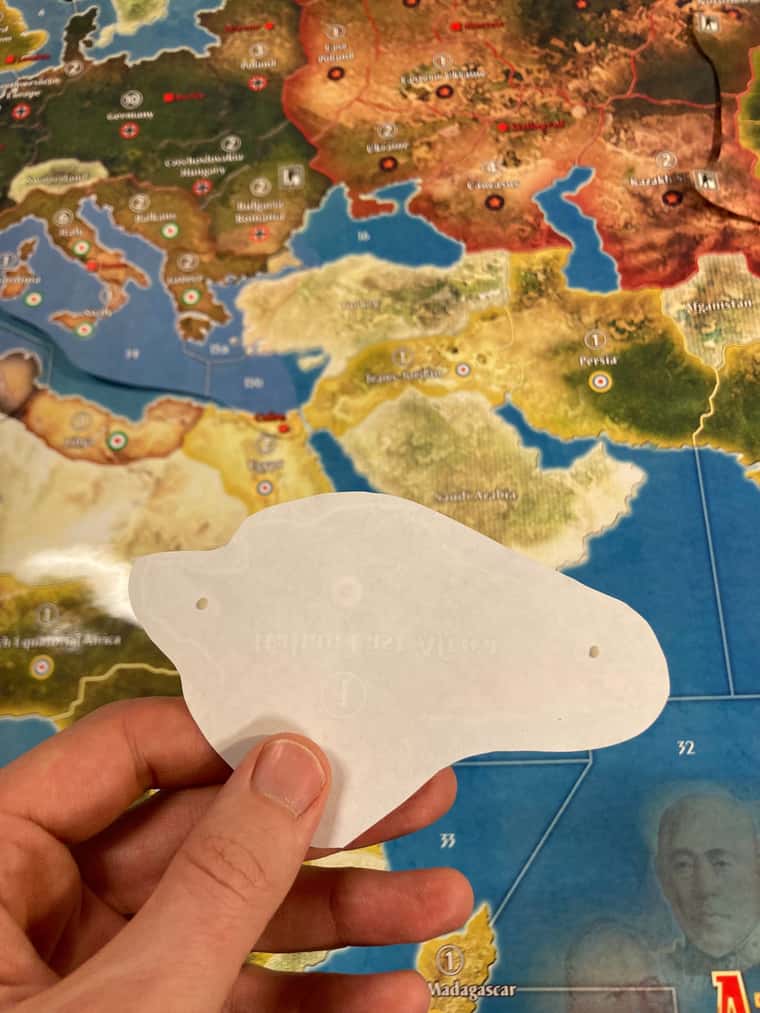
      IEA front:

      D9C1FF61-7CFD-4B4F-8ECF-ECE53E0B5B55.jpeg

      IEA reverse side, with two tiny bits of poster putty shown - about to do gown on the printout:

      093BB8C1-2C5C-4F3E-9689-7A9BA93B73A5.jpeg

      “After” pic with IEA overlay in place:

      AD15938C-0EA9-461B-A891-6A6A23578B5D.jpeg

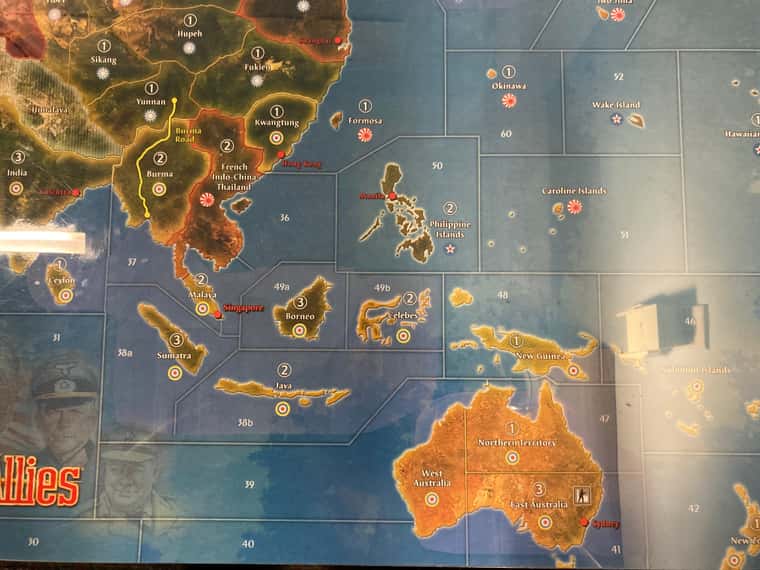
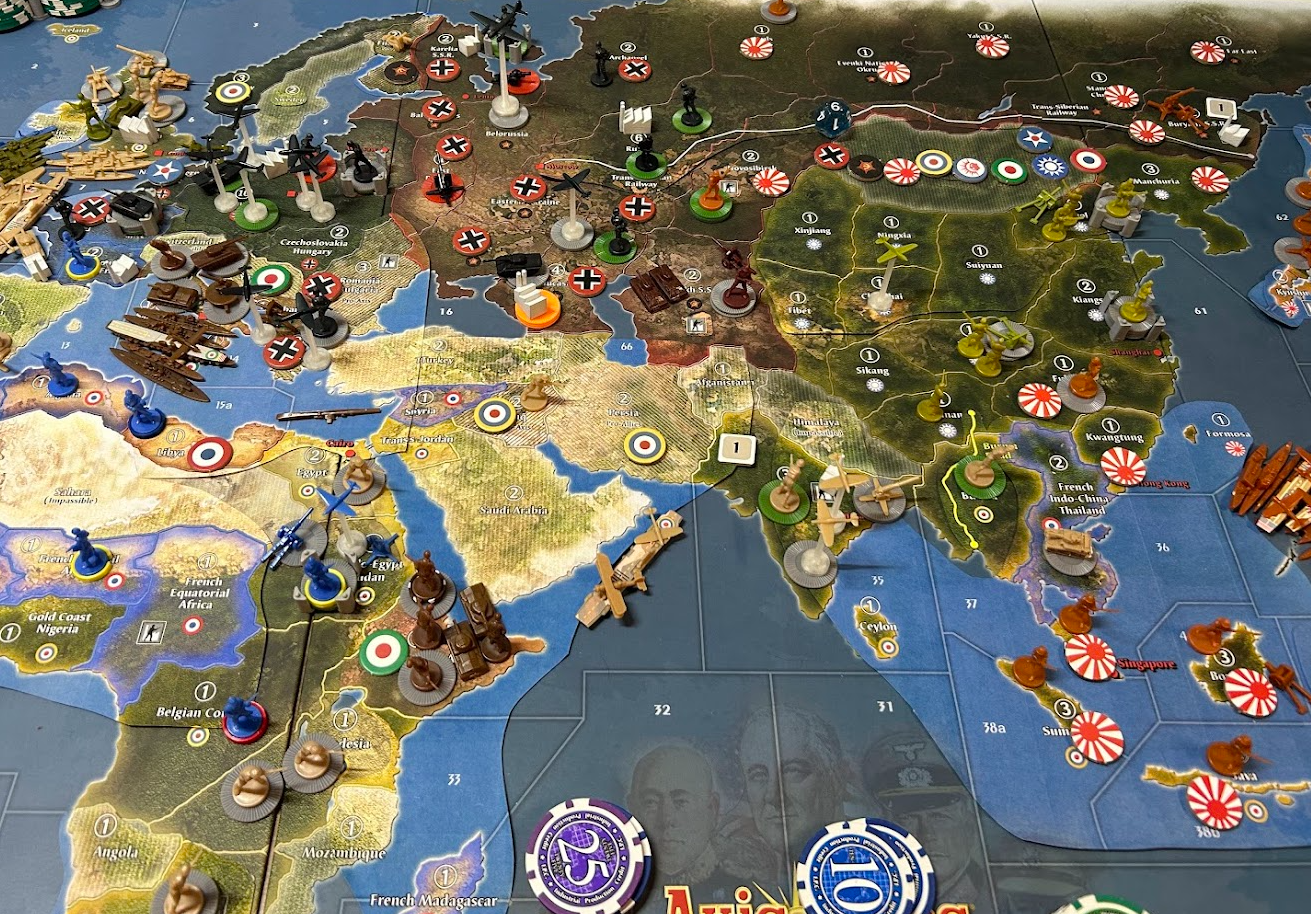
      “After” image of Southeast Asia:

      F5CB0E2C-C715-4524-9555-D1322984033D.jpeg

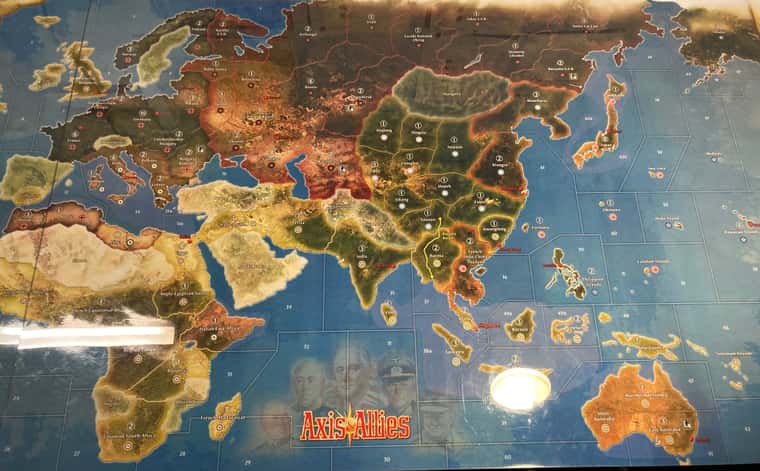
      Overview, after applying the overlays:

      F670B6E9-95DB-4D57-B79C-B72ADDC3706D.jpeg

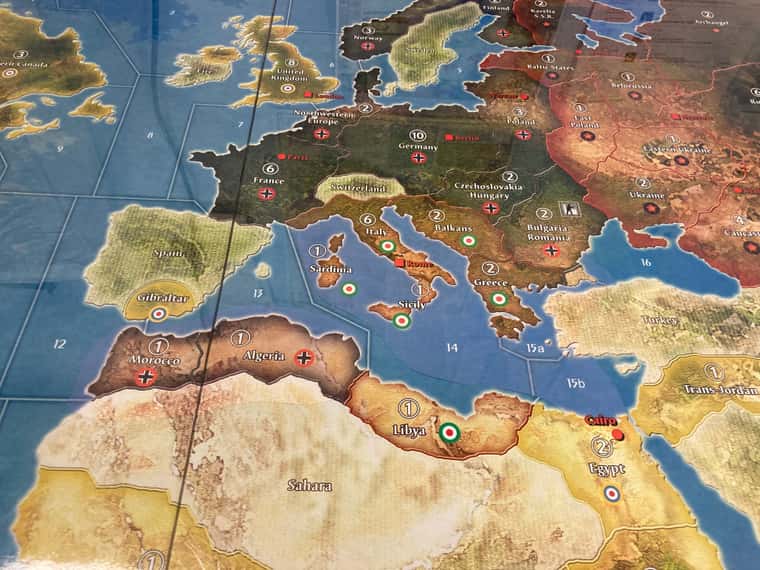
      Mediterranean Theater detail:

      F9847D9D-3F3F-4911-AC67-6F7377C266C2.jpeg

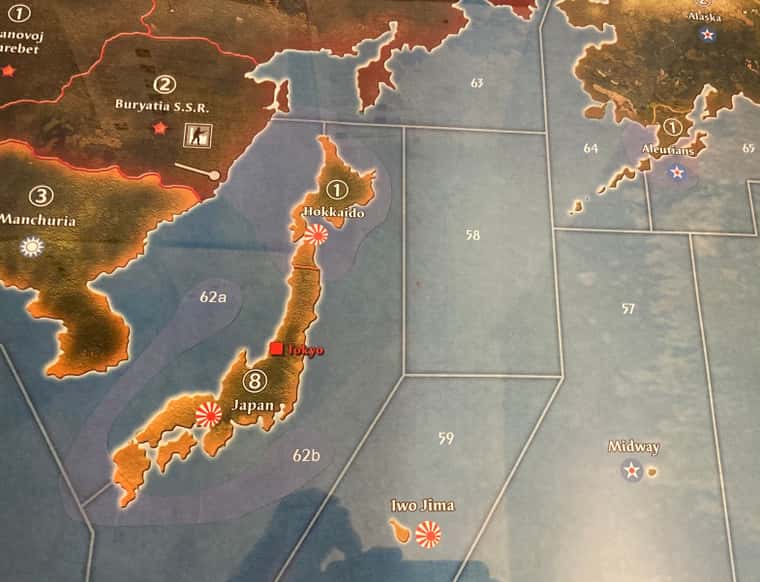
      Hokkaido, SZ62 split, Aleutians:

      391C4309-836D-4EEB-9978-6107A7C1A24D.jpeg

      The colors in some cases may be slightly off from your printouts, but at any reasonable distance these overlays really are invisible.

      You can also do this on the OOB Board, of course, simply by printing the overlay at 400 DPI rather than 300 - see below for some pics of my own board, overlaid with some of my more ambitious “G40 Lite” Overlays.

      Because the overlays are brighter and richer than the OOB board, they will be noticeable, but personally I think that’s a blessing in disguise as they are not only easier to read but also call attention to where the map has been changed from OOB.

      4a47f048-5e2d-4f09-9cee-788bcffdef6f-image.png

      5e397d21-233c-4fbb-bc09-f5e9099c68b2-image.png

      “But vodot,” I hear you ask, “overlays are janky and stupid! We want maps!” If you’re looking for full map files that incorporate some or all of these changes, please see the second post below for downloads of full map files and discussion on these.

      If there is a particular combination of overlays you’re looking for, reply to this thread and I will try to accommodate it.

      Index of Overlays:


      Pacific Theater:

      1. New Australia Splits
      2. Malaya & Singapore
      3. Celebes redrawn & split off from Borneo
      4. Java split off from East Indies / Sumatra
      5. Pacific Sea Zone splits and redraws
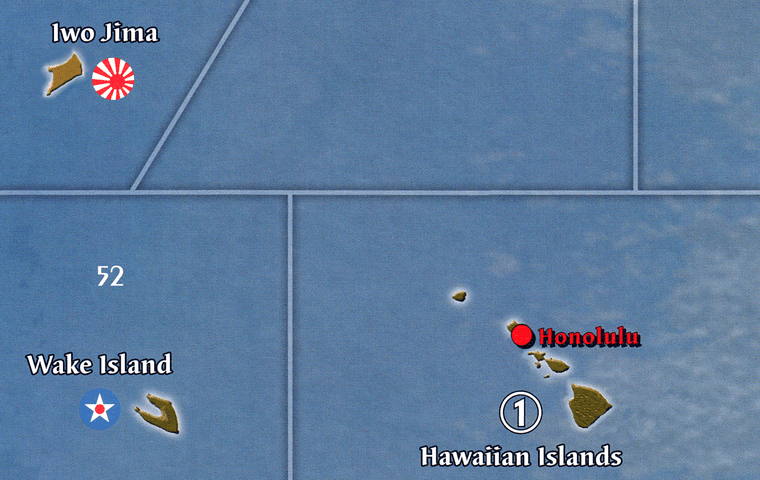
      6. Iwo Jima redrawn and Honolulu position fixed
      7. Pacific & Indian Ocean Island adds and Tweaks:
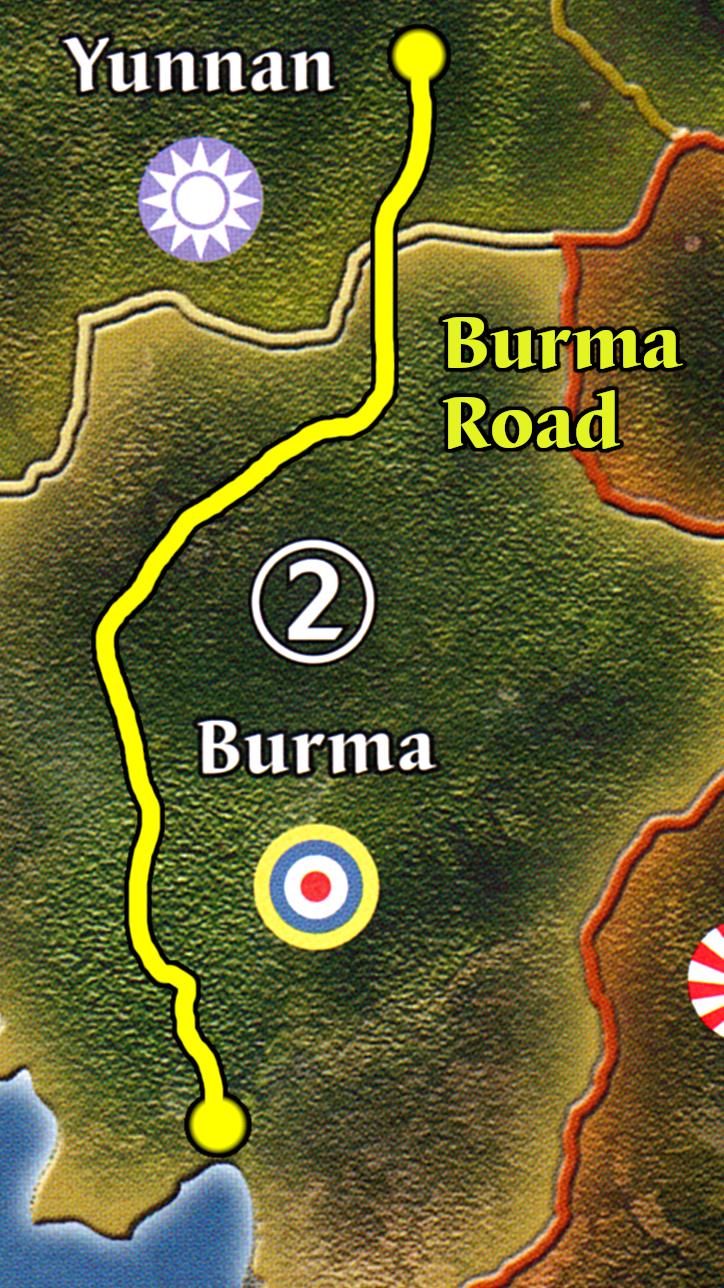
      8. The Burma Road
      9. The Trans-Siberian Railroad
      10. China New Territories & re-color
      11. Japan home island splits
      12. US West Coast & Alaska splits
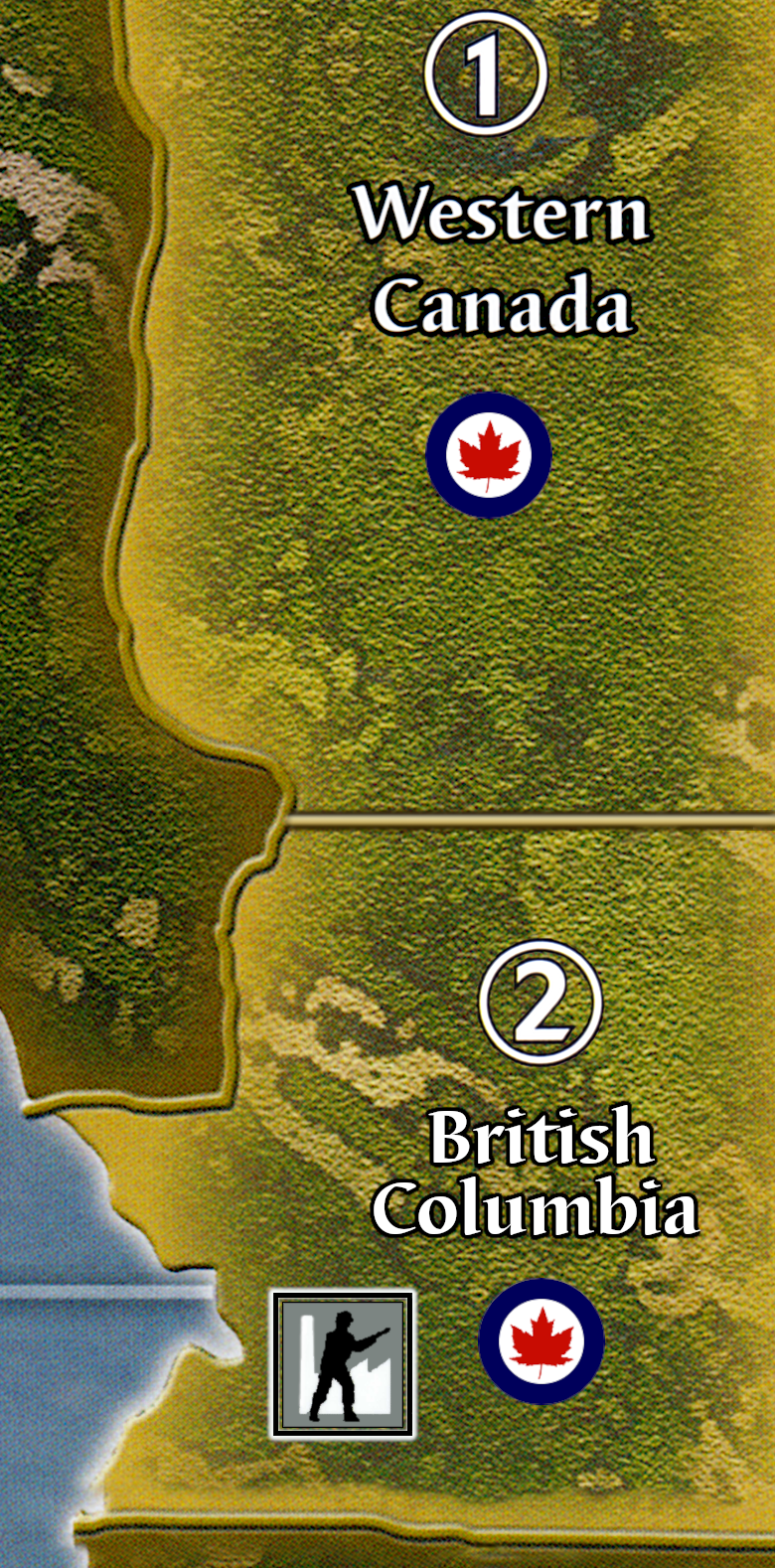
      13. Canada West Coast splits
      14. USSR splits & IPC tweaks
      15. ANZAC as a playable Minor Power
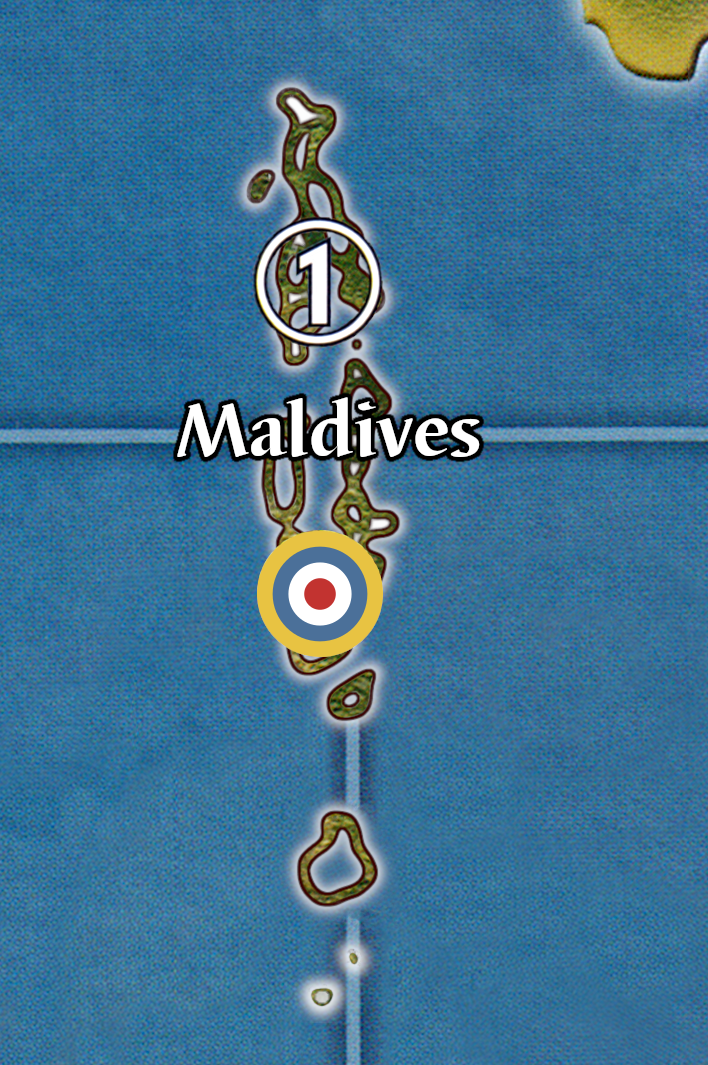
      16. The Maldives added

      European Theater:

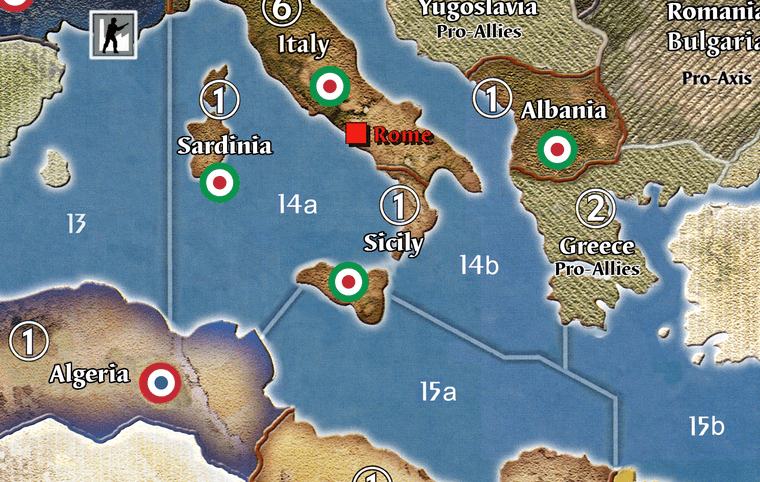
      1. Italian Islands named & IPC-ified
      2. Italian Africa renamed, recolored, and re-roundeled
      3. Cairo!
      4. Balkan Splits
      5. North Africa splits
      6. Turkish border extended north of Bosporus
      7. Add Rio De Janeiro & Cape Town as VCs
      8. Fix Berlin & Warsaw position and laughably bad Germany/Poland geography
      9. USA East Coast Splits
      10. Eastern Canada Splits
      11. Canada as a playable Minor Power
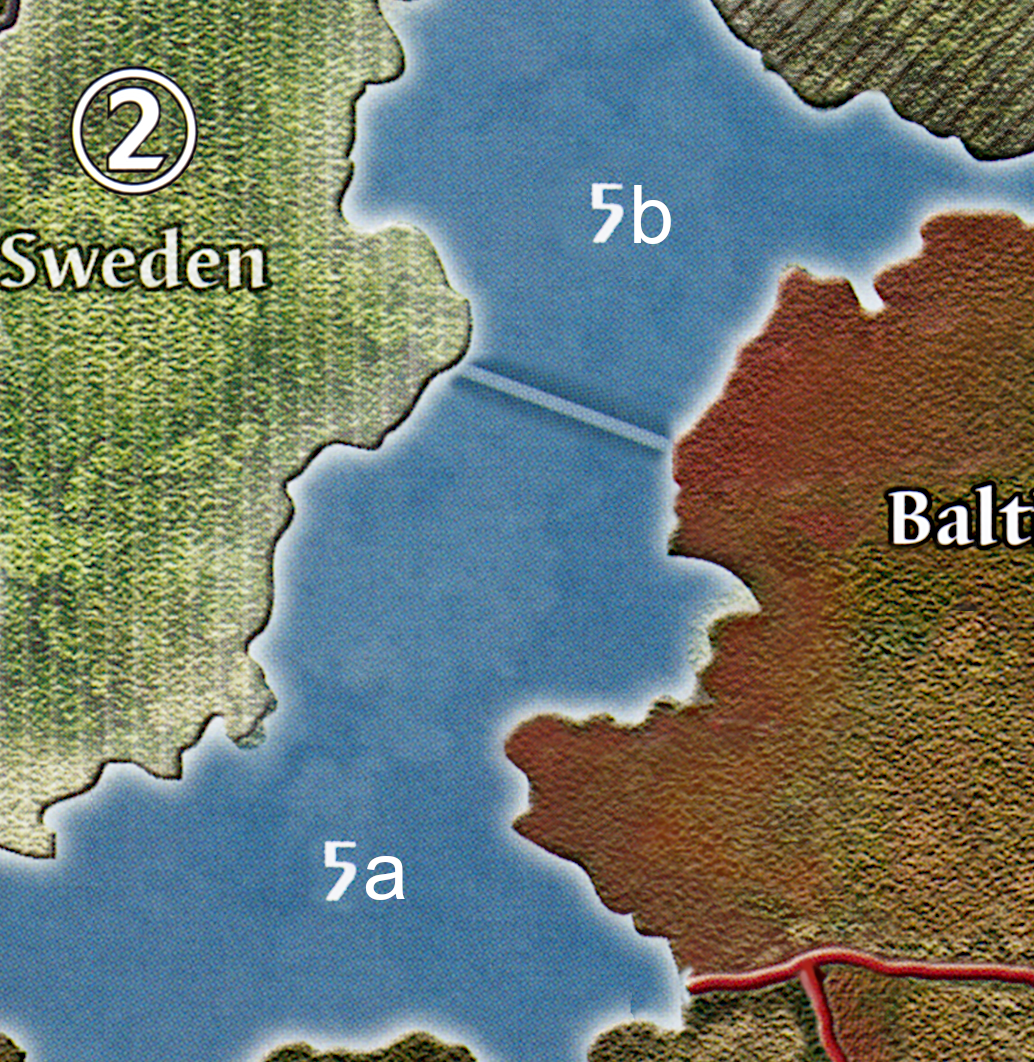
      12. Baltic Sea (SZ5) Split
      13. Scotland Split
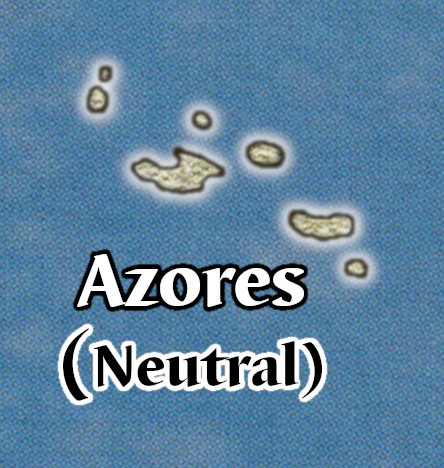
      14. Azores added
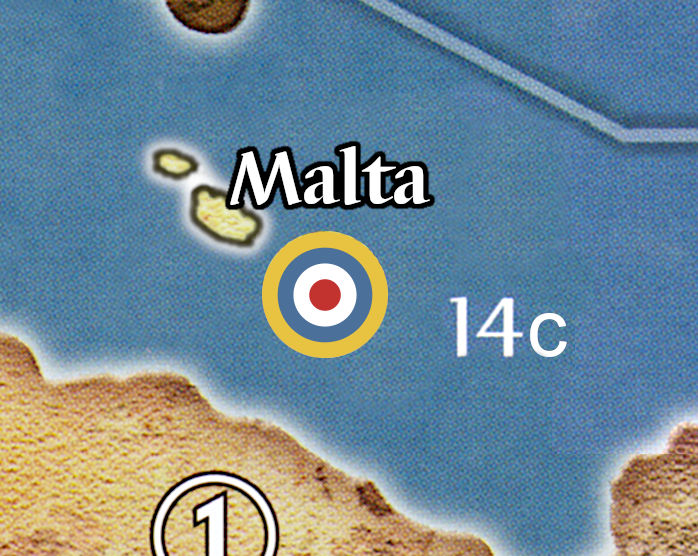
      15. Malta added

      General Map Tweaks:

      1. ‘Recruitment Centers’ ala AA:Z
      2. IPC-ification of major Neutrals
      3. “Impassible” text below Mongolia, Switzerland, Sahara, and Himalaya

      The Actual Overlays:

      These are mostly organized in the order of creation, so if you don’t see something you’re looking for please use Ctrl+F to search this page, or just keep on scrolling down. As this list has grown (and grown…) it may make more sense, if you’re interested in implementing a bunch of these at once, to simply download a whole map file and create your own overlays by snipping out your own parts of it that you like in GIMP/other image editing software.

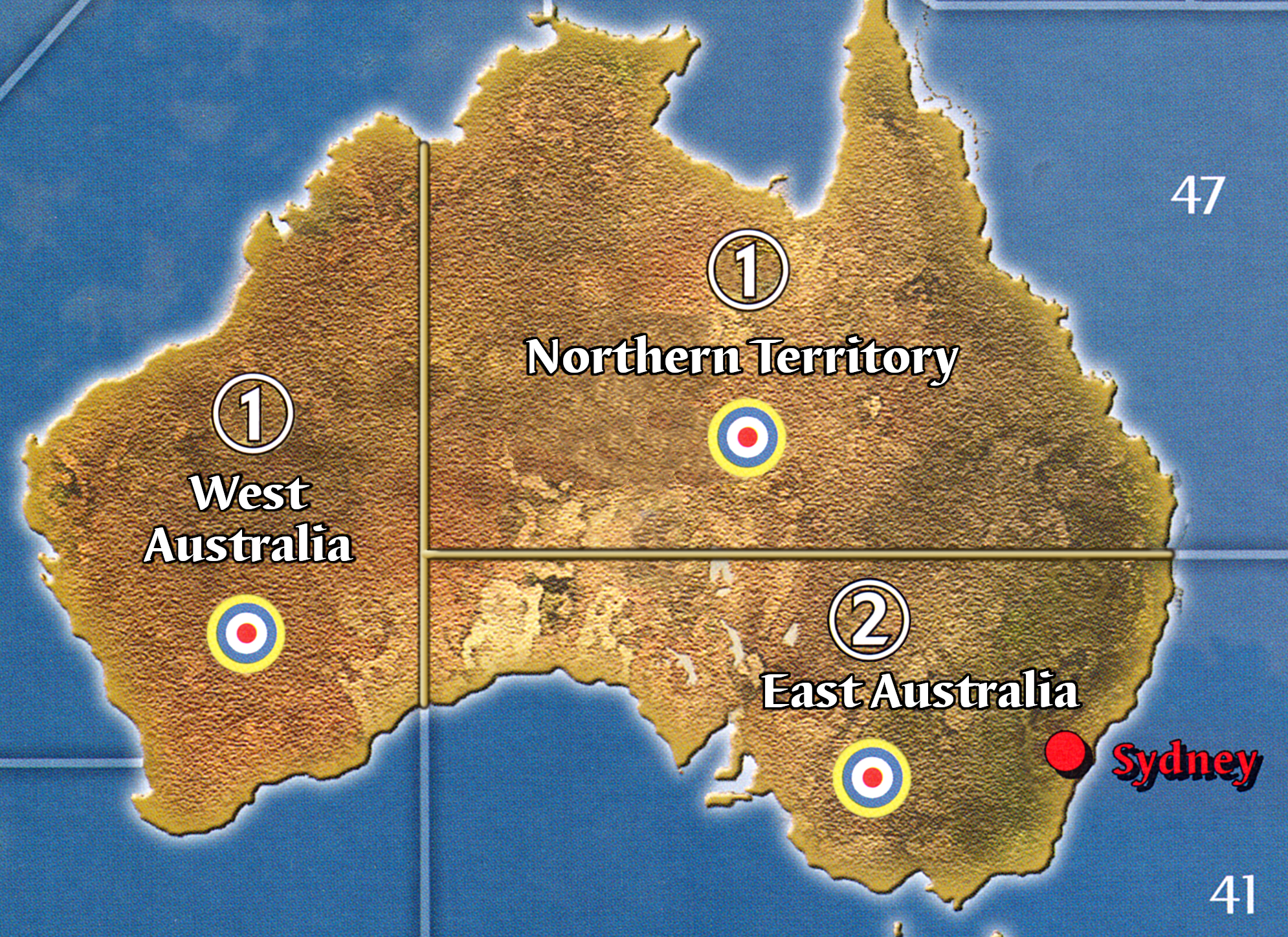
      1a. Australia split into East (2) and West (1)
      ModularAA50_EW-Aus.png


      1b. Australia split into East (2), West (1), and North (1)
      ModularAA50_NEW-Aus.png


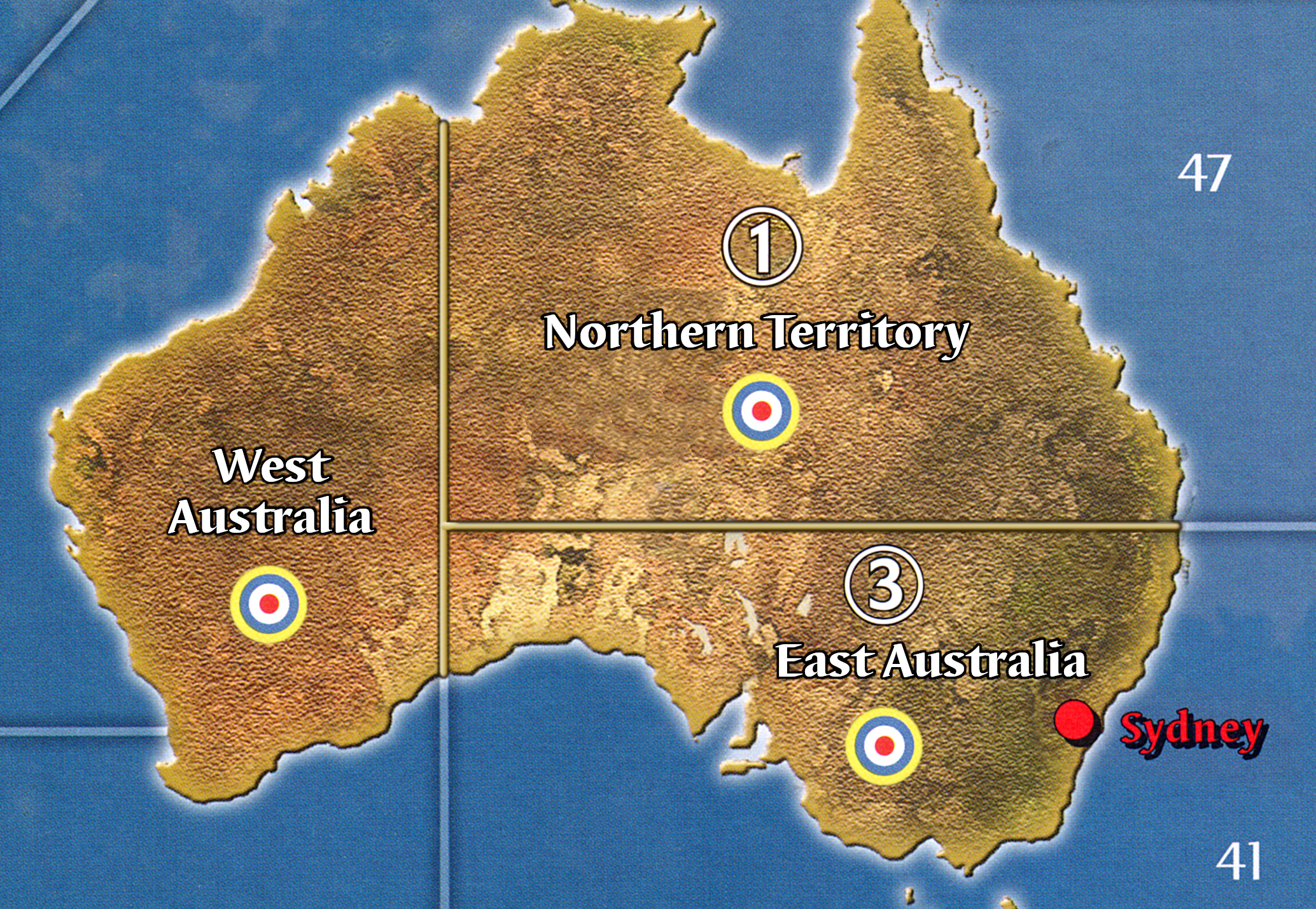
      1c. Australia split into East (3), West (0), and North (1)
      ModularAA50_NEW-Aus_var1.png


      1c. Australia whole, but worth (3) IPCs
      ModularAA50_Aus_3.png


      2. Italian islands named and given IPC values
      ModularAA50_IIs.png


      3. Italian East Africa recolored, renamed, and given and Italian roundel
      ModularAA50_IEA.png


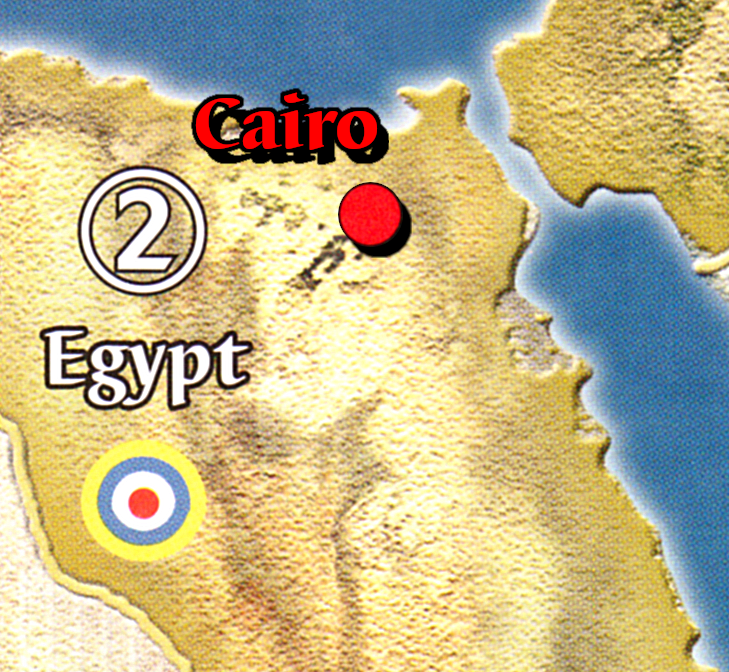
      4. Cairo added as a VC
      ModularAA50_Cairo.png


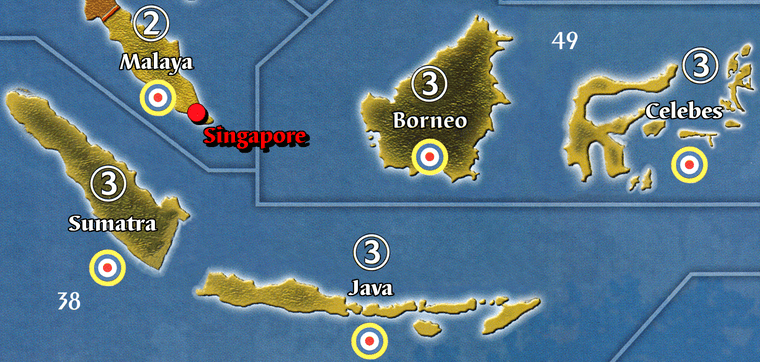
      5. Malaya broken off from FICT

      ModularAA50_DEI_All_Malaya.png


      6. Singapore added as a VC

      ModularAA50_DEI_All_Malaya_Sing.png


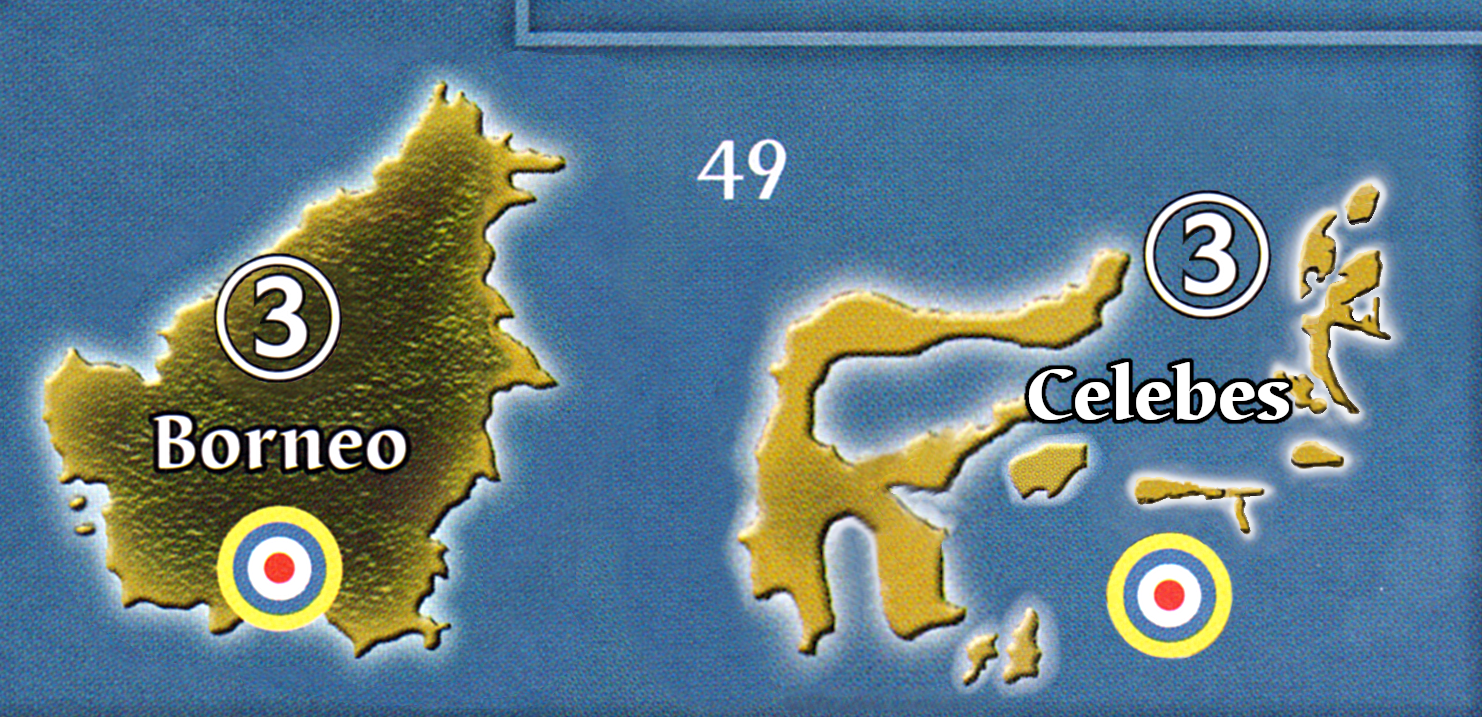
      7. Celebes redrawn and broken off from Borneo

      ModularAA50_Borneo_Celebes_3_3.png


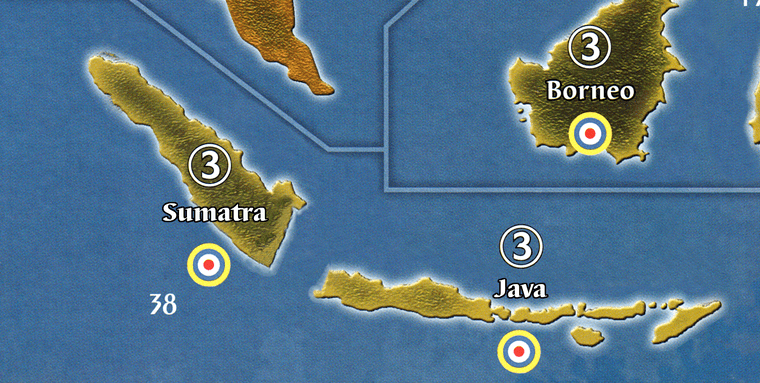
      8. Java broken off from Sumatra

      ModularAA50_Sumatra_Java_3_3.png


      9. Sea Zone splits - 37a/b, 38a/b, & 49a/b

      ModularAA50_DEI-All_3_3_Split_SZs_300DPI.png


      9d. Sea Zone split - 62a/b

      ModularAA50_Split_SZ62_300DPI.png


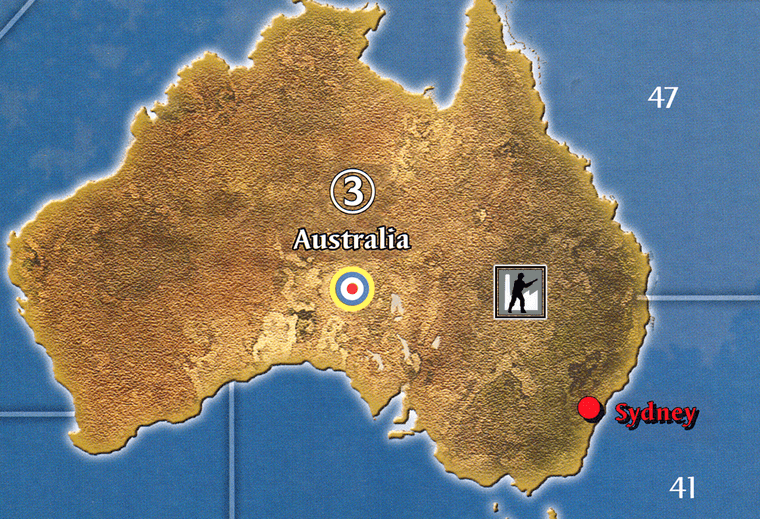
      10a. Australian RC

      ModularAA50_Aus_2_RC.png

      ModularAA50_Aus_3_RC.png


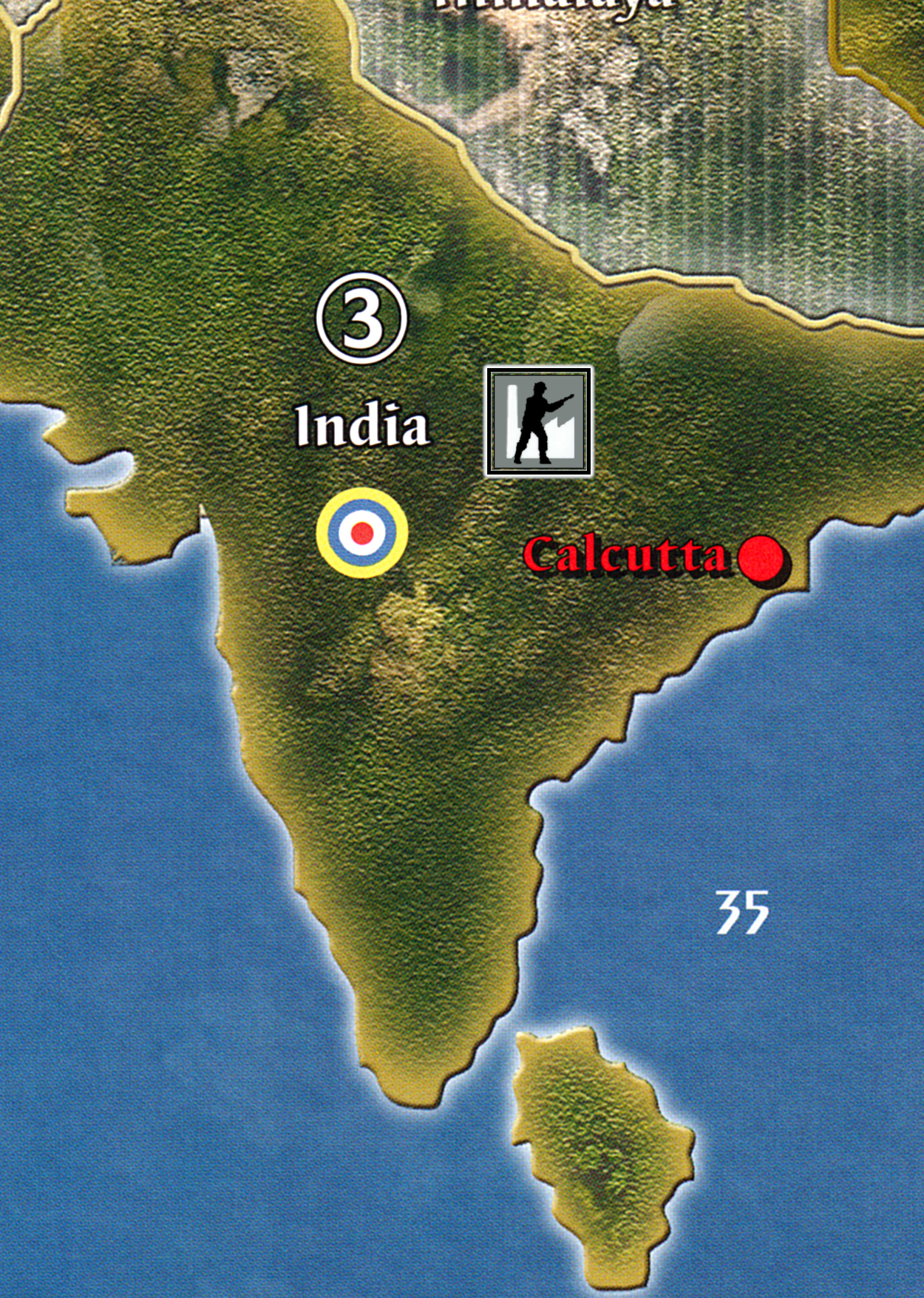
      10b. Indian RC

      ModularAA50_India_RC.png


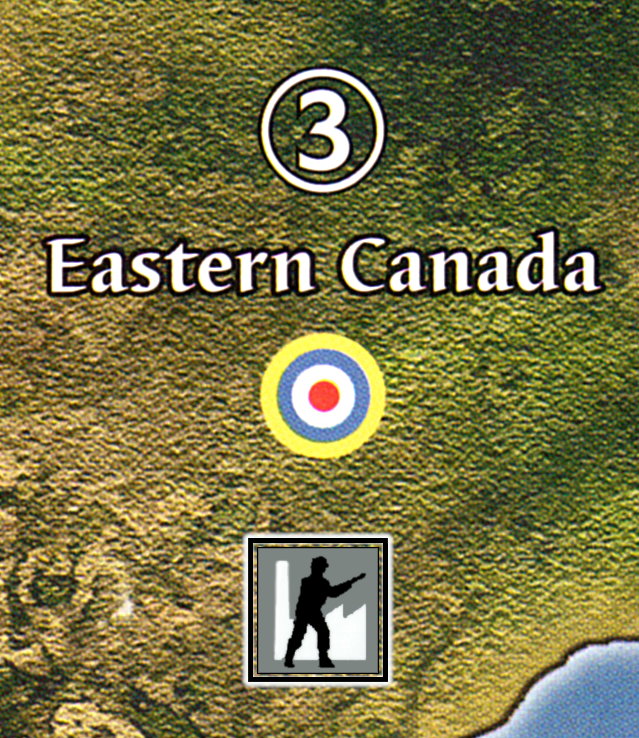
      10c. Eastern Canada RC

      ModularAA50_ECan_RC.png


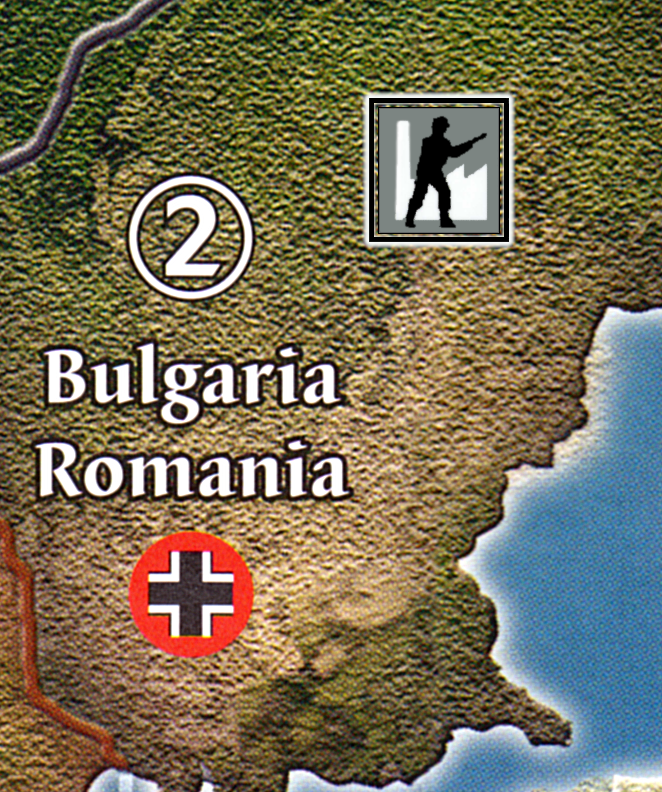
      10d. Bulgaria/Romania RC

      ModularAA50_Bulg_RC.png


      11. Iwo Jima redrawn and Honolulu fixed

      ModularAA50_IJ_hono_fix.png


      12. Mediterranean Tweaks - Greece, Turkey & Morocco

      ModularAA50_Mediterranean.png


      13. Pacific Island Tweaks - Hokkaido, Kyushu, Aleutians, Midway, Wake, Iwo, and Carolines

      ModularAA50_Hokk_Aleu_Midway_Iwo.png

      ModularAA50_Wake_Carolines.png

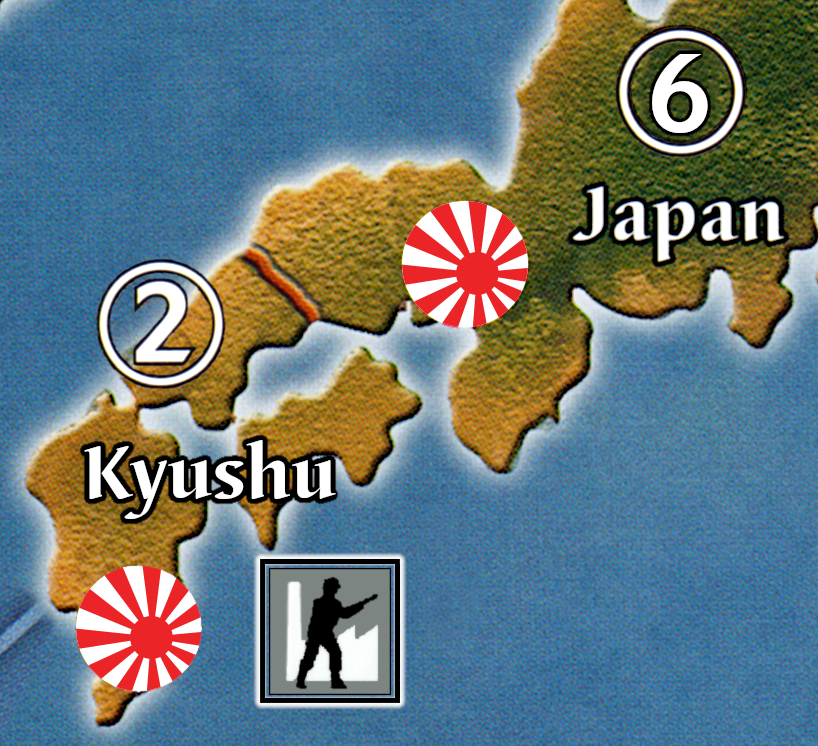
      Kyushu (2) split off from Japan (reduced to 6):

      9529c955-df60-4fc1-a62b-1d3eb598e386-Kyushu.png

      Kyushu (2) by itself (leaving Japan proper at 8 IPCs):

      c3df59cc-00a1-4e4c-8ddb-2a13c7427159-Kyushu_only.png


      14 & 15. Ceylon and the Burma Road

      ModularAA50_Ceylon_Burma_road.png

      Redrawn Burma Road:

      ModularAA50_Burma-Road.png


      16. NW China additions: Tibet, Xinjiang, Anhwei, and Jehol

      ModularAA50_NW-China.png

      Jehol.png

      Anhwei.png

      Jehol recolored to Chinese:

      Jehol_recolor.png


      17. Add Rio & Cape Town as VCs

      ModularAA50_Rio.png

      ModularAA50_Cape-Town.png


      18. Redraw Melacca Straits
      Melacca.png


      1. “Impassible” text added below Mongolia, Switzerland, Sahara, and Himalaya, which becomes important if playable Neutrals are used.

      Impassibles.png


      1. Playable, IPC-ified Neutrals:
        – Sweden (2)
        – Turkey (2)
        – Saudi Arabia (2)
        – Spain (2)
        – Argentina Chile (2)
        – Afganistan (1)
        – South American amalgamations
        – Angola (1)
        – Mozambique (1)

      IPC_Neutrals.png


      1. Germany/Poland/East Poland geography improvement - border connections remain the same but territories and cities are much closer to actual locations.

      Poland_Fix.png____


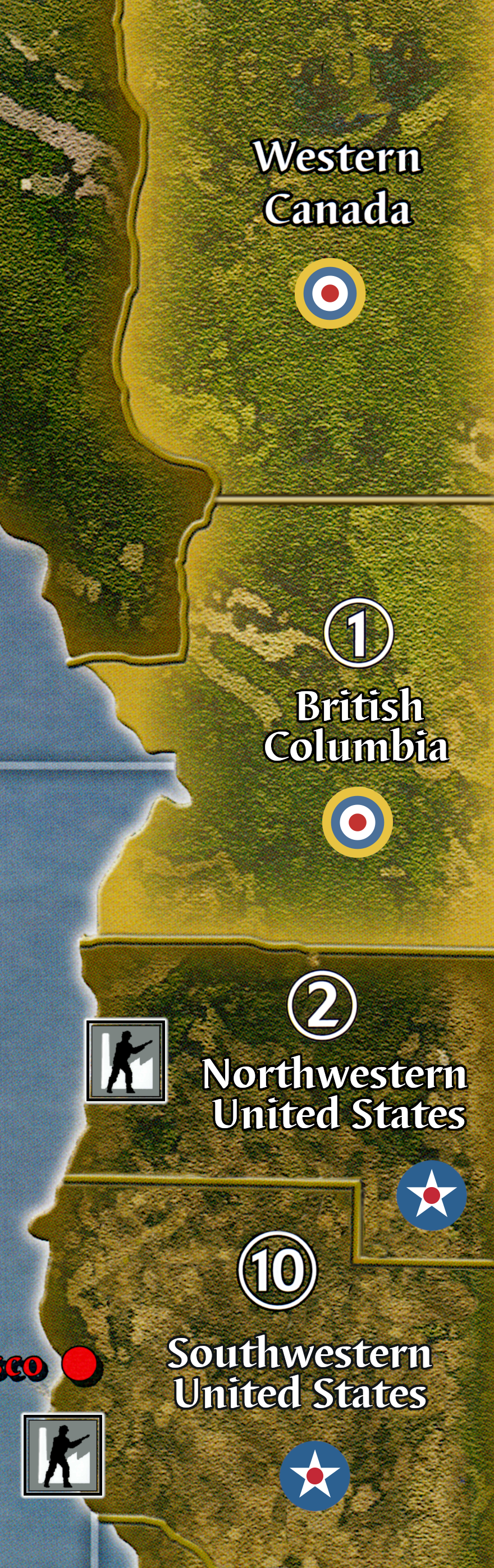
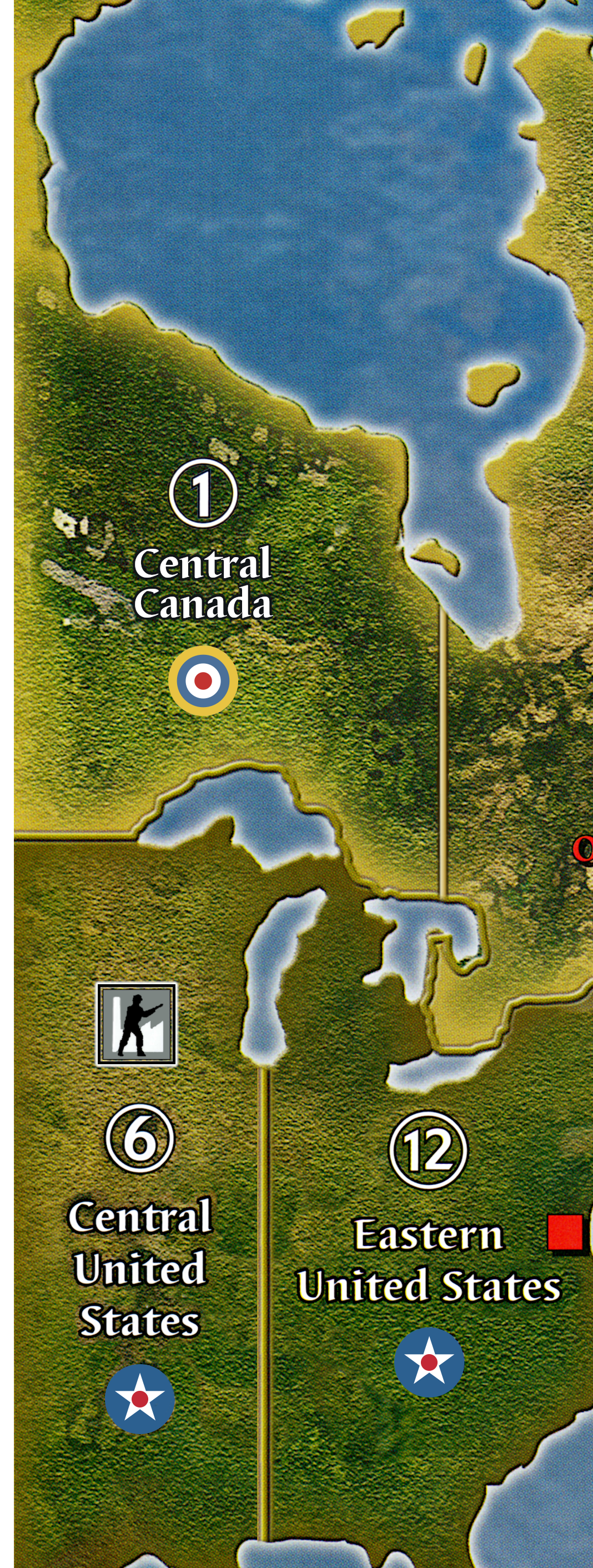
      1. USA & Canada Tweaks:
      • Central US moved to left hand side of map
      • Northwestern US (2) split off from [South]western US (10)
      • British Columbia (1) split off from Western Canada (0)
      • Eastern US Split into NE and SE
      • Central Canada (1) split off from Eastern Canada (1)

      91c846c4-0713-490e-a238-d7ea21e56dc2-NW_NA.png

      bb65512a-ec94-4dbd-8daf-0a8413877ec1-EastNA.png

      LHS_USA_v2.png

      NWUS @ 4 IPC instead of 2:

      RHS_USA_NW4.png


      1. Experimenting with new Med SZs:

      New_Med_SZ.png


      1. Some Soviet tweaks to add a few IPC and granularity:

      Split Siberia (1) off from SFE
      SFE.png

      Split Irkutsk (1) off from Yakut

      irkutsk.png

      Net change of +2 for Soviets who have not gotten much from my other tweaks and have fallen somewhat behind in the IPC counts.


      1. Oh, Canada! Adds Canada as a playable power with 8 IPCs:

      Ecan_NBNS.png

      CCan.png

      norcan.png

      Canada_rhs.png


      1. Baltic SZ 5 Split:

      SZ5_split.png


      1. Scotland (2) Split off from UK (6) (or leave at 8).

      Scotland.png


      1. New Islands: Malta, the Maldives, and the Azores:

      Maldives.png

      malta.png

      Azores.png


      Thanks for reading and let me know your thoughts!


      P.S. One more just for fun :)

      ModularAA50_cSub_SZ66.png

      Build a sub there, for old time’s sakes :)

      posted in Customizations
      vodotV
      vodot
    • House Rules Compilation & Discussion: Oil!

      Hi all, I’m going to compile and discuss some of the best Oil-related community house rules. For starters, here are some of the major threads I’ve found (help me out if you know of more that aren’t identical to those here!)

      oil.JPG

      A&A Europe Oil Rules [OOB]
      https://www.axisandallies.org/forums/topic/11803
      During Germany’s Collect Income phase, the Allies must pay Germany a number of IPCs equal to the total value of Middle East territories that Germany controls.

      @Buran’s Oil Rule’s [sic]
      https://www.axisandallies.org/forums/topic/23944
      Territories with Oil + Oil Well (new infrastructure) produce Oil Barrels, which must be transported to an IC and exchanged for IPCs. Powers have new NOs around capturing/holding Oil-producing territories as well.

      @Johnson73’s Oil Fields
      https://www.axisandallies.org/forums/topic/31902
      Each Oil Field can have an Oil Derrick built on it increasing the value of said territory by 1 IPC. Can be captured/plundered and/or targeted by strategic bombers.

      swinters’ Oil Production values map + rules
      http://www.basesproduced.com/aaa.html
      Territories have Oil Values (0-15) and the movement of all mechanized land and sea units costs one oil unit per space moved, while air units (fighters and bombers) may move up to two spaces at a cost of one oil unit. Unloading a tank from a transport costs one oil unit.

      @Imperious-Leader’s Oil Centers
      https://www.axisandallies.org/forums/topic/15500 & various other places (help me out here, @Imperious-Leader)
      Territories have Oil Values, and Oil limits both production and movement of mechanized units. Total values = total number of mech units that can be bought or move that turn. Additionally, nations with an established oil source gain 1d6 IPCs - and nations without lose 1d6 IPC - each turn.

      @General-6-Stars’ Oil Derricks
      https://www.axisandallies.org/forums/topic/33862/general-6-stars-1941-global-war-game/491?page=20
      Several territories begin the game with indestructible oil derricks and refineries worth 1-8 IPCS. These can be damaged by SBR, and must be fully repaired to provide any benefit. Control of some of these derricks also contribute towards Axis Victory Conditions/Points. In some versions, damage to refineries leads to unit movement penalties.

      @siredblood’s BBR
      http://siredblood.com/community
      10 territories have oil derrick symbols. Controlling these counts toward Axis victory conditions and also activate Axis NOs for IPC bonuses.

      HBG’s Oil Wars expansion (for GW36)
      https://www.historicalboardgaming.com/
      Oil is produced by permanent derricks that can be bombed. Must be physically stored by a power in reserves, which can also be bombed. Oil is used each turn based on the types of activities undertaken that turn - moving categories of units (or individual units, in the case of str. bombers and capital ships), building units, generic domestic expenses, etc. Oil can be lend-leased and traded, in which case it is vulnerable to interdiction.

      Finally, my own humble entry for the complexity-averse:

      "Vodot’s Very Simple Oil Rules"
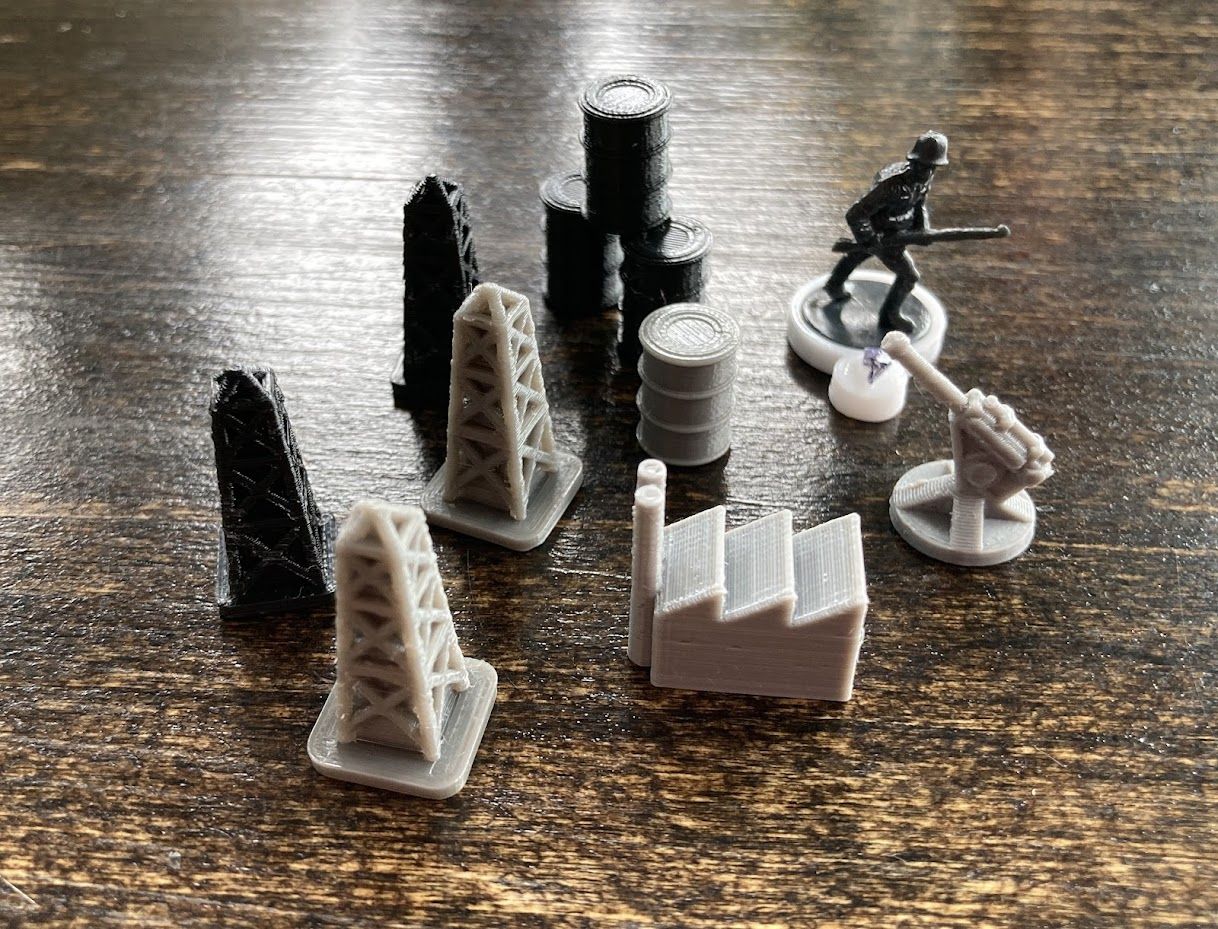
      Oil-producing territories have 1-5 Oil Derrick minis placed on them. During the COLLECT INCOME phase, you collect 1 IPC for each Oil Derrick under your control. Reduce these territories nominal IPC values as needed to compensate.

      posted in House Rules
      vodotV
      vodot
    • Secret Subs - Hidden Sub Movement without Bookkeeping or the Honor System

      Hi all, attached and copy-pasted below is the latest draft of my rules for Secret Subs, a minimalist variant for hidden sub movement that doesn’t rely on laborious bookkeeping or the honor system. It’s designed to be modular and version-agnostic. To play this variant I use these Submerged/Decoy tokens that I designed and sell on my etsy store, but you can use any set of identical tokens/chips with numbers on their face-down sides.

      Let me know below what you think; and if you playtest it, how it goes!

      SEPT 2022 UPDATE: Latest Rules here:
      Axis_and_Allies_-_Secret_Subs_v1.0.pdf

      SS.png

      v0.8 - DEC2021

      0.1 Introduction

      This is a new take on an old idea: how to at least partially simulate the ‘surprise’ nature of submarine warfare in a game with completely public information like Axis and Allies. Since the main benefit of public info games is simplicity, this variant does not seek to change that; rather we add as little secrecy as possible to preserve the “what-you-see-is-what-you-get” simplicity that makes A&A the great game it is.


      Summary / TL;DR:
      In this variant, each power’s submarine units are kept off-board on a public Tracker, organized into in numbered Groups. Each Group is represented on the board by a corresponding Sub ‘Token’, numbered on their bottom (secret) faces. These Tokens are placed whenever new submarines are mobilized, and they can represent groups of any size - often including zero, in which case they’re actually a decoy. On the board, Sub Tokens & decoys behave and move exactly like normal submarines, and the Group they represent is revealed only in combat.


      0.2 Terminology

      Before jumping into the more detailed rules, some helpful terms are defined below:

      Sub Token - This is the physical “Secret Sub Token” that sits on the board/Sea Zone representing a Sub Group. Tokens have a hidden number on the bottom, which under normal circumstances may only be viewed by that Token’s owner.

      Sub Group - this is the group of actual submarines that a given Token represents. Groups are organized on a power’s Sub Group Tracker, which is public knowledge. Each Group is represented on the board by the Token with the same number as that Group. Groups can be of any size, including zero.

      0.3 Similarities/Differences between Sub Tokens and Fleet Markers

      Sub Tokens function similarly to fleet markers from the original Axis and Allies Pacific (and the ‘marshaling cards’ from Revised) in a few ways:

      1. The Tokens are each numbered for tracking (albeit secretly, in the case of Sub Tokens)
      2. The actual units summarized by these Tokens are publicly visible at all times
      3. The actual units summarized by these Tokens are actually present in the Token’s zone
      4. Each unit summarized by the Token still must obey all normal rules

      Sub Tokens are also different from Fleet Markers and marshaling cards in two key ways:

      1. The ID number of each Sub Token is secret (e.g. which Token represents which Group)
      2. Sub Tokens may be decoys: the group they represent may have zero submarines in it

      1.0 Purchasing and Placing Secret Submarines

      1.1 Each turn, powers purchase submarines as normal by paying their cost during the ‘Purchase Units’ phase and setting them aside for deployment in the mobilization zone. During the ‘Mobilize New Units’ phase these submarines are still built normally - but they are physically placed not into Sea Zones but rather onto the public Group Tracker, where they are organized into groups however their owner wishes. On the game board, these Groups will be represented by corresponding new Sub Tokens - it is these which are physically placed in the Sea Zones wherever that Group can be mobilized.

      1.2 The maximum number of new Groups created (and new Sub Tokens placed) in a given turn is equal to the number of submarines purchased plus one. The new Groups/Tokens may be placed in any eligible Sea Zone, as long as all production capacity limits and rules are followed as normal.

      1.3 You are not required to place all of the new Tokens available to you, but you must have at least the number needed to mobilize the new Groups you wish to create. If you do not have enough remaining free Groups on your Tracker or Sub Tokens in your supply, you may add your new subs to a group already present in the mobilization zone(s), or you may reorganize (see section 4.0 below) your Groups or remove decoy Sub Tokens from the board to free these Tokens up to be placed anew this turn.

      1.4 Each Sub Token uses as many production capacity points as the number of submarines they represent, but never less than one - so decoy/empty-group Tokens still use one production capacity point each. If you do not have sufficient production capacity or Tokens to mobilize all of your eligible submarines/Tokens, they are discarded and returned to your supply.

      Production Example:
      John is controlling the United States, and he currently has seven Sub Groups/Tokens on the board (Groups #1-7). During this turn’s Purchase Units phase he bought three more subs. It is now the Mobilization phase, and so John is eligible to place up to four Sub Tokens (one for each purchased sub plus one extra Token. However, he only has three Tokens remaining in his supply (Groups #8-10), so he can only create up to three new Groups this turn unless he reorganizes his current Groups.

      John decides to keep his current Groups as they are, and to use all three remaining Tokens. He wants to divide his three new subs into two groups - one sub in Group #8 and two subs in Group #9 - while also creating a decoy Token. To do this, he places one new submarine into the #8 box on his Group Tracker, the other two new subs into box #9, and nothing into box #10. John then places Tokens #8 & 9 into the Pacific, and he places Token #10 - the decoy with zero submarines in its Group - into the Atlantic. John’s Mobilization phase is now over, and he can move on to placing the rest of his units or the Collect Income phase.

      Note that this placement strategy would consume three production capacity points from his Pacific Industrial Complex (for the two groups containing a total of three subs he placed there), and one capacity point from his Atlantic complex (for the decoy token, which still takes up one capacity point).

      2.0 Secret Submarine Movement

      Movement with Sub Tokens is virtually identical to moving normal submarine units. They have the same movement range and restrictions; they may stack and defend with allied and other friendly units (including yours or an ally’s other Sub Tokens), and they may move through groups of enemy ships without ASW capability (i.e. Destroyers). Just like submarines they can, if unaccompanied by surface warships, be optionally ignored during an enemy’s movement, and their presence alone does not make a Sea Zone “Hostile” for the purposes of determining legal movement or amphibious invasion points of origin (but just like subs, even decoy Tokens do prevent unescorted transports from landing troops from their Sea Zone). Two or more co-located (in the same Sea Zone) Sub Tokens/Groups may also be reorganized during movement, but never in a way that grants a sub or group additional movement.

      3.0 Secret Submarine Combat

      3.1 At the start of a combat involving Sub Tokens they should be moved with the rest of the participating units to the battle board, keeping their Group # hidden. If there is no opposing Destroyer present, the owners of any Sub Tokens must now choose whether their subs will submerge or fight, with the attacker choosing (and reorganizing, if desired) first, followed by the defender.

      3.2 Once submerging vs. fighting Groups/Tokens have been chosen, any submerging Groups/Tokens are not revealed but are instead immediately placed back on the board face-down in the Sea Zone.

      3.3 Any Groups/Tokens that are fighting (i.e. not submerging) are now simultaneously revealed. Flip them over, find their Groups on the owner’s Tracker, and place those submarines on the battle board near their respective Tokens. Keep the submarines grouped with their Tokens during combat to remember which subs belong to which Group. Combat then proceeds as normal.

      3.4 Any time during combat that a submarine would submerge, they must do so as part of a Group and be represented by a Token. You may elect to have some of your subs continue fighting while others submerge, as long as you have at least one Sub Token for the submerging Group and at least one more for any subs that will remain in the combat. Place any submerging subs back on the Group Tracker, and move their Token from the Battle Board back to the Sea Zone.

      3.5 If a Power has only one Sub Token or Group in a given combat, that power’s submarines must fight or submerge together as one Group.

      3.6 If a revealed Token’s Group of submarines is ever zero/empty (including all decoys revealed at the start of combat), that Token is immediately discarded and returned to that owner’s supply.

      3.7 At the end of combat any surviving submarine Groups are returned to the Group tracker (they may be reorganized first) and the Sub Tokens representing them are returned face-down to the Sea Zone.

      Combat Example:
      John (our hypothetical US player from before) wants to invade Wake Island - currently owned by Japan (which is controlled by Mike) - so during his Combat Move phase he moves a fleet to the surrounding Sea Zone. John’s invasion force includes a Battleship and two Cruisers, along with several transports and two Sub Tokens/Groups. Japan also has two Sub Tokens in that Sea Zone, as well as one Cruiser and one Destroyer.

      At the start of Combat, John and Mike each move their units to the battle board, keeping their Sub Tokens unrevealed for now. John is the attacker, so he would ordinarily decide to whether to submerge subs first - but Mike has a Destroyer present, so both of John’s Sub Groups must surface and fight. John will be revealing his Sub Tokens, so he reorganizes them first. One of his two Groups was just a decoy, so to prevent it from being immediately discarded once it’s revealed he splits up his other Group and puts a few subs into the decoy Group. He leaves both of his Tokens on the battle board, and it’s now up to Mike to decide what to do.

      Since John has no Destroyer present, Mike can choose to submerge his subs if he wishes. One of Mike’s Tokens is also a decoy, and the other has three subs in its Group. Mike saw John reorganize his subs, so he has a guess about how many he’s facing. He tells John that he wishes to Submerge one of his Tokens while fighting with the other. He takes the submerging Token (the decoy Token) and places it back on the board face-down in the Sea Zone. The fighting Token remains on the battle board.

      Mike and John have both made their decisions, so it is time to simultaneously reveal the Groups that are going to actively fight. John reveals his Sub Tokens: #1 & 2. After his reorganization, both of those Groups now have submarines in them (he would have had to discard the decoy Token now, if he had left that Group empty). John takes the submarines off the tracker and places them near the Tokens that represent them on the battle board.

      Mike also reveals the Token that has decided to fight, taking the three subs from that Group and places them on the battle board near his remaining Token. The battle can now proceed as normal, beginning with Mike’s subs’ Surprise Strike phase (since John has no destroyer).

      As the combat draws to a close, Mike has one sub remaining and he decides to submerge it. He places the submarine back on the Tracker in the appropriate Group, and places that Token back in the Sea Zone next to the decoy Token that submerged at the beginning of combat. With naval combat over, John can now proceed to the amphibious invasion of Wake Island.

      4.0 Secret Submarine Reorganization and Anonymization

      Sub Groups may be ‘reorganized’ and ‘anonymized’ (shuffled) by their owner at any time, provided the following rules are followed:

      1. Reorganization may occur at any time between Groups of submarines that are co-located and interchangeable.
      Groups that are to be reorganized together must be truly interchangeable; they must be co-located and have identical movement and retreat restrictions/eligibility. If there are any gameplay-affecting differences between the groups they cannot be reorganized together.

      2. Reorganization can never cause the number of Sub Tokens on the board to increase.
      Sub Tokens and Groups may be consolidated and eliminated during reorganization, but new Sub Tokens and Groups cannot be created or placed as part of a reorganization. The number of Tokens/Groups after reorganization must always be equal to or less than the number of Tokens/Groups before reorganization.

      3. Reorganization of Groups is public, but secret anonymization of Sub Tokens is allowed.
      Sub Tokens that share a Sea Zone - even during the movement of one of the Groups - may be anonymized by their owner at any time - that is, they may be picked up from the Sea Zone and shuffled secretly, then returned to the same Sea Zone.

      Reorganization Example:
      John (our US player from earlier) has been building lots of submarines. He currently has eight different Sub Groups (Groups #1-8) on his tracker, and therefore he also has the eight corresponding Sub Tokens (Tokens #1-8) in various Sea Zones representing them. A maximum of 10 Sub Tokens are allowed in this game, meaning that John has only two Sub Tokens left in his supply (Tokens #9 & 10). Of the eight Groups/Tokens John has on the board, only five have actual submarines assigned to them on the Tracker. The other three do not - they’re decoys.

      It is the Mobilization phase again, and John has purchased another three subs this turn. He has another four Tokens/Groups to potentially create (3 purchased subs + 1 extra)… but John only has two Tokens (#9 and 10) left in his supply. He is not required to place all four new tokens, but John likes filling up the oceans with plastic bits, so he looks at his fleet and notices that three of his Tokens/Groups (#1-3) are sharing the same Sea Zone after fighting a combat this turn. Japan just learned the composition of these three groups in a recent combat, so John decides to reorganize those Groups into one large group to free up their Tokens for new placement this turn. On his Group Tracker, then, John takes the subs out of Groups #2 and 3 and puts them all into the Group 1 box. He removes Sub Tokens #2 & 3 from the Sea Zone, leaving Token #1 alone there. John is now free to immediately create new Groups with Tokens #2 & 3 as part of his mobilization this turn.

      Anonymization Example:
      Continuing the above example, imagine that John has just moved one sub Token/Group into a Sea Zone that contains another of his Tokens. John decides to take this opportunity to anonymize the two Tokens to hide their identity from his opponents. To do this, John picks both tokens up off the board, shakes them up in his closed hand, and sets them back down on the board in the Zone they came from, looking at the bottom of each before doing so.

      posted in Other Axis & Allies Variants
      vodotV
      vodot
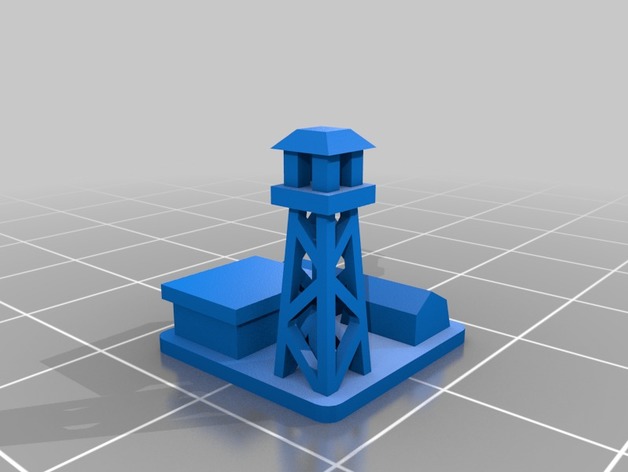
    • Custom 3D Miniatures: Major & Minor Industrial Complexes, Recruitment Center, Airbase, and Naval Base

      Hi all, here are a few things I’m tinkering with to replace the OOB chits, for those of you with access to a 3D printer.

      Download them (for free!) from Thingiverse and print them yourself, or support the designer by ordering them printed on Shapeways! I’m still testing, so Shapeways orders should be considered ‘beta’ orders to help me work out the kinks.

      Completed so far:

      • Minor IC (single, smaller smokestack; smaller building) (Thingiverse Link)
        – New: Order these printed on Shapeways! QTY 10, QTY 20
      • Major IC (four taller-than-OOB smokestacks, larger footprint with small buildings) (Thingiverse Link)
        – New: Order these printed on Shapeways! QTY 10
      • Major ICs (same as above with two smokestacks) (Thingiverse Link)
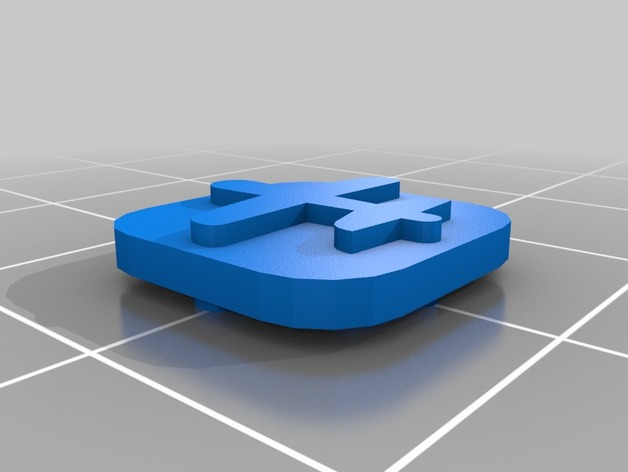
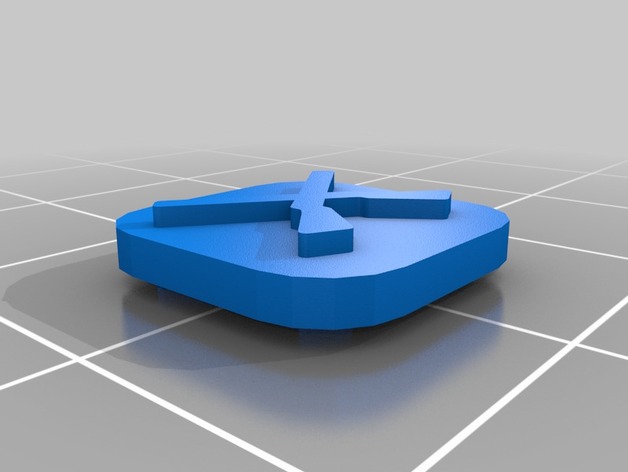
      • Naval Base token (reversible) (Thingiverse Link)
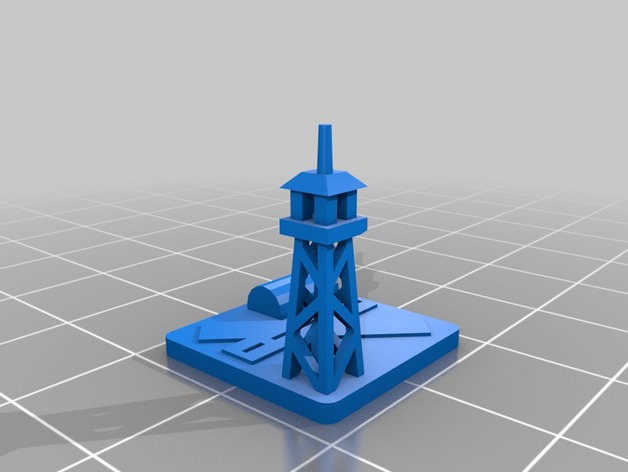
      • Shipyard miniature (Thingiverse Link)
      • Airbase token (reversible) (Thingiverse Link)
      • Airfield miniature (Thingiverse Link)
        – New: Order these printed on Shapeways! QTY 10
      • Recruitment Center token (reversible) (Thingiverse Link)
      • Recruitment Center miniature (Thingiverse Link)

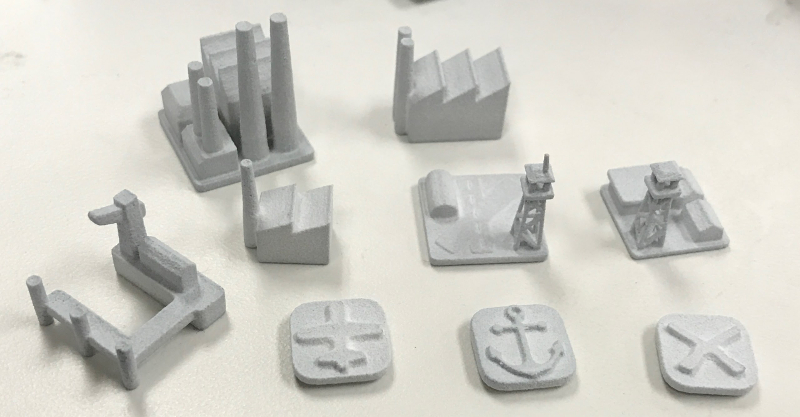
      Prototype Image:
      IMG_7487.JPG

      Minor IC (Thingiverse Link)
      14x8x17mm (vs 17x9x17 IC OOB)
      New: Buy on Shapeways! QTY 10, QTY 20
      minorIC2.jpg

      Major IC (Thingiverse Link)
      17x17x24mm (vs 17x9x17 IC OOB)
      134133e1-4c44-4bc8-81c9-42a2ac4e50b5-image.png

      Major IC (v2, climate change edition) (Thingiverse Link)
      17x17x24mm (vs 17x9x17 IC OOB)
      New: Buy on Shapeways! QTY 10
      majorICv2.jpg

      Naval Base Token (Thingiverse Link)
      These are reversible (same relief on bottom side)
      db199ddf-94ce-4e62-ac94-cfcd5e941a00-image.png

      Shipyard Miniature (Thingiverse Link)
      shipyard.jpg

      Airbase Token (Thingiverse Link)
      These are reversible (same relief on bottom side)
      c0b86675-b48a-4e7e-9edb-943ddee926c1-image.png

      Airfield Miniature (Thingiverse Link)
      Order these printed on Shapeways! QTY 10
      airfield.jpg

      Recruitment Center Token Thingiverse Link
      These are reversible (same relief on bottom side)
      recruitment_center_tkn.jpg

      Recruitment Center (Thingiverse Link)
      recruitment_center.jpg

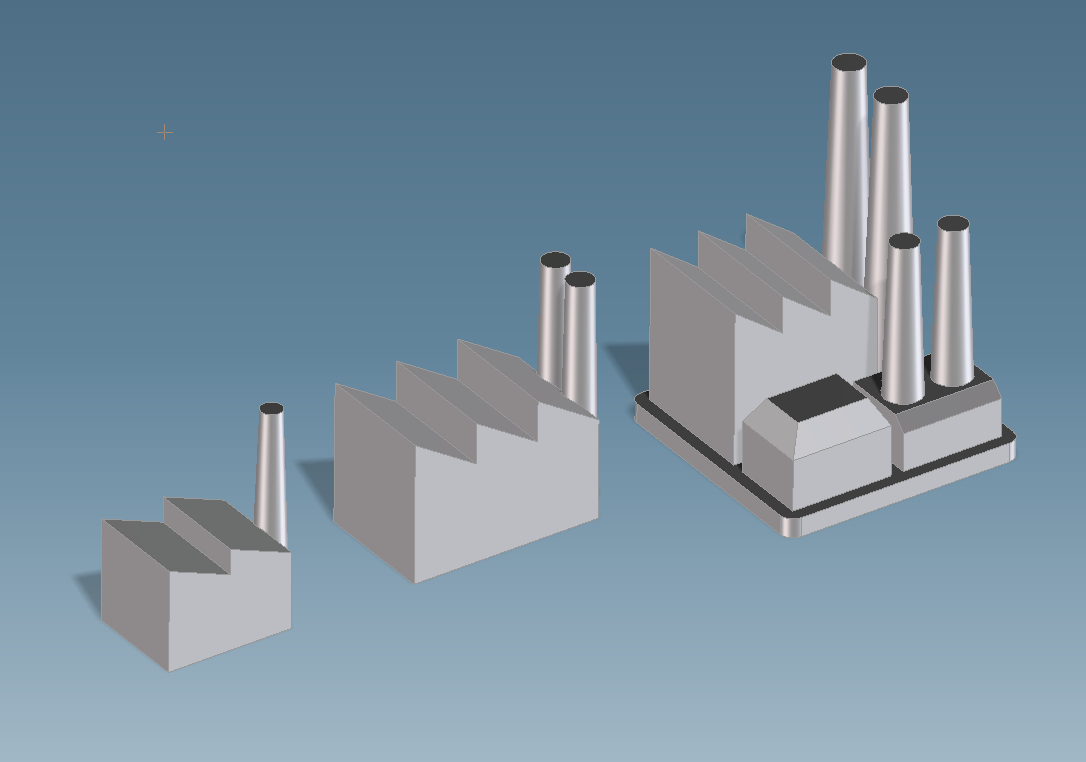
      Here’s a size comparison on the ICs (middle one is OOB, for comparison):
      ICs.PNG

      posted in Customizations miniatures 3d printing g40 aaz
      vodotV
      vodot
    • RE: House Rules Compilation & Discussion: Oil!

      These rules follow similar contours, with the following considerations:

      1. Does special infrastructure need to be built/held before realizing benefits from oil?
      2. Must oil itself be physically moved/transported to production sites before realizing these benefits?
      3. Does oil impact IPC levels or territory values directly, or indirectly?
      4. Does oil have any additional game effects like unit purchase limits and movement?

      Next I want to tackle each of these considerations, discuss some potential pros and cons, and draw some conclusions.

      Oil Facilities/Infrastructure

      These are any oil derricks, wells, and/or refineries that either pre-exist or must be built and maintained in a territory prior to accessing the benefits of any oil that is present there. Of course, “if you build it, they will come” applies: these facilities can also be bombed, captured, and/or destroyed, rendering them inoperable and the underlying oil benefit useless or degraded until they are repaired or rebuilt.

      Mechanics:
      In a ruleset with oil infrastructure, the existence of oil in a territory may represent only a potentiality. Whatever the details, adding oil infrastructure places oil resources behind a barrier: Investment up front is required to exploit the resource, and ongoing maintenance and concern for the protection of the investment from strategic bombing and raids is required.

      The upfront investment can be mitigated somewhat by having most (or even all) oil-producing territories start the game with Oil Derricks already in place - particularly if these derricks are made indestructible - but the cost of protecting the asset from damage and raids remains.

      Pros:

      • Complexity - More strategic granularity and crunchiness
      • Historicity - These facilities (and raids against them) featured prominently in the actual
        strategy of all sides
      • More fun bits - It’s an open secret that all A&A players like more bits.

      Cons:

      • Complexity - cuts both ways; more rules, more pieces, longer play time
      • Scarcity - placing oil behind a vulnerable infrastructure barrier means that there will be less oil overall, and the oil that is out there will be more expensive to exploit and protect.

      Discussion:
      Because adding infrastructure beyond the IC is such a significant change to the game, I believe this rule only makes sense in games that include other base-type facilities as well; so G40 and beyond. Even in this case, Oil facilities should probably leverage the existing bases rules to ease adoption and limit the impact of the added complexity.

      Scarcity is a real factor here as well, and needs to be taken into account by the rules: any benefits conferred by oil (or the consequences of its loss) need to be significant enough to reward the investment (of building/protecting and raiding/capturing) these properties.

      It’s my conclusion, then, that requiring the construction/maintenance of these facilities is too much complexity for the simplicity and abstraction level of games like AA50/42.2, while in G40 and beyond they make sense and can add fun and strategy without overburdening the system. I would seek to add Oil Derricks as a new facility type with identical cost and characteristics as the other bases in the game, then scale their benefits accordingly.

      Oil Transportation & Reserves

      These rules require that some kind of actual oil “unit” be represented/abstracted as a vulnerable physical piece on the board, whether it must be transported from oil fields to production centers or stored in reserves. In addition to the territories and any infrastructure that produce them, these physical oil units are themselves subject to capture or destruction, and may or may not require actual transport units like naval/air transports to carry them around the board.

      Mechanics:
      In these rulesets, oil is placed behind a much higher barrier than the mere maintenance of oil facilities - that of also investing in the transportation infrastructure (and protection thereof) to store or move the oil. Where the distance is minimal (and/or the transportation infrastructure already exists) the impact of these rules will be minimal - in the case of the Russian Caucasus, for example - but where that transportation or storage is more awkward/must be newly established it presents a tremendous obstacle to exploitation (in the Middle East or South America for Germany, etc.)

      Pros: Same as Infrastructure, only more so
      Cons: Same as Infrastructure, only more so; and additionally:
      Asymmetrical - May, for geographical reasons, unequally saddle powers (e.g., the Axis) with impossible burdens (however historical!)

      Discussion:
      Oil-as-a-vulnerable-unit takes the historicity, complexity, and scarcity impact of the “Facilities” rules and increases it by an order of magnitude. It’s one thing to build and/or protect a fixed asset from strategic bombing, but it’s a whole other thing to ensure its safety along an entire transportation corridor. This is one reason why, even for a punishingly intricate system like HBG’s G36, the movement of raw materials such as oil is still abstracted to “convoy zones” or “lines” which can be cut or raided by enemy units.

      Requiring that oil be moved or stored individually and physically in this way raises the question of why it is singled out over other mission-critical resources that would form similar convoys- like wheat or rubber, for example - and also adds a economic/logistical rail to the A&A system that many players would probably not find enjoyable. In my opinion, this sort of rule is interesting but ultimately not worth its own weight for a game like A&A, even at the comparatively granular G36 level of abstraction.

      Oil-to-IPCs: Direct or Indirect?

      Most oil rulesets give some kind of IPC benefit to powers that control it. This discussion is not about a specific rule, but rather about the way that those IPCs are awarded for oil and the difference between oil adding directly to IPC count vs. oil driving NOs or other indirect means of affecting a power’s economy.

      “Direct” oil-to-IPC rules are straightforward in that they award a power bonus IPCs for oil they control - whether that’s controlling oil-producing territories, maintaining functional oil wells, units of oil transported/exchanged, etc.

      “Indirect” rules are the typical ways to which oil is alluded in OOB rulesets, and are myriad, including examples such as:

      • Requiring a power to pay another power for oil controlled (AAE)
      • Giving powers individualized oil NOs to control a specified amount of oil (AA50, G40, etc.)
      • Granting unit cost decreases to powers that control a specified amount of oil
      • Penalizing a power’s economy in some way if it doesn’t control a specified amount of oil

      Mechanics:
      Direct oil-to-IPC rules lean into the abstraction and simplicity of A&A economics by simply giving players more more money to play with. This makes the calculations simpler and the benefits open-ended, at the cost of some gamey blandness and uniformity.

      Indirect rules vary, but are generally trying to achieve some more historical, granular, or realistic end with regards to oil by placing limits on its benefit in some realistic way: either to specific (mechanized) units, or to specific powers, or by capping/specifying the exact amount gained, or by limiting where geographically that oil needs to be obtained.

      Pros: (of the “direct” or $/oil model)

      • Simplicity - $/oil makes calculations and tradeoffs faster and easier
      • Open-ended - $/oil lets players decide where to get it, how much is enough, and what to spend it on

      Cons: (of the “direct” model)

      • Ahistorcal - $/oil can lead to ahistorical strategies and seemingly unrealistic results, like ignoring oil completely or converting “oil money” into divisions of infantry or battleships
      • Optional - $/oil means there’s nothing “special” or necessary about oil, it’s simply one option among many to increasing IPCs

      For the “indirect” model, these pros and cons can simply be inverted: there’s more complexity - and in most cases, individualized and power-specific rules to memorize, and there is less player freedom to explore alternative, ahistorical, or seemingly unrealistic options.

      Discussion:
      I think compelling cases can be made for both sides of this coin.

      On the one hand, simplicity and open-endedness are things to be pursued at all times. There’s nothing wrong with a rule being easy to understand and apply, and I’m personally allergic to making every player memorize 6 or more different NO schemes before they can feel like they understand the game. Finally, the potential for ahistorical situations and player freedom are part of what make A&A a game rather than simply a repeating simulation; and one which the Axis element of initiative and surprise is mostly impossible and should therefore, historically speaking, result in an inexorable Axis defeat barring on Allied mistakes or bad dice.

      On the other hand, if oil is a part of the game it should not be able to be completely ignored - if so, then why add it at all? Moreover, if oil translates simply and directly into just more IPCs, or if the real objective is simply to draw more attention to the periphery of the board… then why not simply increase the IPC values of those territories for everyone and call it a day?

      For AA50/42, an easy compromise between historicity and simplicity might look something like this:

      • Identify a handful (maybe 5-8 for these simpler maps) of oil-producing territories, plopping down a permanent, indestructible Oil Derrick miniature or other marker on each of them as a visual reminder.
      • Declare that, at the end of each game round (when VCs are counted), each of these oil-producing territories controlled by an Axis power will grant that power +2 IPCs.

      This would retain the benefits of simplicity and open-endedness, while adding a smidgen of historicity, with minimal additional rules and impact to game time - you’re already tracking and counting VCs at this point in the game round, anyway. Handing out some IPCs to players that control Oil Derricks here should help keep oil part of the “state of the globe” conversation, and injecting here should hopefully waste minimal time.

      For more complicated games like G40, I would want to land on something slightly different. As I mentioned above, this is the level where there should be infrastructure to deploy and protect, which changes the timing and nature of how/when oil could impact the game. Additionally, because of the added scarcity and tactical possibilities inherent to facilities and the more granular G40 system, this is also where some more significant but focused/specific/limited benefits for oil should be realized. Maybe those already-present convoy zones can be brought into play here as well?

      More on this later.

      Oil Effects: Economic or Tactical?

      Similar to the previous section, this isn’t a matter of a single rule but rather a sort of complexity/historicity continuum. The question here is: “To what degree of specificity should oil impact the war-machine in a highly-abstracted game like A&A?” The answer can be anywhere on this continuum from the “not at all specific” (+/- IPCs only) to very granular per-region and per-unit effects including degraded movement, combat, or producibility.

      Mechanics:
      It’s an understandable next step in complexity and crunchiness to bring the impacts of oil home to the mechanized units that famously rely on it to function. This could be accomplished in lots of ways: we could prevent some or all of the affected units from moving; degrade their combat ability somehow, or perhaps make them more/less expensive or easy to field.

      However, due to the breadth of factors that IPCs are supposed to cover - Everything from raw materials, to manpower, industrial capacity, trade agreements, mobilization status, etc. - having oil simply impact IPCs directly at a high level might actually be more accurate than grounding individual wings of the Luftwaffe or Panzerkorps. After all, “oil” at this level of abstraction would affect the economy in a very overall sense, and adjustments can and obviously would be made to both spread and mitigate this impact.

      Pros: (of having oil affect specific units)

      • Complexity (varies) - throws an additional strategic consideration into the mix, provides for super-crunchy tactical tradeoffs (move this Fighter, or that Tank?)
      • Historicity - Oil availability certainly did affect mechanized units in terms of both production and operation

      Cons:

      • Complexity - cuts both ways, as usual. Having TripleA count up units vs. supply is one thing; doing it manually at a table takes time that people may not want to spend
      • Scope-creep - Some game effect on mechs might be ok, but managing unit supply status is arguably just beyond the pale for A&A

      Discussion:
      I think there is a difference between “powers with/without oil should have some kind of mechanized unit benefit/consequence” and “players must spend time counting up oil reserves/supply vs. fielded unit consumption to determine supply status”. I mean, this is a game where, in most versions, a single plastic factory and the number “10” represents the entire civilizational output of Nazi Germany. It’s not like the players are given any specific responsibility or control for managing civilian morale, or the movement/organization of forced labor, or any other crucial aspect of the sprawling industrial war machine!

      What players are given control of, economics-wise, is which units to produce, where. So let’s do what we can with the levers we already have.

      With that in mind, the main thrust of this idea is something I could see myself keeping; something like “Oil affects mechanized unit production.”

      • ICs with limited access to oil should have limited production of mechanized units.
      • The prevalence of oil in a power’s economy should affect the overall efficiency with which that power can produce mechanized units.

      Exactly how, mechanically, the above factors should work is something I am still thinking about and would love to discuss further. At a minimum it seems that the oil facilities we discussed earlier, the already-present convoy zone mechanics, and research and development rules should play a part; I’m also intrigued by the idea of having multiple strategic resources (wheat, oil, and iron?) that might each affect the unit production table in different ways: wheat for infantry, oil for all mechanized units, and iron for armored units. Yet I think that of all of these oil makes the most compelling case for inclusion, in some dedicated form, even if the others are excluded.


      posted in House Rules
      vodotV
      vodot
    • RE: New 3D-printed parts: Infantry Stands/Bases w/ designations for Marines, Airborne, Elite, and more!

      10/19/2021 Update: New stuff: Kamikaze tokens and Pillboxes!

      Pictured below is everything I’ve got in stock:

      • Infantry Stands (5 styles! 3 sizes!)
      • Major, Regular, and Minor Industrial Complexes
      • Airfield and Shipyard Miniatures
      • Pillboxes, circular and hexagonal
      • Convoy and Kamikaze Zone markers
      • Air Base, Naval Base, Research, and Recruitment tokens

      IMG_7001.JPG

      I’ve also updated my QTY discounts and bundles - come take a look! Use coupon code AADOTORG21 for 10% off your order for the rest of 2021: www.etsy.com/shop/NathanDetr0itDesigns?coupon=AADOTORG21

      posted in Customizations
      vodotV
      vodot
    • RE: Renegade Con Virtual: Axis and Allies

      This post got moved over from a different thread.

      @imperious-leader I’m not sure to what extent the team will feel empowered - or have the appetite - to revise things like rules etc. for the flagship games. They seem, at least right now, content to simply own and reprint the flagship IP while releasing only new entries into the (quite dated) family of “standalone satellite games”. This is after all the age of the timid ‘remake’, for better or for worse.

      I would personally hope that we will see an even more revolutionary version of what @Black_Elk has recommended:

      @black_elk said in Advice to Renegade! What is on your top 10 for adjustments to G40 3rd edition?:

      So the Q was for Global 3rd Ed, but while we’re at it… I just got 3 to add

      1. A legacy version of the base game (midscale board), that is simply called “Axis and Allies” ie don’t include a start date year or an edition number in the name for that one. It should present as the basic starter set. Provide unit set ups for a couple dates like AA50 did, but do that in the manual instead. The idea being that it’s easier to re-print or revise or download material for unit set ups in a manual than on cards/boxes. So you could do 1942 as the default, but also 1941 or 1943 say, just by referencing a page in the rulebook.

      2. Axis and Allies Global - Sell it as a single complete game, rather than 2 separate theater games. For packaging maybe have 1 box be for the maps the cards and all the paper stuff, and then have units sold separately? I think the players that are most interested in the more advanced game just want G40, rather than Europe and Pacific 1940. By selling the sculpts separately there is less need to divide the boards by theater, and then it can build on the starter unit set included with the base “Axis and Allies” game mentioned above.

      3. Include a small Art book/History of the Axis and Allies game and it’s creator, including the images from all the cover boxes and such. Legacy style! I just think that would be a nice touch and cool to see.

      I would take this idea even further - a complete restructuring of the product line into a modern “base game + expansions” system with a basic tier (“Axis and Allies”) and then more complex and theater games layered on top of that. How many olive drab colored US bits does one A&A player need?? I have thousands of plastic bits across dozens of different color variations and decades of different injection molders, and tooling changes both major and minor… and I am by no means a “major collector” by the standards of some of the regulars here.

      Instead, in 2024 maybe we could begin a new three-tier system, something like:

      • “Axis and Allies” (essentially, this would be AA41 or, even better, AAZ without zombies)
        • basic units (inf/art/tnk/ftr/bmr/sub/trn/dd/cv/bb)
        • simplified board with drawn-on infrastructure
      • Expansion 1: “Advanced” Axis and Allies
        • this expansion would, when combined with “Axis and Allies” above, create AA50 or AA50+. Contents:
          • bigger/more granular map; maybe add a minor power or two (Axis minors/Italy, etc.)
          • Set of new ‘basic’ units for the added power(s) only
          • New unit rules + sculpts: Cruisers, AAA units, ICs, etc. for all powers
          • This would not come with the basic pieces for the other powers
      • Expansion 2: Axis and Allies: “Global War”
        • this expansion would, when combined with the Base game and Expansion 1 above, create G40 or G40+. Contents:
          • even bigger/more granular map and add more minor powers
          • Sets of ‘basic’ and ‘advanced’ units for the added minor powers only
          • New unit rules and sculpts: Mech Inf, Tac bombers, Minor ICs, Bases, etc. for all powers

      These three would be the “mainline” series, which would then be further extensible by at least three additional series:

      1. A “Great Battles” product line that zooms in on battles of particular interest like Guadalcanal or the Bulge; or perhaps even whole theaters and regions like North Africa, the Eastern Front, or Operation Overlord and aftermath.
        - These would use but not contain the “Basic” units, rather expanding upon them by adding only the missing needed bits for those battles, scenarios, or theaters. The trucks from Bulge or the Blockhouses from D-Day are examples of these; and these theater games could include rules for incorporating these additional units into the “Global” game as well.

      2. A product line that adds rules, units, and complexity for the “Global” game. These would be “packs” of additional sculpts and units, with each including enough units to add a particular unit for every power or new rules for the Global game; adding things like Transport Planes, Heavy Tanks, Mobile Artillery, Oil/resource bits and rules, new maps and overlays, etc. This could even introduce goofy/fun shenanigans like a “Zombies” deck with zombie figures, or other bizarre and alternative scenarios.

      3. A product line for aesthetic game/sculpt changes - blister-packs releases of special/interesting replacement sculpts for the given powers.

      posted in News
      vodotV
      vodot
    • RE: Axis & Allies .org 2023 Support Drive

      @djensen in for :sports_medal: again in '23! Thanks Dave for everything you’ve done over the years to keep this community strong.

      posted in Website/Forum Discussion
      vodotV
      vodot
    • RE: Warfare Principles of Axis & Allies (By AndrewAAGamer)

      @AndrewAAGamer pdf updated to v2 here:

      Warfare Principles of Axis & Allies with an emphasis on Global 1940 2nd Edition OOB by AndewAAGamer (v2).pdf

      posted in Axis & Allies Global 1940
      vodotV
      vodot
    • [Various] The Colonial Outpost (an enhanced Allied IC bid)

      After putting forward this idea last year, it’s been discussed in various other threads so I’m splitting it out here to avoid derailing them. I’m sure someone else has thought of this, but it seemed original and interesting enough to warrant consideration. I see this applying widely but at least to Anniversary '41 and to AA42.2.

      Colonial Outpost
      Before the start of the game, in lieu of any bid, the Allies may instead elect any one Allied-controlled territory to be the “Colonial Outpost” for that game. If they do, add a Industrial Complex* and AAA unit** to that territory and increase it’s IPC value by +1 (but not over 3) for the duration of the game. If the Colonial Outpost is ever captured by the Axis Powers, the Industrial Complex there is destroyed (not captured) and the value of the territory reverts back to the original value printed on the board.

      * This is a Minor IC in games that include Minor ICs
      ** Only in games where ICs do not have built-in AAA
      

      The background for this idea is the combination of two problems that seemed to have dogged at least the ‘mainline’ games like 42.2 and Anniversary:

      1. Axis bias (sometimes extreme)
      2. Godzilla-Japan (KJF is an order of magnitude more difficult than KGF; JTDM; etc.)

      The consensus fix for balance’s sake is an Allied bid. Bids do offer a kind of flexibility and balance, but are by definition minimal (usually no more than one unit per TT allowed)- and they can be subject to fiddly restrictions or ultimately swept away by a single unlucky roll of the dice. A hitpoint in Egypt in no way guarantees it holds against even a nominal G1 attack; and Indian bid cannot ultimately preserve it from Japan; units in Russia have to be scrutinized to avoid breaking the tenuous R1/G1 balance; and so on. What makes the Colonial Outpost idea so interesting to me is that it can’t be negated with dice alone (it’s a vector change, not just an incremental blip) while also being very simple: just place a factory and bump the IPC value up by 1 (unless it’s already 3+).

      Some additional considerations of a Colonial Outpost rule might be

      1. Maybe we want to allow any IC placed by the allies as part of a bid to be considered a “Colonial Outpost”, following the same rules as above, ala: “Any IC placed as part of an Allied bid is considered to be a ‘CO’…”
        – This would allow the CO to be just a part of the bid and not the entirety thereof, meaning you could have this AND some elements of a normal bid, or they could be combined for an even stronger CO e.g. CO +1 Inf in the event of a bid of 18, etc.

      2. For that matter, maybe we build in a free Infantry or two to the CO, to widen the range of possible locations to include those where a naked IC could fall even before it’s owner takes a turn.

      3. Maybe we should set a bid threshold that would have to be met in order to depoloy the CO with this: “In any game where the settled bid is greater than X, the bidding side may elect to waive that bid and designate a CO…”
        – X =…18? 20? You can already just bid a factory, if you want, and the +1 IPC/turn is nearly worthless by itself… but +100% or +50% production capacity is obviously a game-changer in a default 1 or 2 IPC territory.

      4. [ G40 only ] Maybe we should preclude the risk-free upgrade of the CO into a full-blown Major IC with this: “If the Colonial Outpost’s Minor IC is ever upgraded to a Major IC, that Major IC is exempt from the special CO rule above and is not destroyed automatically when the territory is captured. Follow the standard OOB rules for IC capture instead.”
      I’m teaching either AA50 or AA42.2 to a group soon, and I’m intending to give this rule a try. I’m not sure that this rule wouldn’t also be some fun for the Axis side as well, I just can’t think of a game other than Revised where anyone ever has to bid to take the Axis :)

      posted in House Rules anniversary 1942 2nd ed
      vodotV
      vodot
    • RE: Custom 3D Miniatures: Major & Minor Industrial Complexes, Recruitment Center, Airbase, and Naval Base

      Finally got my test prints off the company printer! Pic below. The IC is the same size as the OOB IC, for size comparison.
      IMG_7487.JPG

      I also shrank the self-propelled artillery pieces by a further ~20%, so I should be down to about 1:350 scale now, which should look better on the board given how tiny the OOB Mech Infantry are. I’ll post comparison pics of OOB pieces with the new smaller hummels and sextons (priests were omitted from this print, unfortunately) from home tonight. For anyone looking to replicate, grab the 1:200 3D files from m_bergman and shrink by ~45% before printing.

      posted in Customizations
      vodotV
      vodot
    • RE: Renegade Con Virtual: Axis and Allies

      @black_elk solid post. I like the wider view of the first map much more, which would allow for ocean at the extreme left - Casablanca has to be on the map, I think, along with Cyprus and Salermo.

      posted in News
      vodotV
      vodot
    • RE: How much are Kamikazes "worth" in terms of IPC value?

      TL;DR: I think Kamikaze tokens are worth about 4-5 IPCs each to Japan, and probably worth more as deterrents and bombardment stoppers than solely as ship-killers.

      @AlphaKappa I would defer to people with more experience, but Kamikazes have two concrete or ‘hard’ purposes and at least one ‘soft’ purpose.

      1. [Hard] Sink valuable ships
      With their target select feature, Kamikazes can hit large ships directly and ignore cannon fodder like destroyers and subs. (or maybe sink a couple key destroyers to allow subs to dodge planes and surprise strike a now-exposed fleet).

      • In the simplest sense, there are a bunch of scenarios for Kamikaze hit values:
        – Destroyer (8 IPC)
        – 1/2 Carrier; No lost fighters (8 IPC)
        – 1/2 Battleship (10 IPC)
        – Cruiser (12 IPC)
        – 1/2 Carrier causing 1/2 sunk Fighter (16/2 + 10/2 = 13 IPC)
        – 1/2 Carrier causing 1 sunk Fighter (16/2 + 10 = 18 IPC)
        – 1/2 Carrier causing 2 sunk Fighters (!!) (16/2 + 20 = 28 IPC)
      • Calculating the average value here could be as simple as figuring out the expected damage per Kamikaze roll with an equation like $Kavg = %h x $Tavg, where %h = 1/3 (Kamikazes hit on a 2) and the $Tavg = ~12 (trying to place this near the ‘center of gravity’ for hit scenarios) . So with those numbers, the average value of a Kamikaze is about 4 IPC.
      • Of course, you’d probably want assurance you’re going to sink those targets and not simply allocate one Kamikaze per expected hit. This pushes the value of Kamikazes down considerably, since you can’t wait to see if they were effective before sending out the next wave. The laws of RNG say that you’re bound to overallocate in some cases and underallocate in others.
      • Finally, this assumes that these targets would even present themselves in the relevant Sea Zones. However, this objection can be resolved by qualifying the question to be: How much is a Kamikaze worth assuming that valid uses present themselves?
      • I would gloss, then, that for this purpose ship-sinking Kamikaze tokens are worth between 3-4 IPC each.

      2. [Hard] Prevent Bombardment during Amphibious Landings

      • A single Kamikaze token can prevent all naval bombardment from a given SZ during amphibious invasion. Figuring the value in this use case is speculative and situational, but we can try with some big assumptions:

        • Lets assume that the targets for bombardment are always infantry units, so a successful bombard hit is going to cost Japan 3 IPCs.
        • Because most contested amphibious invasions land at least 4 units with bombardment support increasingly likely in the mid-endgame where Kamikaze could happen, lets broadly assume that the average number of prevented bombard shots in a Kamikaze-contested landing is 3, and that those shots are going to be taken by 2 battleships and 1 Cruiser.
      • With these assumptions and the simplest setup, we can roughly guess that A kamikaze token used this way is worth $Kavg = Bh x $Tb, where BHavg = 1 5/6 (the average prevented bombardment hits = 0.66 + 0.66 + 0.5) and $Tb = 3 IPC (the cost of each prevented infantry hit), for a total savings of 5.5 IPCs worth of Infantry units.

      • The real impact of the Kamikaze in the case, however, would be how much extra the attacking player has to bring to account for the lost bombardment. In this case, that’s probably close to the expected damage that those three saved infantry are going to inflict on his landing force, which for a single round of combat against a far-superior landing force is about 3 IPC (0.33 hit chance/inf x 3 infantry); in a much closer battle (in which case, why are you invading in the first place?) lasting multiple rounds the impact could be closer to 6 or even the full 9. Let’s say then that our impact to the attacker is somewhere between 3 and 6 IPCs.

      • But finally, the spent Kamikaze token might actually hit something! If we go after a cruiser, say, then using the equation from 1. above gives an additional average value of 4 IPC (12 IPC cruiser sunk x 1/3 of the time).

      • This would give the average bombardment-preventing Kamikaze token a conservative value of 4 + 3 = 7 IPC, varying wildly by situation.

      3. [Soft] Deter Naval Incursions

      • With at least the potential to sink 6 escort ships in one go, Kamikazes have a fun ‘soft’ threat value in the game. It’s unlikely to come off that way, of course, and the threat dissipates with each spend token as the game goes on, but it’s at least possible that one single massive Kamikaze strike could net the Japanese player an incredible 72 IPC of impact or 12 IPC per token. This would be enough to swing a majority of endgame naval confrontations, and has to at least be accounted for by the US player if mounting a KJF.
      • If I were the US and wanted to conservatively plan around a massive endgame kamikaze strike, I would plan to take fully three hits and so overbudget for that attack by at least 36 IPC.
      • So for the purpose of deterring an endgame naval incursion, I would give Kamikaze tokens a value of 6 IPC each.

      All of this asks what they’re worth, not what I would pay as Japan where resources are precious and actual units are worth much more than mere potentialities.

      While my assumption-ridden stuff above yields a value of around 6, I would personally probably only pay 4-5.

      Allowing the Japanese player to purchase/replenish 1 Kamikaze token per turn to a maximum of 6 at a cost of 5 IPC each seems like a fun and relatively fair house rule… although it has the potential to make the home and home-adjacent islands perpetually un-bombardable. Then again, those dug-in Japanese were awfully tenacious on those islands…

      posted in Axis & Allies Global 1940
      vodotV
      vodot
    • Tons of extra/variant unit 3D-print-ready models fixed/scaled for A&A, including Gliders, Light Tanks, Light Carriers, Landing Craft, and more!

      Hi All, just a fun post- here are all the unit sculpts I’ve been cleaning up for AAA! The raw files for every one of these (except the roundel) was found on Thingiverse (most from the incredible m_bergman); all have been modified (some more-or-less completely rebuilt), scaled, and edited for printability, and finally repeatedly print-tested by me. All of these have run through the full-color 3D printer I have access to at work- pictures coming soon!

      Starting from left and moving roughly to the right in typewriter fasion, the first row has:

      • Tiger I (Axis Heavy Tank)
      • DH Mosquito (Allied Tac Bomber) (needed extras for Canada- hence the purple :) )
      • Hummel (Axis Self-propelled Artillery)
      • USS Independence (Allied Escort Carrier)
      • IJN Royujo (Axis Escort Carrier)
      • Katayusha (Russian Self-propelled Artillery)
      • Me-262 (Axis Jet Fighter)

      The second row:

      • IS-2 (Allied Heavy Tank)
      • Panzer III (Axis Light Tank)
      • HMS Atherstone (Escort)
      • LCM (Landing Craft)
      • USS Midway (Super Carrier)
      • D9 (Engineers)
      • M3 Stuart (allied Light Tank)
      • Wirbelwind (Axis Mobile AAA)
      • Me-410 (Heavy Fighter)

      The rest:

      • 0.75" roundel
      • Sexton (Allied Self-propelled Artillery)
      • Waco G-4 (Glider)
      • Generic kneeling sniper (Special Forces)
      • P-80 Shooting Star (Allied Jet Fighter)
      • Flaktrack (Allied Mobile AAA)
      • USS Des Moines (Battlecruiser)
      • M7 Priest (US Self-propelled Artillery)
      • Halftrack (Allied Mech Inf.- done but not pictured- needed for canada :) )

      UPDATE 1: I’ve also added some of the miscellaneous bits of my own design that I have been working on over the years. Veterans of the forum will recognize some of these from previous threads I’ve posted, but some are brand new. :)

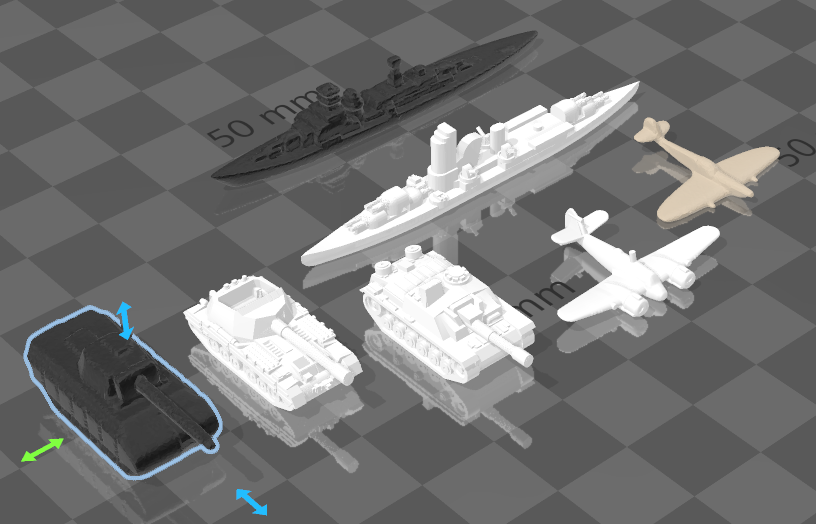
      UPDATE 2: More units!

      (More) Units:

      • StuG III (German Tank Destroyer)
      • Archer (British Tank Destroyer)
      • IJN Myoko (Japanese Heavy Cruiser)
      • Beaufighter (British Heavy Fighter)

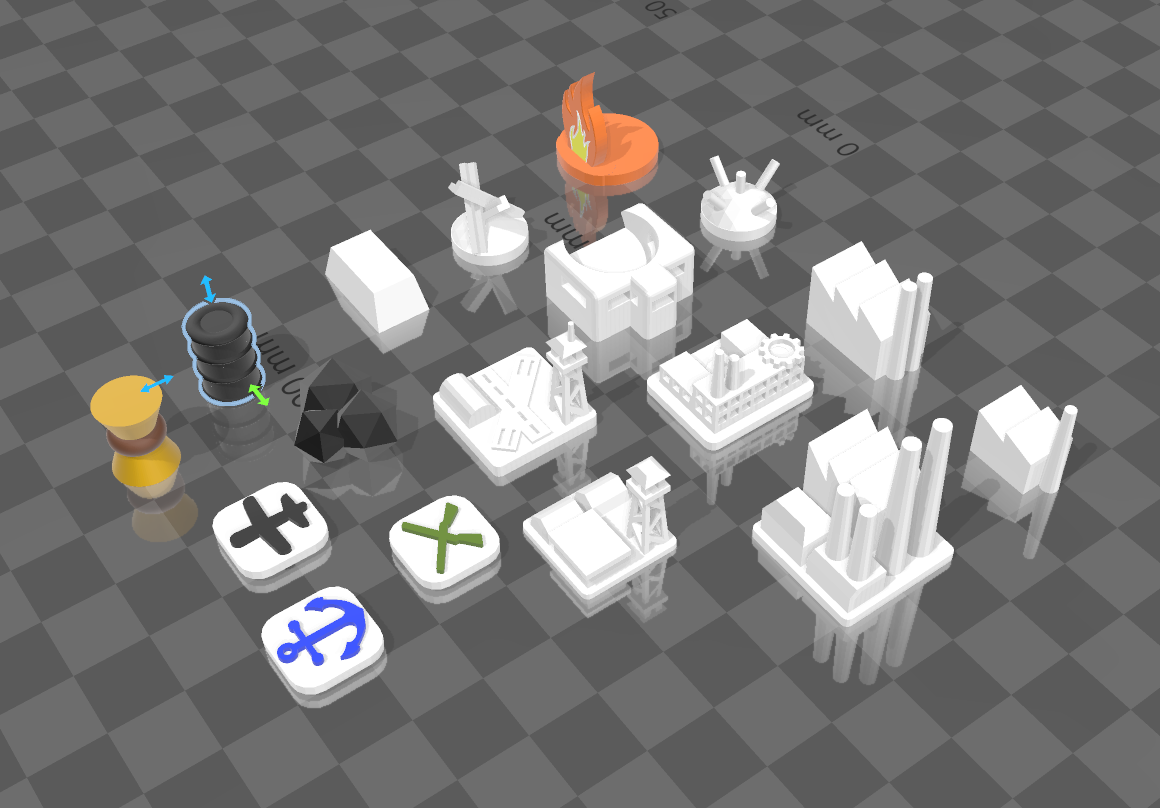
      Misc:

      • Damage/flame token
      • Grain token
      • Oil Drum
      • Bar of metal
      • Coal
      • 3/4" x 3mm disc
      • Czech Hedgehog
      • Mine token

      Buildings:

      • Research Center
      • Installation (uses/holds an OOB generic AAA unit as the “gun” on top)
      • Major Industrial Complex
      • Medium Industrial Complex
      • Minor Industrial Complex
      • Airfield
      • Shipyard
      • Airbase token
      • Naval Base token
      • Recruitment Center token

      Extra_Units.png

      Misc_stuff.png

      updateaaaparts.png

      All of these can be found here on Thingiverse!

      Beyond just doing this for fun, my plan is to gradually add these units one/two at a time with the group I play with. As we add them and get comfortable, I’ll start locking them behind research and use an early start date and map (like oztea’s awesome 1939 G40 scenario). For the curious, this system uses most of the nations’ tank sculpts as “medium” tanks and the fighter sculpts as “light” fighters- the ones I modeled and printed take on the “heavy” role (USA is the exception with OOB sculpts for both: P-38 HFTRs and hellcats from pacific taking the LFTR role).

      Anyway, enjoy. If anyone is curious about rules for all of these extra units and the corresponding point-based tech tree, let me know and I’ll share what I have.

      posted in Customizations g40 3d printing expansion units 3d models
      vodotV
      vodot
    • RE: Renegade Con Virtual: Axis and Allies

      @Black_Elk what about supply? Surely trucks or at the very least something more abstracted are making a comeback here.

      I am definitely hoping this will be a whole Mediterranean theater game, almost full stop; beginning with the early Italian and British incursions, and ending with the potential capture of Cairo or the invasion and/or collapse of Italy.

      posted in News
      vodotV
      vodot
    • New 3D-printed parts: Infantry Stands/Bases w/ designations for Marines, Airborne, Elite, and more!

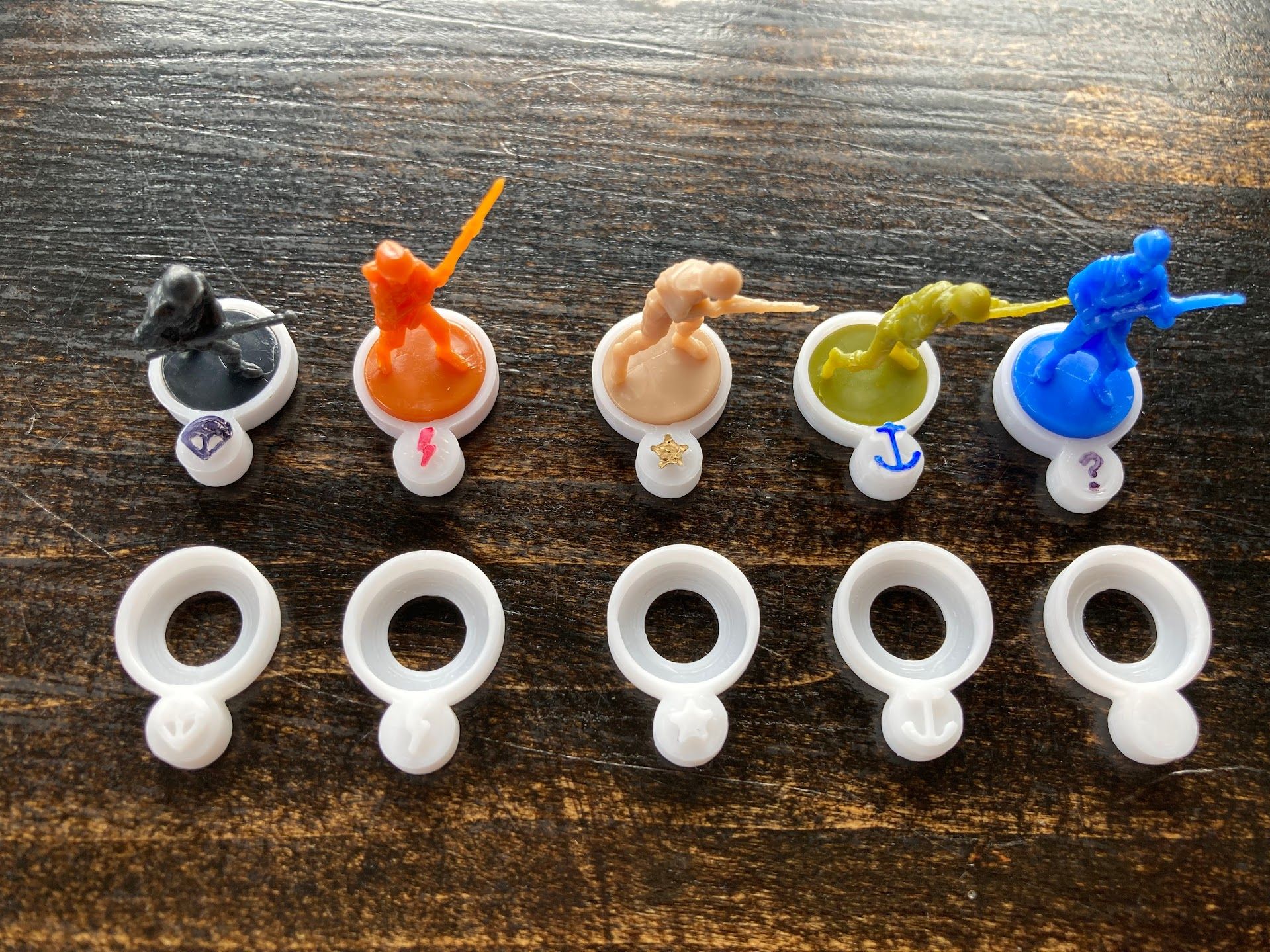
      Hi all, I recently released a new model on my Etsy shop: 3D-printed bases for infantry with 5 different raised symbols/designations:

      • Marines (anchor)
      • Airborne (parachute)
      • Elite (lightning bolt)
      • Veteran/Guard (star)
      • “DIY” (blank/no symbol - design your own!)

      inf_stands.jpg

      IMG_6949.jpg

      These are printed in white but the raised symbol means they are a snap to paint (or even sharpie, as pictured). Note that some of the pictures show a full circle base, but I’ve since moved to the open-backed crescent style for better fit and piece removal.

      I wanted to offer a perfect snug-fit for these so that, once paired with an infantry, they move easily around the board together - but it’s a well-known fact that not all infantry bases are equal, so I have three size variations to accomodate the most-frequently encountered infantry bases:

      • “Small”, which fits the smaller Italy and China sculpts (12.0mm dia bases) from AA50 and G40, in addition to the old 11.7-12.2mm bases from AAP and AAE.
      • The default size, which fits most modern sculpts (12.6mm dia bases) for the major powers + France from about AAR-onwards
      • “ANZAC”, which fits the ridiculously oversized ANZAC infantry (13.5mm dia bases) from AAP40.

      Anyways, check them out and come be one of my first customers! I’m offering 10% off to A&A forum members through the end of 2021 using coupon code AADOTORG21. https://www.etsy.com/shop/NathanDetr0itDesigns?coupon=AADOTORG21

      Let me know below what you think, and if there are more designs & designations you would like to see!

      posted in Customizations
      vodotV
      vodot
    • November 3D-Printing Updates: Now printing in Allied Power Colors; LCVPs, Stuart Light Tanks, Jimmy Trucks, Type IX U-boats, and more!+

      November Update: Pictured below are some of the new designs and things in the shop, including four new colors and four new units:

      Colors:

      • China Lime Green
      • UK Light Tan/Beige
      • Dutch Bright Orange
      • French Blue

      Units:

      • LCVP “Higgins” boats
      • M3 Stuart Light Tanks
      • GMC “Jimmy” CCKW 2 1/2 Ton trucks
      • Kriegsmarine Type IX U-boats

      IMG_7373.JPG

      These and most of my other prints are $0.60 per model or less! Come check them out, and let me know if you have more ideas below.

      As always, A&A forum members can use coupon code AADOTORG21 for 10% off your order for the rest of 2021: www.etsy.com/shop/NathanDetr0itDesigns?coupon=AADOTORG21

      posted in Customizations
      vodotV
      vodot
    • Jan/Feb '22 Etsy Update: Flight Stands, Balao-class Subs, Pz.Kpfw. III Ausf. J Light Tanks, and more!

      Hi all, thanks for all of the incredible ongoing support- I’m honored to be a part of the community of makers supporting this awesome hobby.

      Here’s a major Jan/Feb '22 update for my etsy shop:

      New Models!

      • Flight Stands in 3 sizes
      • USN Balao-class Submarine - Allied super subs!
      • Panzer III (Pz.Kpfw. Ausf J) - Axis light tanks!
      • Kriegsmarine Type 39 Torpedo Boats - Axis escort ships!
      • Damage/Flame Tokens
      • Naval Mines
      • Czech Hedgehog anti-vehicle obstacles
      • Resource Tokens - Oil Barrels, Metal Ingots, and Grain

      New Colors!

      • In good news for all of you non-painters, I am thrilled to announce that after an obnoxious amount of trial and error I have arrived at the full A&A color-matched palette of materials!

      Come see all these and more at my esty shop: https://www.etsy.com/shop/NathanDetr0itDesigns, and don’t forget to use coupon code AADOTORG22 for 10% off!

      flight stands.jpg
      il_1140xN.3664225780_cl99.jpg
      il_1140xN.3641365664_dl4q.jpg
      il_794xN.3682146889_bx4r.jpg
      il_794xN.3515203612_r9s9.jpg
      il_794xN.3441533852_3t64.jpg
      il_794xN.3489190781_spcp.jpg
      il_794xN.3489237739_dfe1.jpg
      il_794xN.3563292919_jhkd.jpg

      posted in Customizations
      vodotV
      vodot
    • 1
    • 2
    • 3
    • 4
    • 5
    • 10
    • 11
    • 1 / 11