
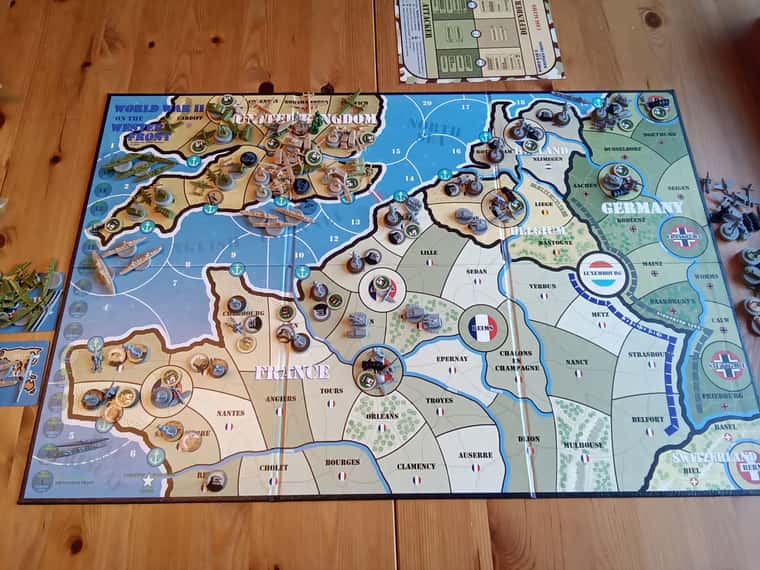
Here is the set up for The Battle of France scenario. Game starts on May 10, 1940.
This game is available through Combat Miniatures:
https://combatminiatures.org/collections/historical-board-games/products/world-war-ii-on-the-western-front
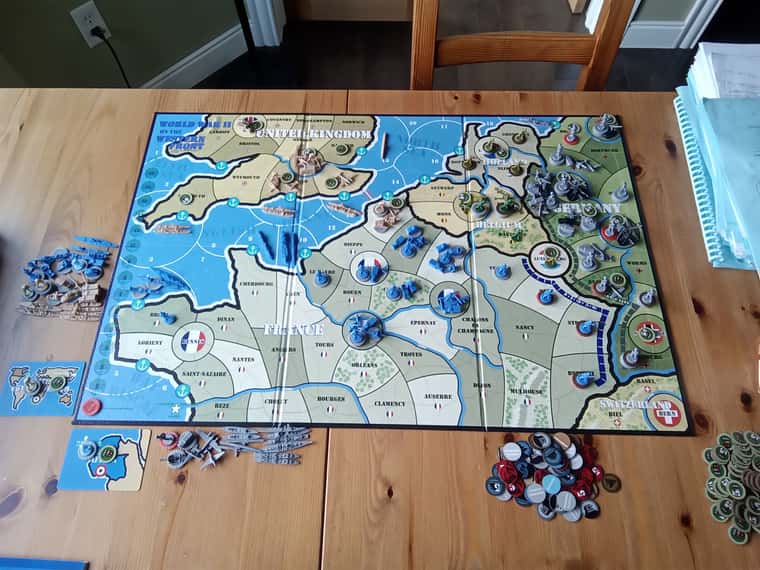
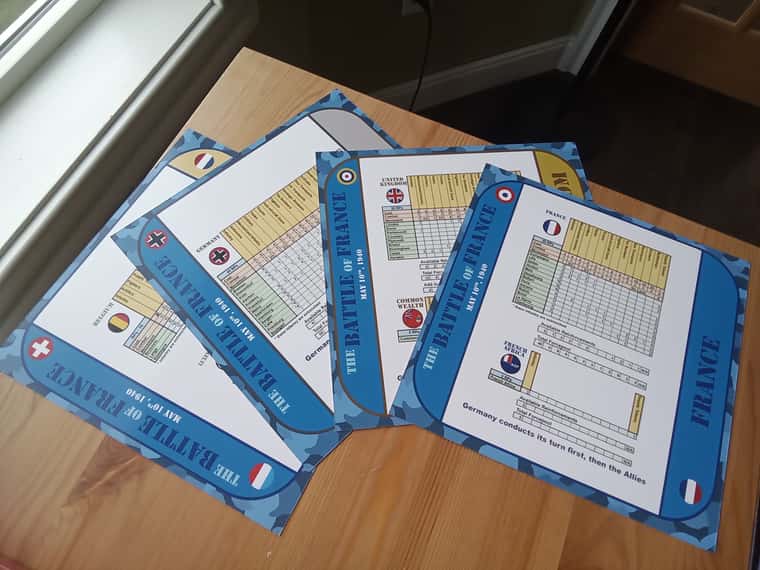
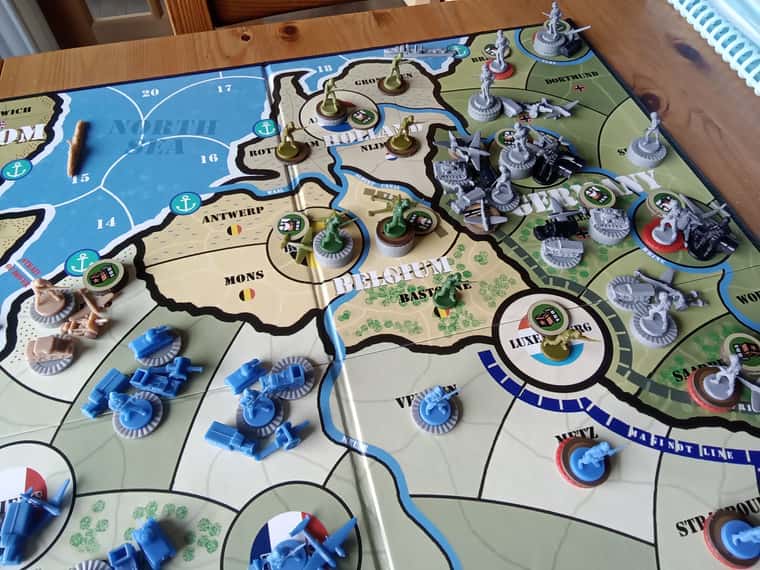
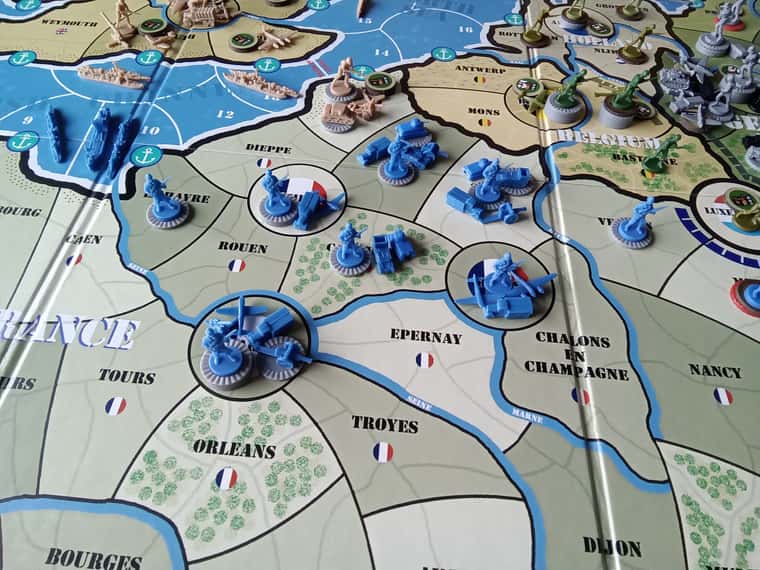

Here is the set up for The Battle of France scenario. Game starts on May 10, 1940.
This game is available through Combat Miniatures:
https://combatminiatures.org/collections/historical-board-games/products/world-war-ii-on-the-western-front
The balance between doing operations in the Pacific and advancing in China is pretty hard. Lost a couple more transports in my convoy to the subs from Darwin, and the nationalists are holding onto Hanoi, which is neutralizing my units down there.
![20200413_140305[1].jpg](/forums/assets/uploads/files/1586808415075-20200413_140305-1-resized.jpg)
![20200413_140305[1].jpg](/forums/assets/uploads/files/1586808454962-20200413_140305-1-resized.jpg)


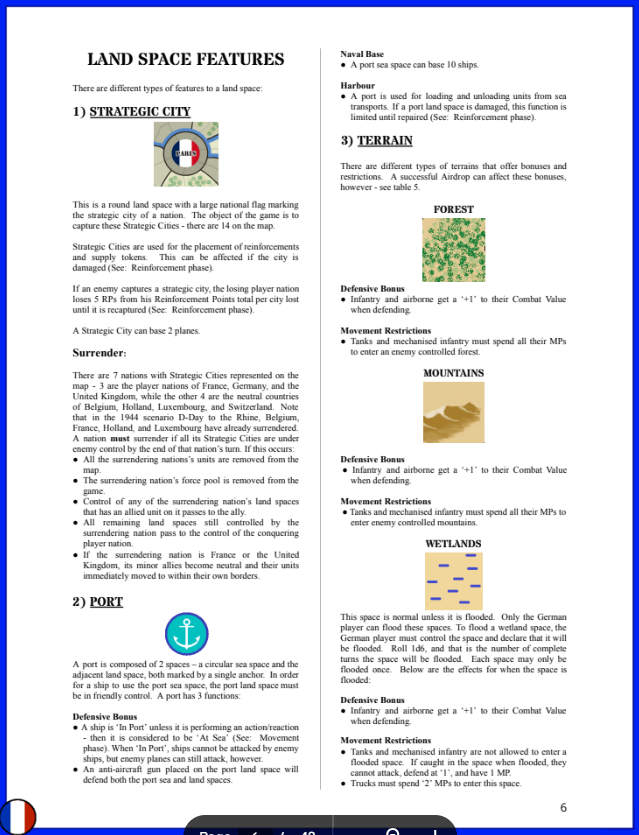
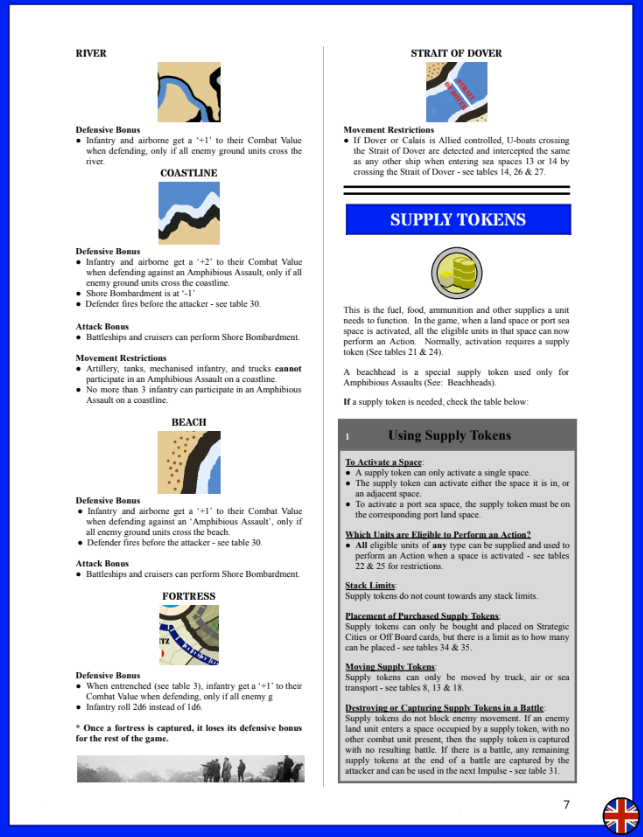
Here is a look at the rules for the terrain in the game. It usually benefits the defender, and in some cases inhibits the attacker. The effects of terrain are cumulative. So if you are defending behind a river, and are in a fortress in a forest, you get the defensive bonuses for all those features unless otherwise stated.
On page 7 you can see the role that supply has in the game. The supply management in the game is similar to AA Battle of the Bulge.
Transport in a convoy are stuck with convoy duty until you take them out of the convoy, which can be done in you non combat move. In a convoy they can carry money, supply or both, but not units. Outside of a convoy, they carry units only.
You could have transports drop units off in an amphibious attack in combat and then in non combat have them go into a convoy, bit not the other way around.
Could France have stopped the Germans? Was the Maginot a waste?
This worries me, though. Look what’s coming down the pipe …![20200416_100527[1].jpg](/forums/assets/uploads/files/1587053676753-20200416_100527-1-resized.jpg)
@FranceNeedsMorePower even beyond the Saar offensive, do you think France could have stopped the Germans?
For my part, the French army was the equal of the Germans and more in terms of numbers and equipment. It was Gamelin stubborness to stick to the Dyle plan that doomed them.
The game is World War II in Asia and the Pacific (there is also the Europe side as well from them).
In the optional rules, there are rules for advanced naval combat that separates submarine warfare, surface engagements, and carrier combat. Below is an overview of the surface combat - carrier combat is different from surface combat and utilizes a different battle board.
Cheers
https://combatminiatures.org/en-ca/collections/historical-board-games/products/wwii-in-europe
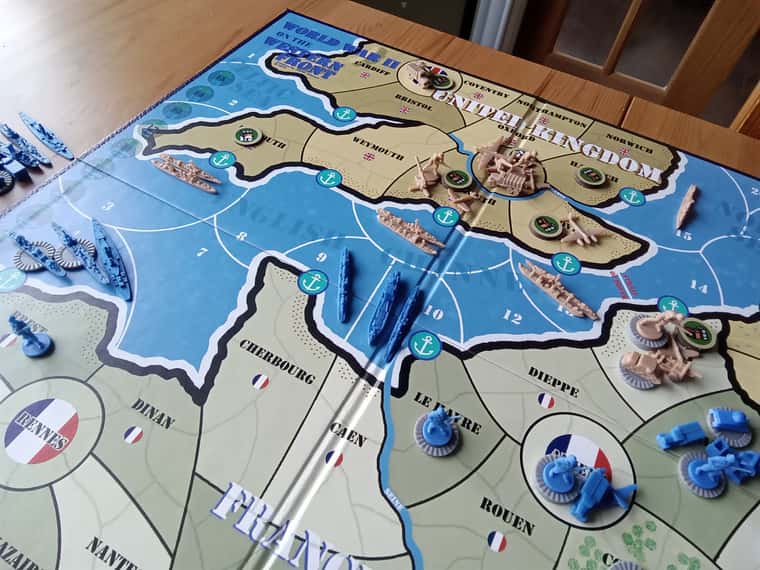
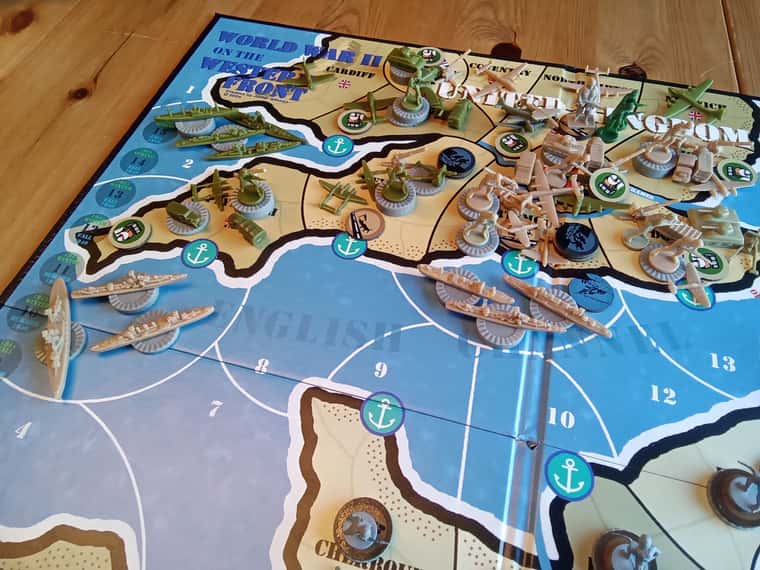
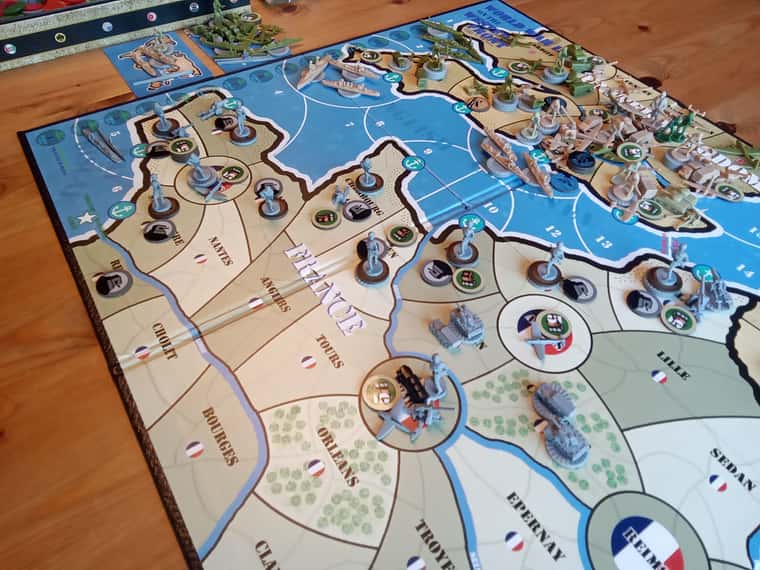
Here is the 1944 scenario. Allies go first in the scenario followed by Germany. Scenario start on June 6th, 1944. US must land in Cherbourg, and UK/Canadians must land in Caen - unless playing with optional rules.
This game is available through Combat Miniatures:
https://combatminiatures.org/collections/historical-board-games/products/world-war-ii-on-the-western-front

11. Casualties are now removed. Battle can continue, unless one side decides to retreat or is destroyed.
In this game, infantry get defensive bonuses from terrain such as forest, mountains, coastlines, or rivers. But Infantry can also entrech themselves to get a defensive bonus. While entrenched, they cannot move, even to retreat.
They also get a bonus for defending in a fortress, but the infantry must be entrenched to get the fortress bonus. While entrenched in a fortress, infantry roll 2d6, instead of 1d6.
When defending from an amphibious landing, the defender fires first and the attacker must remove those units before he gets to fire. This is for the first round only. It makes amphibious landings very dangerous.
The stack limit in the game is 6 ground units to a space. But when amphibiously attacking a land space, only 3 units are allowed to amphibiously attack - unless the land space is a beach, in which case all 6 units can attack.
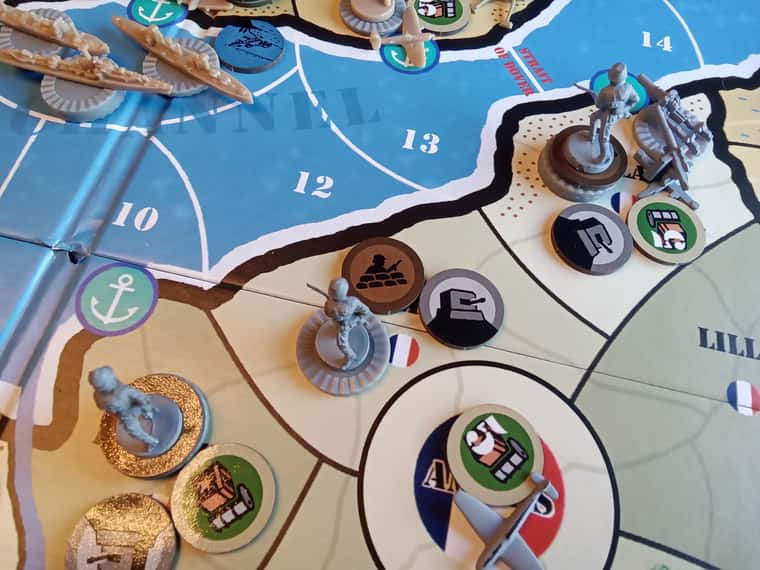
The grey token with the turret represents a fortification. The brown token represents that the infantry are entrenched.
@FranceNeedsMorePower Yes. They show up on or after turn 8 as the French First Army coming up from southern France chasing the Germans after Dragoon.
@FranceNeedsMorePower For me, it is more about the decisions they made May 10th and on. They didn’t have to advance into Belgium, and they could have taken the reports from the Ardennes seriously. Had that have happened, would the Germans still have broken through?
@FranceNeedsMorePower just jumping ahead, but starting on turn 8, Allies start rolling to see if the Operation Dragoon armies pop up on the south eastern part of the board like so:
Meant to represent the US 7th army and the French 1st army chasing the German army group G.
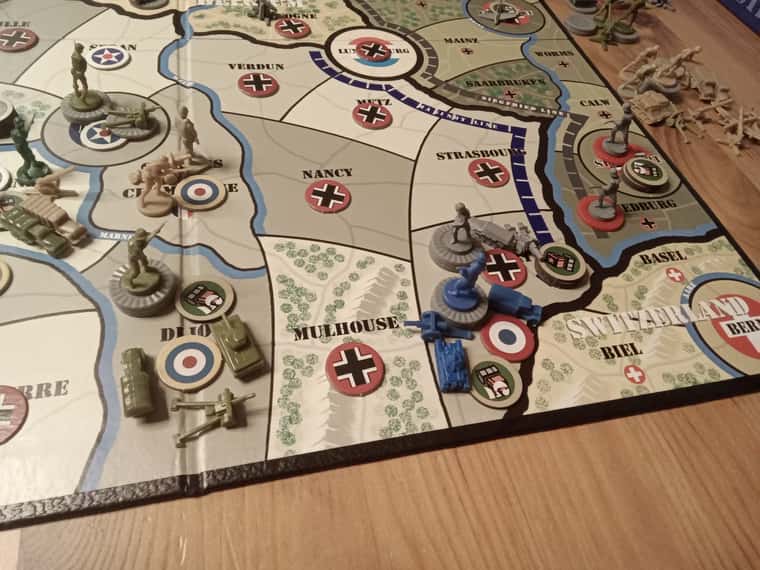
Terrain absolutely does play a factor in movement. It can slow down or funnel the enemy.
Weather is optional, and yes, it can wreck the Mulberry Harbour.
Supply is brought up by truck just like in North Africa. Bulge is more what I modeled this after, but North Africa is pretty much the same in terms of supply mechanics.
How a game turn is conducted is different, though. You choose a unit (or group of units) to move to a single space, whether it is to attck, or must to move. Then you do it againwith new units and keep repeating. This allows for you to hit a space, and if not successful, you can hit it again. Or if you successfully clear a space, then the next batch of units could then move through the hole you punched. Supply can be brought up and used in the same turn. It opens up alot of possibilities compared with the standard way. That being said, there will be a more ‘standard’ ruleset in the future for those that prefer to keep things simple.
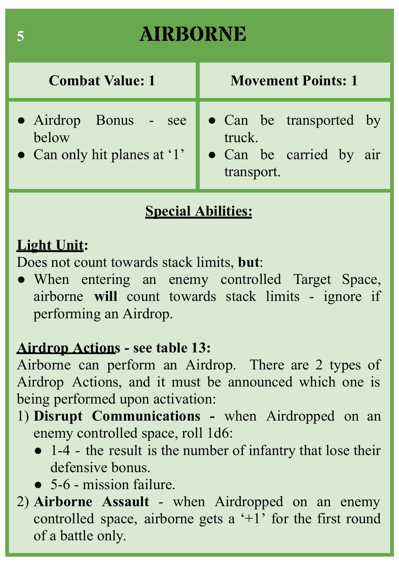
The unique rules for the airborne unit:
@FranceNeedsMorePower Exactly. Great move if it was WW1. Gamelin was far too inflexible that he was incapable of seeing any other way to respond to German moves. He was the final (and biggest) nail in the French army’s coffin.