Axis & Allies .org Forums
    • Home
    • Categories
    • Recent
    • Popular
    • Users
    • Register
    • Login
    1. Home
    2. CWO Marc
    3. Best
    C
    • Profile
    • Following 0
    • Followers 3
    • Topics 129
    • Posts 5,700
    • Best 194
    • Controversial 0
    • Groups 13

    Best posts made by CWO Marc

    • Lancaster Bomber Bunny

      Here’s a cute news story involving: a) one of the only two Avro Lancasters still flying in the world, and b) a stuffed toy bunny. I love the navigator’s map annotated “X 1319 last known position.”

      “Stuffed bunny found on Burlington, Ontario, rooftop after sky-high fall from WWII bomber.”
      https://www.cbc.ca/news/canada/hamilton/bunny-burlington-1.5372682

      posted in General Discussion
      C
      CWO Marc
    • RE: A&A Unit Identification Charts

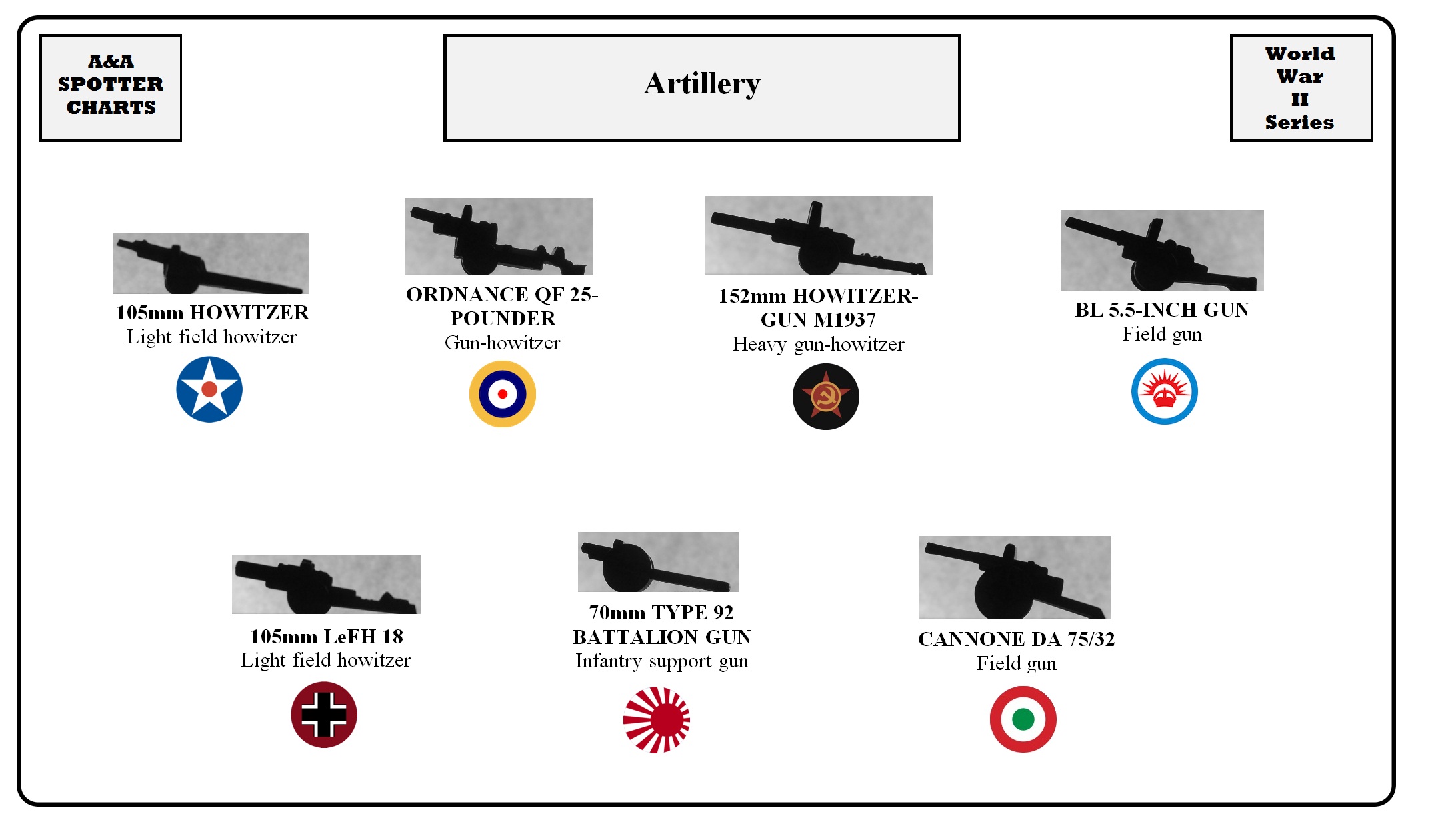
      The last two charts for today are the artillery and anti-aircraft artillery charts.

      WW2-Land-Artillery.jpg
      WW2-Land-AntiAircraft Artillery.jpg

      posted in Customizations
      C
      CWO Marc
    • RE: Simplified Bombers, Flak Guns, and Submarines

      @axis_roll said in Simplified Bombers, Flak Guns, and Submarines:

      Are ‘flak guns’ the same as AAA guns?

      Yes. “Flak” is the Anglicized version of the German acronym “FlaK”, which stands for “FliegerabwehrKanone”, which means “aircraft defence cannon”, often also referred to in English as anti-aircraft artillery (AAA).

      posted in House Rules
      C
      CWO Marc
    • Pre-Radar Aircraft Detection

      Here’s a fascinating bit of pre-WWII history: the network of concrete “sound mirrors” projected to be set up in Britian to detect the noise of incoming aircraft. The concept was rendered obsolete by the development of radar, but apparently these experiments did provide the British with useful experience which ultimately helped them to establish the Chain Home network of radar stations which proved crucial in winning the Battle of Britian.

      https://www.bbc.co.uk/news/in-pictures-46348917

      posted in World War II History
      C
      CWO Marc
    • RE: Could of should of ?

      Hmm. Interesting article, but when I read the line that says “One other grave mistake was not continuing the attack on British airfields after the initial blow on Aug. 13, 1940” my reaction was to wonder why they needed “a computer model using a technique known as weighted bootstrapping” to figure out something that’s been known for decades. To give one example of this point being made long ago, the Battle of Britain episode of the 1970s BBC TV series The World At War says that Fighter Command was almost brought to the breaking point by the phase of the campaign which focussed on the airfields, and that British pilots characterized as “a miracle” the day when the Luftwaffe’s incoming raids went past the airfields and switched to bombing London instead.

      posted in General Discussion
      C
      CWO Marc
    • RE: A&A Unit Identification Charts

      Here’s the page order that I used in my binder, along with a couple of extra pages which I created for the binder after seeing that they’d be useful.  The two-page pairings (except for the front and back pages, which are on their own) are:

      1: Cover sheet (use whatever title and/or graphics you wish)

      2a: Infantry (WWI)
      2b: Infantry (WWII)

      3a: Equipment type list (see attachment below)
      3b: Mechanized Infantry Vehicles / General Transport Trucks

      4a: Tanks: Allies
      4b: Tanks: Axis

      5a: Artillery
      5b: Anti-Aircraft Artillery

      6a: Fighters: Allies
      6b: Fighters: Axis

      7a: Tactical Bombers: Allies
      7b: Tactical Bombers: Axis

      8a: Strategic Bombers: Allies
      8b: Strategic Bombers: Axis

      9a: Aircraft Carriers: Allies
      9b: Aircraft Carriers: Axis

      10a: Battleships and Battlecruisers: Allies
      10b: Battleships and Battlecruisers: Axis

      11a: Cruisers
      11b: Destroyers

      12a: Submarines
      12b: Transport Ships

      13a: Generic-Design Units: World War I
      13b: Generic-Design Units: World War II

      14: Player Nations and Unit Colours (see attachment below)

      Equipment List.jpg
      Player Nations and Unit Colours WWI & WWII.jpg

      posted in Customizations
      C
      CWO Marc
    • RE: G40 Historial v1.1

      @SS-GEN said in G40 Historial Beta:

      Thanks Marc. Ha ha now it’s pro allies.
      I read where yes to what your saying but then I maybe wrong but I thought I read that there were 150,000 guerilla resistance people that just kept causing havoc for Japan ?

      I’m not familiar enough about the subject to know if Siam had an appreciable guerilla movement or not. There are all sorts of things which were peculiar about Siam; I believe that, pre-war, it was the only genuinely independent nation in Southeast Asia, and I think that Japan technically “asked” Siam (more or less at gunpoint) to give it right of passage through its territory so that Japan could send forces from Vichy French Indo-China (where Japan had a presence) to Burma. Germany similarly wanted to traverse Spanish territory to attack Gibraltar from Vichy France, but opted to negotiate with Franco – ultimately unsuccessfully – rather than marching in first and asking for permission second (which is what I think happened in Siam). A further complication was that Siam had its own regional ambitions, as shown by the Franco-Thai War of 1940-1941.

      posted in House Rules
      C
      CWO Marc
    • RE: Help needed to create A&A game night playlist

      Not all of these compositions have actual lyrics, but here are some WWII (or WWII-appropriate) musical pieces that you might enjoy:

      • Marche Lorraine (composed by Louis Ganne)

      • Prussia’s Glory (composed by Johann Gottfried Piefke)

      • Katyusha (composed by Matvey Blanter)

      • The Sacred War (music by Aleksandr Aleksandrov; lyrics are by Vasily Lebedev-Kumach)

      posted in World War II History
      C
      CWO Marc
    • RE: Have you ever done miniature wargaming?

      You might want to try finding a second-hand copy of Donald Featherstone’s 1973 book Solo Wargaming. I read it ages ago, so I don’t recall much about it, but I remember that it mentions one particular wargamer who, as a multi-year project, solo-wargamed the entire Second World War – something that’s a little too ambitious for most people, but the chapter on that fellow (which includes his rules, if I remember correctly) could provide some useful ideas. The book might even be available online somewhere; there’s a link to it in the Wikipedia article on Featherstone, but it doesn’t seem to work.

      Just a point of terminology, by the way, that I should have mentioned in my original answer: “miniatures” in the wargaming sense has two meanings. In the traditional sense, it refers to the scale models (soldiers and tanks and other land equipment, or ships for naval wargaming) which are used to fight “miniatures wargames”, which is also known as tabletop wargaming. They come in all sorts of sizes, and some of them are actually rather large; hobbyists often paint them in great detail, and sometimes build them from scratch. The A&A Miniatures line of products, which are pre-painted, are an example of these relatively large miniatures. The other meaning refers to the tiny plastic units used in A&A board games – sometimes called micro-miniatures, but more often called sculpts. To give you an idea of the scale, most A&A tank sculpts can fit on a dime (not counting the gun barrel). They’re essentially glorified gaming tokens. That’s not to take anything away from them: they’re great fun to use and collect (I own more of them than I can even estimate), and they add enormously to the WWII flavour of the game. But they’re closer to being game tokens that conventional “miniatures wargaming” units, which I think of as being conceptually closer to being model railroad trains or standalone plastic model kits.

      posted in General Discussion
      C
      CWO Marc
    • RE: "Tall Paul"s German units detailed and painted by the "WARMACHINE Team"

      @Tall:

      Guys,
      ––And here are a couple of close-up pics of the German JU-87 Dive Bomber. Notice the “D” that denotes a Dive Bomber. Enjoy!
      Tall Paul

      They look great!  Do the different nose colours have any particular significance in terms of using the pieces?

      posted in Customizations
      C
      CWO Marc
    • RE: Rail Movement

      I’m not sure I understand your post correctly, and I don’t grasp what you mean by “rebase” (I’ve never heard the term), but here are a couple of thoughts:

      • When nations want to send airplanes or ships – by which I mean fully assembled and operational airplanes and ships – from one place to another, they don’t usually do so by rail. The airplanes travel from Point A to Point by air (by flying there on their own), and the ships travel from Point X to Point Y by sea (by steaming there on their own).

      • That being said, unassembled airplane and ship components do sometimes travel by other means (such as by rail and by ship), but that’s not the same thing as sending a combat-ready plane or ship from one hot spot to another.

      • Land equipment certainly does travel by rail (and by ship and by plane in various circumstances), and this includes transporting land vehicles. Tanks can’t travel far on their own without running into maintenance problems, and can’t travel very fast (especially cross-country), so rail is the method of choice for moving tanks overland quickly and for great distances.

      • I don’t know specifically where you could find actual WWII numbers, but basically what you’re talking about is railway shipping capacity, which a function of two things: how much track a country has and how much rolling stock (locomotives and freight cars) a country has. Railway enthiusiasts (I’m not one of them) might know off the top of their heads where such figures can be found.

      posted in House Rules
      C
      CWO Marc
    • RE: On this day during W.W. 2

      @captain-walker said in On this day during W.W. 2:

      On this day in 1945, Army Rangers, Alamo Scouts and Filipino guerrillas rescue 552 Allied prisoners from the Japanese POW camp at Cabanatuan.

      An event re-enacted (with a fair bit of artistic licence, though some of the actual POWs were featured in the sequence) at the beginning of the 1945 John Wayne film Back to Bataan.

      posted in World War II History
      C
      CWO Marc
    • RE: I Need Help! - Special Round Robin Tournament Algorithm

      @charles-de-gaulle
      I don’t have an answer to your actual question, and I have no idea whether what you have in mind is mathematically possible, but here’s the angle which really puzzles me. You mentioned that this issue arose out of hosting small tournaments, but you also mentioned that the concept involve 21 people playing 21 games, which doesn’t sound like a small event to me. From a practical point of view, there are two questions which come to mind. First, what is the rationale for having all the stipulations you mention? If I’m understanding your post correctly, you’re saying that what makes the problem so difficult is satisfying all the stipulations – but this begs the question of why you have so many of them in the first place. Second, your post presumably works from the assumption that you actually have 21 players on hand who’ve indicated that they’re willing to play under this round-robin system…but is that actually the case? In other words, are you trying to work out the mechanics of something to which they’ve already agreed, or are you developing a concept that you want to pitch to them as a cool idea once you’ve worked out the details? If it’s the latter, you may end up investing a great deal of work in a concept that might not actually fly with your intended audience.

      posted in General Discussion
      C
      CWO Marc
    • RE: "Tall Paul"s German units detailed and painted by the "WARMACHINE Team"

      @Tall:

      My Air Transports are the ONLY aircraft that I allow to use WHITE ‘squadron colors’. IMHO the White color boldly emblazoned on the noses and wingtips set these aircraft apart and should notify/warn ALL players that these are aircraft with ‘SPECIAL’ capabilities (Paratroop Drops). I also believe that the White coloring sub-consiously makes a connection to their white parachutes.

      Thanks for the answer.  The white colour-coding is definitely nice from an aesthetic point of view, but I’m wondering if it might have an unplanned down side from a gaming perspective.  To a ruthless opponent, the white colour-coding might well identify these aircraft as high-priority targets because if he can shoot them down on their outward trip he’ll not only eliminate the planes, he’ll also eliminate the airborne troops inside them before they have a chance to reach the ground.  Think of it as a well-advertised two-for-one special bonus deal.  :-D

      posted in Customizations
      C
      CWO Marc
    • RE: (G40) Division Azul

      Another interesting example of an odd “foreign” unit within the German armed forces was the SS Division Charlemagne, whose name and size (it wasn’t always a division) varied over the years. It originated in two older units, the Legion of French Volunteers Against Bolshevism and in the SS Volunteer Sturmbrigade France, which were merged in 1944. The unit ended up being among the last defenders of Hitler’s bunker during the Battle of Berlin in 1945, a twist of fate which must have infuriated Charles de Gaulle when (assuming he did so) he eventually found out about it. Some of its men, who were taken prisonner by the Soviets, ended up on the wrong end of a US Army firing squad when the Russians handed them over to the Americans. Their leader, Henri Joseph Fenet, fared somewhat better: he merely received a sentence for treason of twenty years in prison with hard labour, of which he served half before being released.

      posted in House Rules
      C
      CWO Marc
    • RE: On this day during W.W. 2

      @Phelan-Kell said in On this day during W.W. 2:

      26 February 1942

      Indian ocean: American seaplane tender Langley, on the way to Java, is sunk by Japanese air action.

      I once saw a two-part, 1960s-ish US Navy documentary about the evolution of aircraft carriers and it mentions the USS Langley, a.k.a. CV-1, the USN’s first carrier (and, as a footnote, also the USN’s first ship with turbo-electric propulsion). Its capacities were limited, but it was only meant to serve as an experimental platform for the development of carrier technology, operational techniques and doctrine, and much was learned from those early pioneering days. The documentary’s narrator has a memorable line in which he says that, decades later, it was a source of great pride for a dwindling number of grey-haired naval aviators to say to their younger buddies, “I flew from the Langley.”

      posted in World War II History
      C
      CWO Marc
    • RE: I Need Help! - Special Round Robin Tournament Algorithm

      Here are a few additional thoughts, based on your “I’ve tried many, many matchups, but they all have thus far failed” comment and on aardvarkpepper’s analysis, which among other things raises the question of whether the kind of matrix you’re contemplating actually achieves the fairness it’s supposed to deliver.

      To illustrate the argument I’m about to make, I’ll use the relatively simple case of the three-player matrix, which has already been solved, my version of it being:

      A B C
      1 2 3
      4 1 5
      6 7 1
      2 6 4
      7 5 2
      3 4 7
      5 3 6

      The first point to consider is this. You’ll note that every player does indeed play in each position (A, B and C) exactly once, and that every player plays against every other player exactly once, as required. At first glance, everything looks perfectly symmetrical, and therefore perfectly “fair”, because the assumption being made is that “symmetry equals fairness.” It turns out, however, that there are two problems here. Problem one has already been pointed out by Aardvarkpepper: the concept that “symmetry equals fairness” is questionable. Problem two is that the matrix is only symmetrical when you view it it terms of every player playing against every other INDIVIDUAL player. It stops being symmetrical when you view it it terms of every player playing against every possible COMBINATION of players. In the above example, for instance, 1 gets to play against three combinations of players; 2&3, 4&5, and 6&7, but never gets to play against all the other possible combinations of players (such as 2&6). If you work from the assumption that “symmetry equals fairness”, the logical conclusion would be that your players would all have to play a game against all the other possible combinations of players, not just against every individual player. This would not only increase the number of games to be played, it also require you to drop the requirement that each play play each position only once.

      The second point to consider is this. As noted, the above matrix does not include all the possible three-player combinations. Some of the possible combinations are “valid”, in the sense that they work within the matrix, while others are “invalid”, in the sense that they wreck the matrix. This may explain the “I’ve tried many, many matchups, but they all have thus far failed” problem you’ve been running into. Your five-player matrix experiments presumably all use the following match-ups as their starting points, since those match-ups are quick and easy to identify…

      1 2 3 4 5
      1 6 7 8 9
      1 10 11 12 13
      1 14 15 16 17
      1 18 19 20 21

      2 6 10 14 18
      2 7 11 15 19
      2 8 12 16 20
      2 9 13 17 21

      …but I’m wondering if those match-ups include “invalid” ones that make the rest of the matrix impossible to complete? I’m not saying that your contemplated 5-player matrix is impossible; I’m saying that working it out may require a good deal of mathematical knowledge (which I certainly don’t have). If you look at the Wikipedia articles on round-robin tournaments…

      https://en.wikipedia.org/wiki/Round-robin_tournament
      https://en.wikipedia.org/wiki/Tournament_(graph_theory)

      …you’ll note that the scheduling algorithms for even the relatively simple case of rotating two-player match-ups are quite complicated, or at least (to borrow a phrase from Calvin and Hobbes) look complicated “to the untutored eye of the ignorant layman.” This doesn’t appear to be a problem you’ll be able to solve by continuing to “diligently working on at least finding ways that DON’T work for the 5-player, 21-participant bracket.”

      Which brings me to a practical suggestion. The problem you’re working on is extremely difficult to solve if the only solution that’s acceptable to you is one that meets your requirements perfectly. If you settle for “almost perfectly,” however, it immediately becomes quite manageable. I assume from your remark “I’ve tried many, many matchups, but they all have thus far failed” that every time you try to set up a matrix, there are always one or two match-ups that don’t fit. How about simply living with them? As has ben discussed above, the premise that “symmetry equals fairness” has got a couple of conceptual problems with it, so it seems to me that having a couple of non-fitting outliers in your matrix is hardly going to be a fatal flaw. And you’ll note that the Wikipedia articles mention the concept “dummy competitors”, whose function seems to be make scheduling algorithms work. If the professionals need to use loopholes of this type, there’s no dishonour in your doing likewise.

      posted in General Discussion
      C
      CWO Marc
    • RE: Historical Board Gaming

      Yes, the expression “piece junkies” is a good description of a good many folks on the forum, myself included.  “Sculpt enthusiasts” would be a more clinical term.  I own a bit of stuff from HBG, but I think of myself mainly as a collector of OOB A&A sculpts.  My collection is organized into a couple of dozen compartmentalized plastic storage trays, and some of those trays are literally packed full.  To use another clinical term, my sculpt collection is “in excess of requirements” for actual playing purposes, to put it mildly.  I ultimately blame (or rather credit) the 1970s movie Midway for my mild obsession with A&A sculpts: it features two very cool (an in one case very large) table maps, one Japanese and one American, on which the opposing fleets are depicted with ship markers, with a few aircraft markers thrown in for good  easure.  When I first saw the film, I remember wishing I had a big map table and neat military and naval markers to play with.  Now I do.  :)

      posted in Customizations
      C
      CWO Marc
    • RE: [Global 1940] Third Faction Idea for Russia/Communist China

      @Xlome_00 said in [Global 1940] Third Faction Idea for Russia/Communist China:

      @CWO-Marc I like this idea of making Soviet Communism operate like a tech roll.

      I wonder if a Soviet–Axis agreement (like done against Poland) could be expanded against neutrals and pro-allied neutrals as well…thereby still keeping the Soviets neutral against the main powers, but becoming a more Axis-friendly power who then would not be able to turn on the Axis late game.

      Might be a facinating setup for a post-Axis game where the only remaining powers are the Soviets and the neutrals they have conquered, versus the remaning Allies…

      The scenario you mention at the end is intriguing, but it deviates so substantially from a standard A&A game that it virtually becomes a new game. A less radical and more historically plausible scenario would be one in which Soviet entry into the war is delayed slightly but not indefinitely. Keep in mind that many of WWII’s “non-aggression pacts” were actually (originally in concept, or eventually in practice, or both) delay-of-aggression pacts which were intended to give Country X a useful amount of breathing time during which it wouldn’t have to worry about Country Y, and potentially giving it time to deal with Country Z in the meantime, after which it could turn around and attack Country Y under more favourable circumstances. That’s not exactly a case of being “friendly”; it’s more a case of cynical opportunism. The Nazi-Soviet Pact and the Japanese-Soviet non-aggression treaty both served their immediate purposes, and they held for as long as it was in interest of both sides to maintain their side of the bargain, but both were ultimately violated when one of the parties decided that it was in their interest to break the deal. I’m reminded of a scene in the original pilot episode 1970s-era Battlestar Galactica series (or in its comic book adaptation) in which the traitor Baltar appears before the Cylon leader with whom he’s been collaborating and accuses him of violating a key provision of their bargain. The leader says, “I am altering the bargain.” Baltar says, “How can one side alter a bargain?” The leader replies, “When there is no other side,” and orders his men to execute Baltar on the spot. (Which they do in the pilot, though the producers altered the scene when the series went into episodic production because Baltar was too good a villain to do without.)

      posted in House Rules
      C
      CWO Marc
    • RE: On this day during W.W. 2

      @barnee said in On this day during W.W. 2:

      @captainwalker
      nice hadn’t heard of POWs guns jamming before

      There’s a kind of tragic irony to the fact that POW’s jammed in an action in which Britain’s last battlecruiser, HMS Hood, was destroyed by a spectacular explosion of its magazines. The cause of those jams can be traced back to the Battle of Jutland in 1916, in which several British battlecruisers were lost…including HMS Invincible, which also suffered a magazine explosion, and which was commanded by Admiral Horace Hood, a great-great-grandson of Admiral Samuel Hood (after which HMS Hood was named). Britain in 1916 had the world’s largest fleet of battleships and battlecruisers, but Jutland revealed a number of quality-control weaknesses on the British side. One of the problems was that ammunition and propellant hoists in the turret complexes lacked (or only had minimal; I can’t remember which) anti-flash shutters. On the plus side, this increased the rate at which the guns could fire; on the negative side, this made it possible for the blast effects of an enemy hit on a turret to propagate themselves down into the ammunition magazines. Jutland was a shock to the R.N., and it led to a number of changes. One change was that HMS Hood, then under construction, was redesigned and rebuilt, in part to give her more armour (which ultimately proved inadequate in her action against the Bismarck). Another change, however, is that the R.N. started taking anti-flash shutters more seriously. The subsequent irony is that The R.N. overcompensated: POW’s anti-flash shutters were so elaborate that they were finicky and prone to jamming. (It didn’t help that POW was a very new ship and had not fully worked up.)

      posted in World War II History
      C
      CWO Marc
    • 1
    • 2
    • 3
    • 4
    • 5
    • 6
    • 7
    • 8
    • 9
    • 10
    • 5 / 10