Axis & Allies .org Forums
    • Home
    • Categories
    • Recent
    • Popular
    • Users
    • Register
    • Login
    1. Home
    2. Charles de Gaulle
    3. Best
    • Profile
    • Following 0
    • Followers 7
    • Topics 34
    • Posts 496
    • Best 41
    • Controversial 0
    • Groups 0

    Best posts made by Charles de Gaulle

    • [G1940] Cooperative Nation Control

      Recently, I took part in an eighteen player game of Global 1940 with no drastic house rules aside from this: most nations were controlled by more than one player.  Each major nation was assigned a top leader, which we named according to the title of the real leader of the nation.  Under this leader were two generals, each one focusing on a certain front.  The generals selected their desired purchases for their section but had to get approval from the top leader.  Troops movements, attacks, and cooperation worked likewise.  This system not only resulted in more people playing, but it also eliminated mistakes greatly, encouraged teamwork, and bred a healthy rivalry between generals working for the same nation.  Here is how we played originally (we did have to reorganize command as the war eliminated forces or shifted focus).

      Germany:
      The top leader was called the Fuhrer, mostly because he liked roleplaying as a bad guy.  The two generals under him were split between the obvious: Eastern and Western Front.  These three players worked together beautifully.  The Eastern and Western troops were always ready to sacrifice for the good of the other half, and the top leader made sure his generals never made a single mistake.

      Soviet Union:
      The Soviets chose the title Premier for their top leader.  The two generals were split on very awkward lines: one player controlled the north (Leningrad area and the Far East) and the other controlled the southern half (Moscow to the Caucasus). The Premier was a bit too oppressive over his two generals and usually tended to make their decisions for them.  This was funny at first to the other nations, but resulted in a boring, bitter game for the two Russian general players.  The lack of unity between the two Russian players and the oppressive nature of their leader resulted in the Soviets’ collapse.

      Japan:
      The Japanese players chose not to have a title for their top leader and took the game very seriously.  Instead of dividing themselves between fronts, they decided to have one national leader, one naval leader, and one army leader (airforces were attached to one or the other.)  Their teamwork was excellent and their top leader kept them from being reckless, but in the end, Japan was basically a defensive force that was too huddled in its corner of the world.  I would say Japan was a success for the coop system but a failure strategically.

      United States:
      I played on the U.S. team as General Eisenhower controlling the Americans in the European theater (I Like roleplaying, so deal with it.)  My counterpart, of course, controlled the Pacific.  Much to his dismay, I always called him “the Nimitz with no trannies [transports].”  We also had a top leader over us representing the President.  Although our actions could not save the world from the Axis, I felt that the U.S. team did a great job of showing how coop play could work.  There was a great rivalry between me and my Pacific teammate as we always tried to convince the “Pres.” to let one of us get more IPCs to spend on our side.  Our top leader did a good job of being neutral and sharing wisdom while allowing us to go with what we thought was best.

      China and France were played by one person.  With eighteen people at the table one time or another and players arguing over who is going to get a single fighter for use at their front, China and France felt like a big role for a change.

      United Kingdom:
      The UK chose the title Prime Minister for their top leader. The two generals under him were constantly getting their zones of control reorganized, but they started with one controlling Malta to India, and the other getting Gibraltar to Iceland.  The UK had the opposite problem of Russia.  Their leader was too weak and only ended up compromising disputes.  Perhaps the main reason for this was that India gets its own economy and is virtually separate from the rest of the UK’s responsibilities.

      Italy and ANZAC were played by two different players.  Like the person playing China and France, the Italian and ANZAC players were satisfied with the small roles because everbody around the table also had small roles.

      Overall, I loved this system.  It encouraged teamwork greatly, added a nice feel of reality, eliminated many stupid mistakes, and made the whole A&A experience much more social.  Of course, having so many people did make it crowded at times, but at no one time were there eighteen people seated at the table.  In between turns, only one person stayed to represent their nation while the others left to plan, eat snacks, or take some shots on the pool table on the other side of the room.

      I had a fantastic experience playing like this, and I wonder if any of you have ever tried this before.  Sometimes even just having two people work together for a nation (without splitting up zones of control) can be very fun.  If you do ever try this regional generals system, I highly recommend that you have a top leader as well.  He is the one that makes a split army capable of working together to achieve victory.

      posted in House Rules
      Charles de GaulleC
      Charles de Gaulle
    • World War 2 Axis and Allies on the 1914 Board?

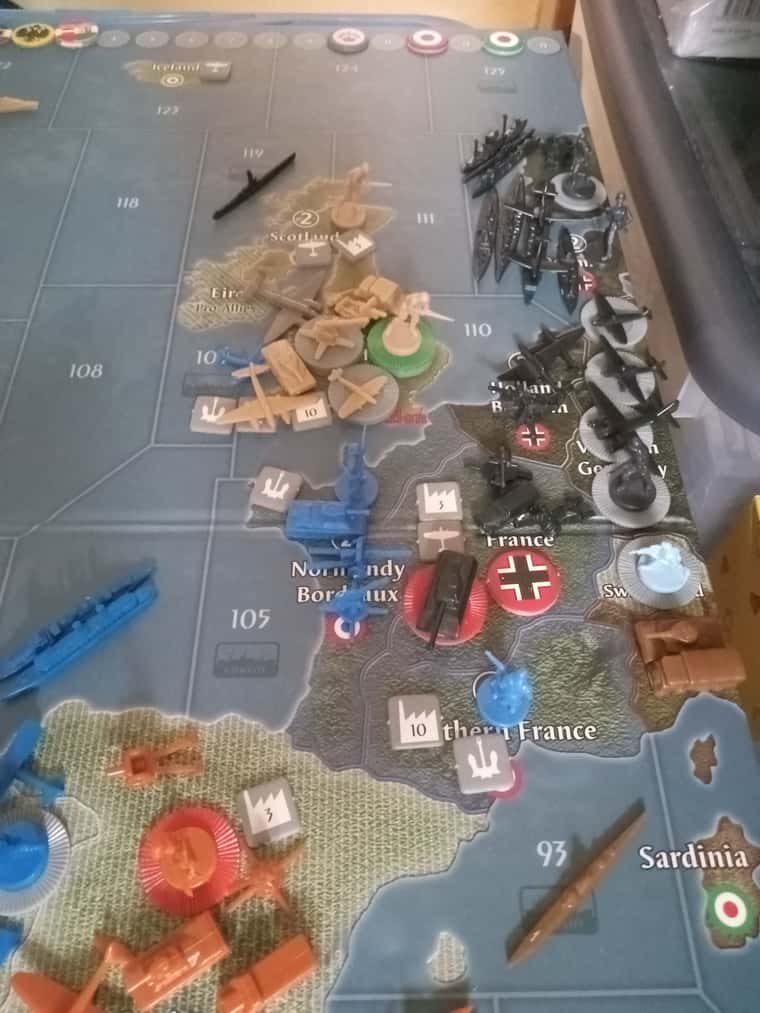
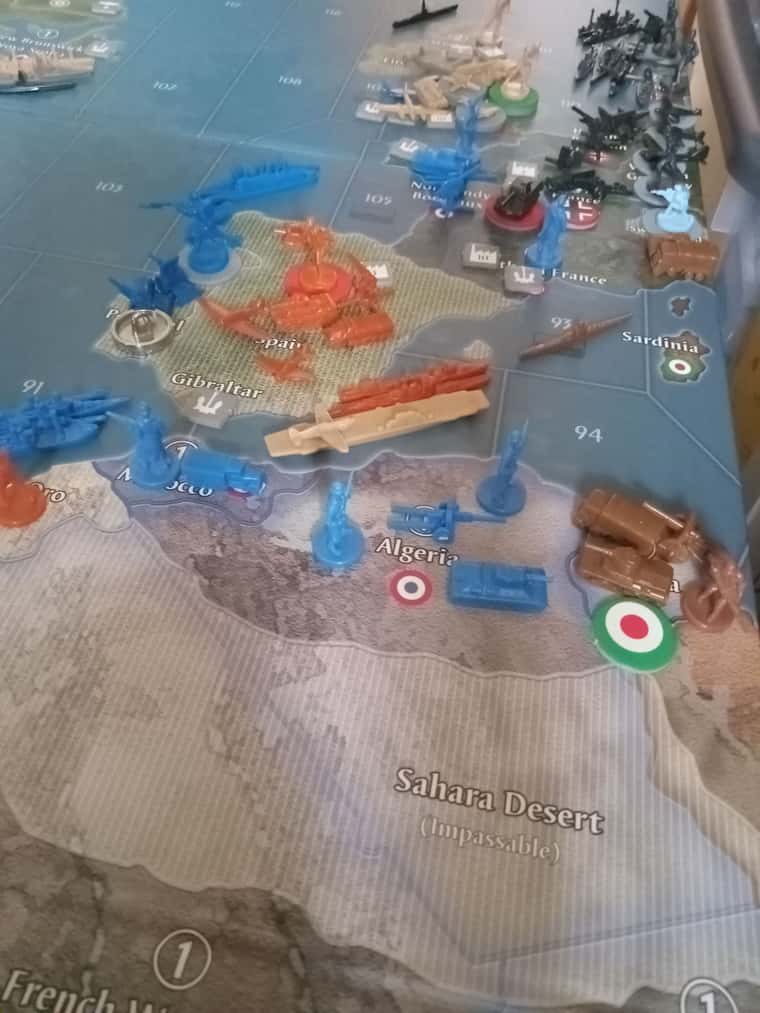
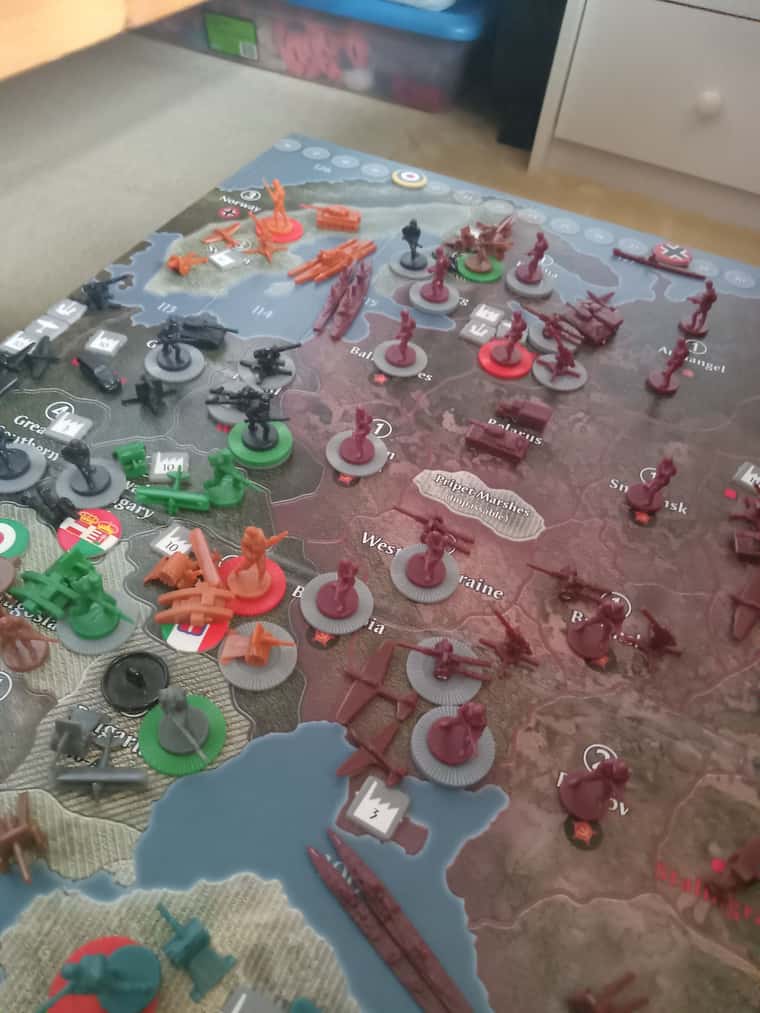
      When you’re stuck at home in quarantine and you have nothing that you need to do, sometimes the craziest ideas will cross your mind:IMG_20200508_173034_hdr.jpgIMG_20200508_173932_hdr.jpg IMG_20200508_173959_hdr.jpg IMG_20200508_174031_hdr.jpg IMG_20200508_174049_burst_01.jpg IMG_20200508_174015_hdr.jpg
      This is something I’ve actually been toying with for a while: a 1939 or 1937 game played on the 1914 board. It’s been a great deal of fun, but I usually find myself exploring alternate history rather than creating a game that is actually balanced with streamlined rules.

      Have you ever experimented with playing a World War 2 era game on 1914 with the rules and units from 1940? Making a good setup has been difficult, and some places like Russia just aren’t ideal, but I’ve seen a lot of potential with making an early war scenario like this with many playable little nations. OH, and a well-defended France as well. ;)

      Have I just gone crazy, or is this an interesting idea?

      posted in House Rules
      Charles de GaulleC
      Charles de Gaulle
    • RE: World War 2 Axis and Allies on the 1914 Board?

      IMG_20200508_195523_hdr.jpg
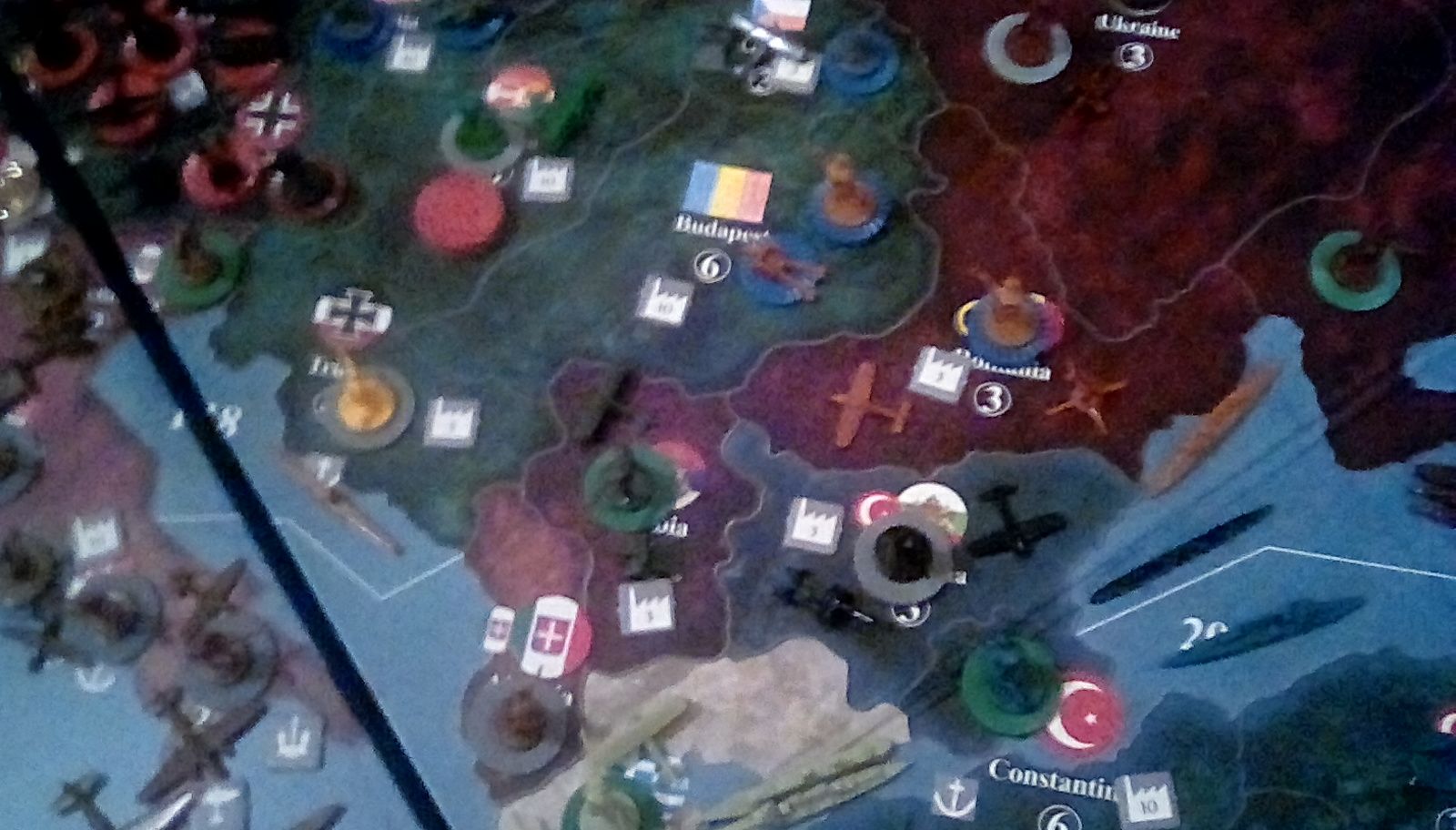
      Chaos in the Balkans:
      Hungary and Romania are at war, Germany has annexed Austria, Yugoslavia suffered an unfortunate die role and has been forced to disintegrate into a Pro-Fascist Croatian state and a smaller Serbia. Italy managed to seize Albania without loss, and Czechoslovakia is reinforcing its border with the Nazis.
      The UK has pledged to declare war on any power invading Greece.
      IMG_20200508_200336_hdr.jpg
      Swedish Disaster:
      The Swedes attempted to peacefully take over Norway to prevent any major nations from entering Scandinavia, but the plan backfired. Not only did another unfortunate die role cause the Norwegians to resist, but the German and British players were offended by the assault, and Germany turned a blind eye to a British force that liberated the Norwegians and devastated Sweden’s hopes of a powerful, neutral, United Scandinavian state.
      IMG_20200508_200349_hdr.jpg
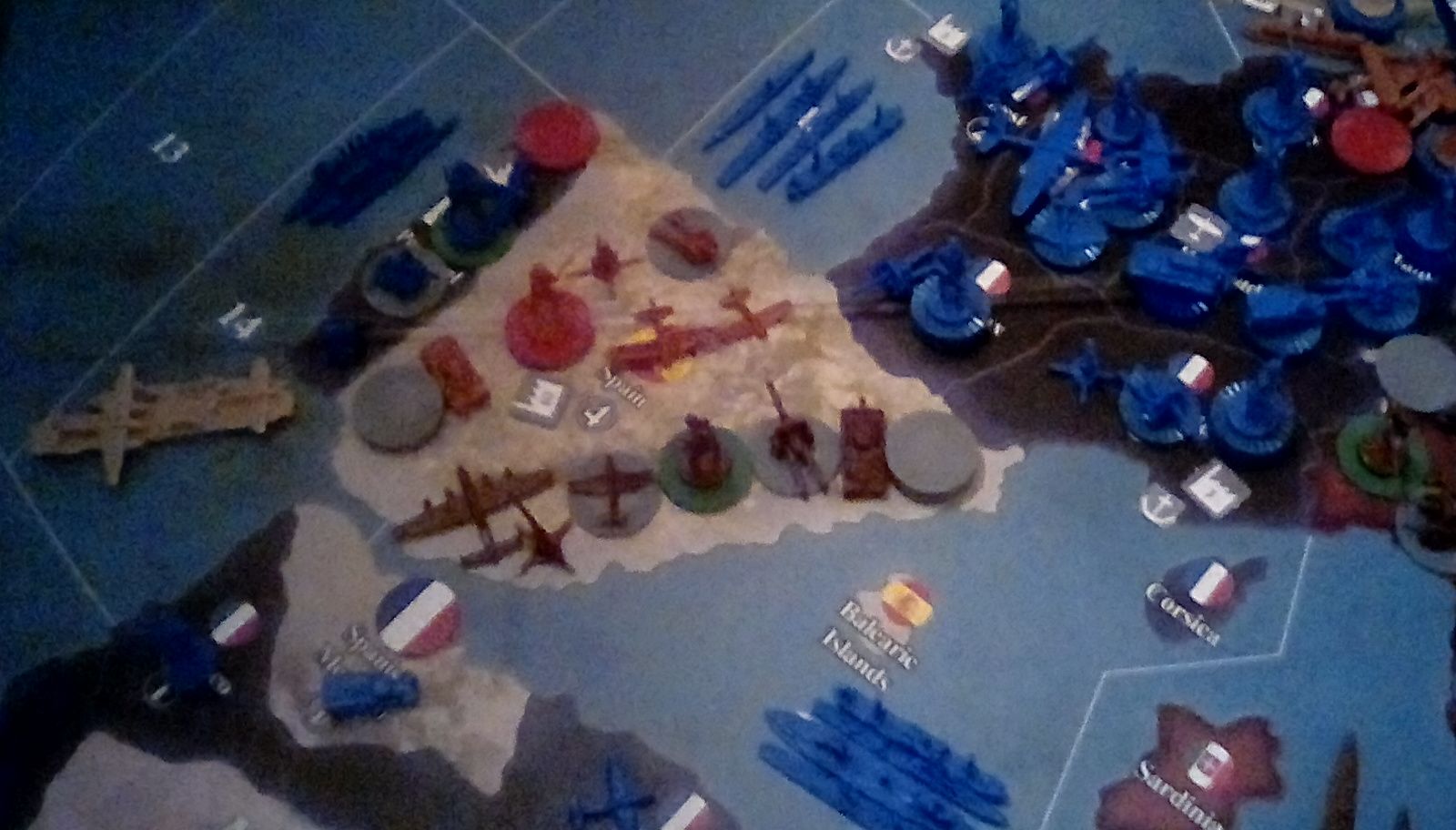
      Spain in Flames:
      The civil war rages on in Spain, just as a deadly naval encounter ended in mutual annihilation for the Nationalists and Republicans. The free world does not want a Fascist Spain, and the U.S. Player has sent generous air aid to the Republicans. With Franco’s Army of Africa having headed for the mainland, I, as France, took advantage and seized their Moroccan colony. Unfortunately, I earned a -1 diplomacy points for this “aggressive” act.

      posted in House Rules
      Charles de GaulleC
      Charles de Gaulle
    • Global/Europe/Pacific 1939 for 1940 2nd Editon

      Global 1939 Version 3 plus tweaks (Europe and Pacific Standalone setups are further below)

      Axis and Allies Global 1939 is a 1940 variant that uses a new setup and political situation.

      Global (Europe + Pacific):
      Anything not specified here is the same as 1940 2nd Edition.

      Political situation changes:

      Russia may not declare war on Germany/Italy until turn 5 unless attacked by the Axis.

      Nazi-Soviet Pact:
      On turn 1 only, Russia is given the option of attacking/annexing any of these territories: Vyborg, Baltic States, Eastern Poland, and Bessarabia.  Germany may not take any of the aforementioned territories or trigger Finalnd on turn 1 without declaring war on Russia.  If Russia does not take some/all of these territories, Germany may take them without consequence starting on turn 2.  Vyborg is hostile to Russia and friendly to Germany.  Eastern Poland is an enemy to both Russia and Germany.

      Germany is allowed to move through the Danish straits even though Germany does not control Denmark on turn 1.

      Italy begins the game neutral and cannot leave its territories.  Other powers cannot enter neutral Italy.  Italy may declare on any Allied powers on turn 2 or later.  If Italy stays neutral, the Allies may declare war on Italy on turn 3 or later.  On the turn Italy declares war or the Allies attack Italy, transports may load units in shared sea zones shared between Italy and the Allies.

      The United States may declare war on the Axis on the collect income phase of turn 4.
      The minor industrial complexes on Western, Eastern, and Central U.S. don’t get upgraded automatically.  The U.S. must pay for the upgrades if it wants them.

      The new pro-Allies/-Axis (same rules as for Persia, Iraq, etc.) and their standing armies are
      Pro-Allies:
      Poland: 6 infantry
      Eastern Poland: 2 infantry
      Denmark: 1 infantry
      Norway: 2 infantry
      Holland/Belgium: 3 infantry
      Iceland: nothing
      Greenland: nothing
      Belgian Congo: 1 infantry
      Pro-Axis:
      Slovakia/Hungary: 3 infantry, 3 tanks
      Romania: 4 infantry, 1 artillery, 1 fighter
      Bessarabia: nothing
      Baltic States: nothing
      Vyborg: 2 infantry
      Northwest Persia: nothing
      Persia: 2 infantry
      Eastern Persia: nothing

      When collecting NOs, treat the territories as the board represents them (e.g. the original controller).
      Examples:
      Iceland and Belgian Congo do not start as British anymore, but they are needed for UK’s NO for holding the empire because they have a British roundel on them.
      Even though Persia is pro-Axis in this setup, it does not count in Russia’s spread of Communism NO because the board represents it as being pro-Allies.

      New Turn order and starting income/IPCs in hand:
      Germany: 14
      Soviet Union: 35
      United Kingdom-
      Europe: 27
      Pacific: 17
      Italy: 10
      France: 19
      ANZAC: 10
      Japan: 24
      China: 14
      United States: 52

      New Setup:
      Germany:
      Germany: 16 infantry, 4 artillery, 1 tactical bomber, 4 AA guns, 2 strategic bombers, major industrial complex
      Greater Southern Germany: 6 infantry, 2 artillery, 3 tanks
      Western Germany: 2 infantry, 3 tanks, 4 AA guns, 4 fighters, 3 tactical bombers, 2 mech., air base, naval base, major industrial complex
      Sea Zone 112: 2 submarines, 1 destroyer
      Sea Zone 113: 2 submarines, 1 transport, 1 cruiser
      Sea Zone 114: 1 submarine, 1 transport, 1 battleship

      Soviet Union:
      Russia: 1 infantry, 1 AA gun, 1 artillery, 1 strategic bomber, air base, minor industrial complex
      Samara: 1 infantry
      Novosibirsk: 1 infantry
      Kazakhstan: 1 infantry
      Turkmenistan: 1 infantry
      Caucasus: 1 infantry, 1 artillery
      Volgograd: 1 infantry, 1 AA gun, minor industrial complex
      Ukraine: 2 infantry, 1 tactical bomber
      Western Ukraine: 2 infantry, 1 artillery
      Belarus: 2 infantry, 1 mechanized infantry
      Novgorod: 6 infantry, 1 artillery, 2 AA guns, 1 tank, 1 fighter, air base, naval base, minor industrial complex
      Karelia: 2 infantry
      Timguska: 1 infantry
      Yenisey: 1 infantry
      Yakut: 1 infantry
      Buryatia: 2 infantry
      Sakha: 2 infantry
      Amur: 4 infantry, 1 artillery, 1 mechanized infantry, 2 AA guns, 1 tank
      Siberia: 1 infantry
      Soviet Far East: 1 infantry
      Sea Zone 100: 1 destroyer, 1 cruiser
      Sea Zone 115: 1 destroyer, 1 battleship
      Sea Zone 127: 1 submarine

      Italy:
      Southern Italy: 4 infantry, 2 artillery, 2 AA guns, 1 fighter, air base, naval base, major industrial complex
      Northern Italy: 4 infantry, 1 mechanized infantry, 1 tank, 1 strategic bomber, 1 tactical bomber, minor industrial complex
      Sardinia: 1 infantry
      Sicily: 1 infantry
      Albania: 1 infantry, 1 artillery, 1 tank
      Libya: 3 infantry, 1 artillery, 1 mechanized infantry, 1 tank
      Tobruk: 2 infantry, 1 artillery, 1 mechanized infantry
      Ethiopia: 2 infantry, 1 artillery, 1 tank
      Italian Somaliland: 1 infantry, 1 mechanized infantry
      Sea Zone 95: 1 submarine, 1 destroyer, 1 transport, 1 cruiser
      Sea Zone 97: 1 destroyer, 1 cruiser, 1 battleship, 1 transport

      France:
      France: 6 infantry, 3 AA guns, 3 artillery, 2 tanks, 2 fighters, air base, minor industrial complex
      Normandy/Bordeaux: 1 infantry, naval base, minor industrial complex
      Southern France: 1 infantry, 1 artillery, naval base
      Tunisia: 1 infantry, 1 artillery
      Algeria: 1 infantry, 1 mech.
      Morocco: 1 infantry, 1 AA gun
      French West Africa: 1 infantry
      French Central Africa: 1 infantry
      Syria: 1 infantry
      Sea Zone 105: 1 destroyer, 1 transport
      Sea Zone 93: 1 cruiser, 1 transport
      Sea Zone 94: 1 battleship
      Sea Zone 82: 1 submarine
      Sea Zone 72: 1 destroyer

      Japan:
      Japan: 6 infantry, 1 mech., 2 artillery, 2 AA guns, 1 tank, 2 fighters, 2 tactical bombers, 2 strategic bombers, air base, naval base, major IC
      Korea: 2 infantry, 1 mechanized infantry
      Manchuria: 6 infantry, 1 mech., 1 artillery, 1 tank, 2 fighters, 2 tactical bombers, 1 AA gun, control marker
      Jehol: 3 infantry, 1 artillery, control marker
      Shantung: 3 infantry, 1 artillery, control marker
      Kiangsu: 5 infantry, 2 artillery, control marker
      Okinawa: 1 infantry, 1 fighter
      Formosa: 1 infantry, 1 fighter
      Hainan: 1 infantry
      Palau: 1 infantry
      Caroline Islands: 1 infantry, 1 AA gun, air base, naval base
      Marshall Islands: 1 infantry, air base, 1 fighter, 1 tactical bomber
      Marianas: 1 infantry, naval base, 1 AA gun
      Iwo Jima: 1 infantry, 1 AA gun
      Siam 2 infantry
      Sea Zone 6: 1 submarine, 3 transports, 1 destroyer, 1 cruiser, 1 battleship, 2 carriers with 2 fighters and 2 tactical bombers
      Sea Zone 19: 1 transport, 1 cruiser, 1 destroyer
      Sea Zone 20: 1 destroyer, 1 submarine, 1 aircraft carrier with 1 fighter and 1 tactical bomber
      Sea Zone 36: 1 destroyer
      Sea Zone 22: 1 cruiser
      Sea Zone 33: 1 battleship, 1 destroyer, 1 submarine
      Sea Zone 32: 1 destroyer

      United States:
      Western United States: 1 infantry, 1 artillery, 1 AA gun, 1 fighter, air base, naval base, minor IC
      Alaska: 1 infantry
      Hawaii: 1 infantry, 1 AA gun, 1 fighter, 1 strategic bomber air base, naval base
      Midway: air base
      Wake: air base
      Guam: air base
      Philippines: 2 infantry, 1 fighter, air base, naval base
      Eastern United States: 1 infantry, 1 artillery, 1 AA gun, 1 fighter, air base, naval base, minor industrial complex
      Central United States: 1 mechanized infantry, 1 tank, minor industrial complex
      Sea Zone 64: 1 cruiser
      Sea Zone 101: 1 destroyer
      Sa Zone 10: 1 submarine, 1 transport, 1 destroyer, 1 cruiser, 1 battleship
      Sea Zone 29: 1 carrier with 1 fighter and 1 tactical bomber
      Sea Zone 26: 1 submarine, 1 destroyer, 1 cruiser
      Sea Zone 35: 1 destroyer

      China:
      Suiyuan: 3 infantry
      Chahar: 1 infantry
      Anhwe: 3 infantry
      Kiangsi: 2 infantry
      Kwangsi: 2 infantry
      Hunan: 2 infantry
      Kweichow: 3 infantry, 1 artillery
      Hopei: 1 infantry
      Shensi: 1 infantry
      Szechwan: 4 infantry, 1 artillery, 1 fighter
      Yunnan: 3 infantry

      United Kingdom:
      United Kingdom: 2 infantry, 1 AA gun, 1 artillery, 1 tank, 1 fighter, 1 strategic bomber, air base, naval base, major industrial complex
      Scotland: 1 infantry, 1 AA gun, 1 fighter, air base
      Quebec: 1 infantry, 1 fighter, 1 mechanized infantry, minor industrial complex
      Nova Scotia: naval base, air base
      Ontario: 1 AA gun, 1 artillery, 1 tank
      Gibraltar: naval base
      Malta: 1 fighter, 1 infantry, 1 AA gun, airbase
      Alexandria: 1 infantry, 1 mechanized infantry, 1 tank
      Egypt: 1 infantry, 1 artillery, 1 AA gun, naval base
      Trans-Jordan: 1 infantry
      British Somaliland: 1 infantry
      Kenya: 1 infantry
      Rhodesia: 1 infantry
      Anglo-Egypt Sudan: 1 infantry
      Union of South Africa: 1 infantry, 1 tank, 1 mechanized infantry, naval base, minor industrial complex
      West India: 2 infantry, 1 artillery
      India: 4 infantry, 1 artillery, 2 AA guns, 1 fighter, 1 tactical bomber, air base, naval base, major industrial complex
      Burma: 2 infantry
      Shan State: 1 infantry
      Malaya: 3 infantry, naval base
      Kwangtung: 1 infantry, naval base
      Samoa: naval base
      Sea Zone 106: 1 transport, 1 destroyer
      Sea Zone 109: 1 transport, 1 cruiser
      Sea Zone 110: 1 destroyer, 1 battleship, 1 transport
      Sea Zone 111: 1 cruiser
      Sea Zone 91: 1 cruiser, 1 aircraft carrier (carrying 1 tactical bomber)
      Sea Zone 98: 1 destroyer, 1 submarine, 1 battleship
      Sea Zone 81: 1 cruiser
      Sea Zone 71: 1 destroyer
      Sea Zone 70: 1 transport
      Sea Zone 39: 1 cruiser, 1 sub
      Sea Zone 37: 1 destroyer, 1 battleship
      Sea Zone 51: 1 destroyer

      ANZAC:
      New South Wales: 1 infantry, 1 artillery, 1 tank, naval base, minor IC
      Queensland: 1 infantry, 1 AA gun, 1 fighter, air base
      Northern Territory: 1 infantry, 1 AA gun
      Western Australia: 1 infantry, 1 mechanized infantry
      New Zealand: 2 infantry, 1 AA gun,  1 fighter, naval base, minor IC
      Malaya: 1 infantry
      Shan State: 1 infantry
      Trans-Jordan: 1 infantry
      Egypt: 1 infantry
      Sea Zone 62: 1 cruiser
      Sea Zone 63: 1 destroyer
      Sea Zone 54: 1 cruiser, 1 destroyer
      –---------------------------

      Pacific 1939 Standalone:

      Anything not specified here is the same as 1940 2nd Edition.

      The United States may declare war on Japan on the collect income phase of turn 4.

      New Turn order and starting income/IPCs in hand:
      United Kingdom: 16
      ANZAC: 10
      Japan: 24
      China: 14
      United States: 17

      New Setup:
      Japan:
      Japan: 6 infantry, 1 mech., 2 artillery, 2 AA guns, 1 tank, 2 fighters, 2 tactical bombers, 2 strategic bombers, air base, naval base, major IC
      Korea: 2 infantry, 1 mechanized infantry
      Manchuria: 6 infantry, 1 mech., 1 artillery, 1 tank, 2 fighters, 2 tactical bombers, 1 AA gun, control marker
      Jehol: 3 infantry, 1 artillery, control marker
      Shantung: 3 infantry, 1 artillery, control marker
      Kiangsu: 5 infantry, 2 artillery, control marker
      Okinawa: 1 infantry, 1 fighter
      Formosa: 1 infantry, 1 fighter
      Hainan: 1 infantry
      Palau: 1 infantry
      Caroline Islands: 1 infantry, 1 AA gun, air base, naval base
      Marshall Islands: 1 infantry, air base, 1 fighter, 1 tactical bomber
      Marianas: 1 infantry, naval base, 1 AA gun
      Iwo Jima: 1 infantry, 1 AA gun
      Siam 2 infantry
      Sea Zone 6: 1 submarine, 3 transports, 1 destroyer, 1 cruiser, 1 battleship, 2 carriers with 2 fighters and 2 tactical bombers
      Sea Zone 19: 1 transport, 1 cruiser, 1 destroyer
      Sea Zone 20: 1 destroyer, 1 submarine, 1 aircraft carrier with 1 fighter and 1 tactical bomber
      Sea Zone 36: 1 destroyer
      Sea Zone 22: 1 cruiser
      Sea Zone 33: 1 battleship, 1 destroyer, 1 submarine
      Sea Zone 32: 1 destroyer

      United States:
      Western United States: 1 infantry, 1 artillery, 1 AA gun, 1 fighter, air base, naval base, major IC
      Alaska: 1 infantry
      Hawaii: 1 infantry, 1 AA gun, 1 fighter, 1 strategic bomber air base, naval base
      Midway: air base
      Wake: air base
      Guam: air base
      Philippines: 2 infantry, 1 fighter, air base, naval base
      Sa Zone 10: 1 submarine, 1 transport, 1 destroyer, 1 cruiser, 1 battleship
      Sea Zone 29: 1 carrier with 1 fighter and 1 tactical bomber
      Sea Zone 26: 1 submarine, 1 destroyer, 1 cruiser
      Sea Zone 35: 1 destroyer

      China:
      Suiyuan: 3 infantry
      Chahar: 1 infantry
      Anhwe: 3 infantry
      Kiangsi: 2 infantry
      Kwangsi: 2 infantry
      Hunan: 2 infantry
      Kweichow: 3 infantry, 1 artillery
      Hopei: 1 infantry
      Shensi: 1 infantry
      Szechwan: 4 infantry, 1 artillery, 1 fighter
      Yunnan: 3 infantry

      United Kingdom:
      India: 4 infantry, 1 artillery, 2 AA guns, 1 fighter, 1 tactical bomber, air base, naval base, major IC
      Burma: 2 infantry
      Shan State: 1 infantry
      Malaya: 3 infantry, naval base
      Kwangtung: 1 infantry, naval base
      Samoa: naval base
      Sea Zone 39: 1 cruiser, 1 sub
      Sea Zone 37: 1 destroyer, 1 battleship
      Sea Zone 51: 1 destroyer

      ANZAC:
      New South Wales: 1 infantry, 1 artillery, 1 tank, naval base, minor IC
      Queensland: 1 infantry, 1 AA gun, 1 fighter, air base
      Northern Territory: 1 infantry, 1 AA gun
      Western Australia: 1 infantry, 1 mechanized infantry
      New Zealand: 2 infantry, 1 AA gun,  1 fighter, naval base, minor IC
      Malaya: 1 infantry
      Shan State: 1 infantry
      Sea Zone 62: 1 cruiser
      Sea Zone 63: 1 destroyer
      Sea Zone 54: 1 cruiser, 1 destroyer

      Europe Standalone:
      Anything not specified here is the same as 1940 2nd Edition.

      Political situation changes:

      Russia may not declare war on Germany/Italy until turn 5 unless attacked by the Axis.

      Nazi-Soviet Pact:
      On turn 1 only, Russia is given the option of attacking/annexing any of these territories: Vyborg, Baltic States, Eastern Poland, and Bessarabia.  Germany may not take any of the aforementioned territories or trigger Finalnd on turn 1 without declaring war on Russia.  If Russia does not take some/all of these territories, Germany may take them without consequence starting on turn 2.  Vyborg is hostile to Russia and friendly to Germany.  Eastern Poland is an enemy to both Russia and Germany.

      Germany is allowed to move through the Danish straits even though Germany does not control Denmark on turn 1.

      Italy begins the game neutral and cannot leave its territories.  Other powers cannot enter neutral Italy. Italy may declare on any Allied powers on turn 2 or later.  If Italy stays neutral, the Allies may declare war on Italy on turn 3 or later.  On the turn Italy declares war or the Allies attack Italy, transports may load units in shared sea zones shared between Italy and the Allies.

      The United States may declare war on the Axis on the collect income phase of turn 4.
      The minor industrial complexes on Eastern and Central U.S. don’t get upgraded automatically.  The U.S. must pay for the upgrades if it wants them.

      The new pro-Allies/-Axis (same rules as for Persia, Iraq, etc.) and their standing armies are
      Pro-Allies:
      Poland: 6 infantry
      Eastern Poland: 2 infantry
      Denmark: 1 infantry
      Norway: 2 infantry
      Holland/Belgium: 3 infantry
      Iceland: nothing
      Greenland: nothing
      Belgian Congo: 1 infantry
      Pro-Axis:
      Slovakia/Hungary: 3 infantry, 3 tanks
      Romania: 4 infantry, 1 artillery, 1 fighter
      Bessarabia: nothing
      Baltic States: nothing
      Vyborg: 2 infantry
      Northwest Persia: nothing
      Persia: 2 infantry
      Eastern Persia: nothing

      When collecting NOs, treat the territories as the board represents them (e.g. the original controller).
      Examples:
      Iceland and Belgian Congo do not start as British anymore, but they are needed for UK’s NO for holding the empire because they have a British roundel on them.
      Even though Persia is pro-Axis in this setup, it does not count in Russia’s spread of Communism NO because the board represents it as being pro-Allies.

      New Turn order and starting income/IPCs in hand:
      Germany: 14
      Soviet Union: 26
      United Kingdom: 28
      Italy: 10
      France: 17
      United States: 35

      New Setup:
      Germany:
      Germany: 16 infantry, 4 artillery, 1 tactical bomber, 4 AA guns, 2 strategic bombers, major industrial complex
      Greater Southern Germany: 6 infantry, 2 artillery, 3 tanks
      Western Germany: 2 infantry, 3 tanks, 4 AA guns, 4 fighters, 3 tactical bombers, 2 mech., air base, naval base, major industrial complex
      Sea Zone 112: 2 submarines, 1 destroyer
      Sea Zone 113: 2 submarines, 1 transport, 1 cruiser
      Sea Zone 114: 1 submarine, 1 transport, 1 battleship

      Soviet Union:
      Russia: 1 infantry, 1 AA gun, 1 artillery, 1 strategic bomber, air base, minor industrial complex
      Samara: 1 infantry
      Novosibirsk: 1 infantry
      Kazakhstan: 1 infantry
      Turkmenistan: 1 infantry
      Caucasus: 1 infantry, 1 artillery
      Volgograd: 1 infantry, 1 AA gun, minor industrial complex
      Ukraine: 2 infantry, 1 tactical bomber
      Western Ukraine: 2 infantry, 1 artillery
      Belarus: 2 infantry, 1 mechanized infantry
      Novgorod: 6 infantry, 1 artillery, 2 AA guns, 1 tank, 1 fighter, air base, naval base, minor industrial complex
      Karelia: 2 infantry
      Sea Zone 100: 1 destroyer, 1 cruiser
      Sea Zone 115: 1 destroyer, 1 battleship
      Sea Zone 127: 1 submarine

      Italy:
      Southern Italy: 4 infantry, 2 artillery, 2 AA guns, 1 fighter, air base, naval base, major industrial complex
      Northern Italy: 4 infantry, 1 mechanized infantry, 1 tank, 1 strategic bomber, 1 tactical bomber, minor industrial complex
      Sardinia: 1 infantry
      Sicily: 1 infantry
      Albania: 1 infantry, 1 artillery, 1 tank
      Libya: 3 infantry, 1 artillery, 1 mechanized infantry, 1 tank
      Tobruk: 2 infantry, 1 artillery, 1 mechanized infantry
      Ethiopia: 2 infantry, 1 artillery, 1 tank
      Italian Somaliland: 1 infantry, 1 mechanized infantry
      Sea Zone 95: 1 submarine, 1 destroyer, 1 transport, 1 cruiser
      Sea Zone 97: 1 destroyer, 1 cruiser, 1 battleship, 1 transport

      France:
      France: 6 infantry, 3 AA guns, 3 artillery, 2 tanks, 2 fighters, air base, minor industrial complex
      Normandy/Bordeaux: 1 infantry naval base, minor industrial complex
      Southern France: 1 infantry, 1 artillery, naval base
      Tunisia: 1 infantry, 1 artillery
      Algeria: 1 infantry, 1 mech.
      Morocco: 1 infantry, 1 AA gun
      French West Africa: 1 infantry
      French Central Africa: 1 infantry
      Syria: 1 infantry
      Sea Zone 105: 1 destroyer, 1 transport
      Sea Zone 93: 1 cruiser, 1 transport
      Sea Zone 94: 1 battleship
      Sea Zone 82: 1 submarine
      Sea Zone 72: 1 destroyer

      United States:
      Eastern United States: 1 infantry, 1 artillery, 1 AA gun, 1 fighter, air base, naval base, minor industrial complex
      Central United States: 1 mechanized infantry, 1 tank, minor industrial complex
      Sea Zone 64: 1 cruiser
      Sea Zone 101: 1 destroyer

      United Kingdom:
      United Kingdom: 2 infantry, 1 AA gun, 1 artillery, 1 tank, 1 fighter, 1 strategic bomber, air base, naval base, major industrial complex
      Scotland: 1 infantry, 1 AA gun, 1 fighter, air base
      Quebec: 1 infantry, 1 fighter, 1 mechanized infantry, minor industrial complex
      Nova Scotia: naval base, air base
      Ontario: 1 AA gun, 1 artillery, 1 tank
      Gibraltar: naval base
      Malta: 1 fighter, 1 infantry, 1 AA gun, airbase
      Alexandria: 1 infantry, 1 mechanized infantry, 1 tank
      Egypt: 2 infantry, 1 artillery, 1 AA gun, naval base
      Trans-Jordan: 1 infantry
      British Somaliland: 1 infantry
      Kenya: 1 infantry
      Rhodesia: 1 infantry
      Anglo-Egypt Sudan: 1 infantry
      Union of South Africa: 1 infantry, 1 tank, 1 mechanized infantry, naval base, minor industrial complex
      West India: 2 infantry, 1 artillery
      Sea Zone 106: 1 transport, 1 destroyer
      Sea Zone 109: 1 transport, 1 cruiser
      Sea Zone 110: 1 destroyer, 1 battleship, 1 transport
      Sea Zone 111: 1 cruiser
      Sea Zone 91: 1 cruiser, 1 aircraft carrier (carrying 1 tactical bomber)
      Sea Zone 98: 1 destroyer, 1 submarine, 1 battleship
      Sea Zone 81: 1 cruiser
      Sea Zone 71: 1 destroyer
      Sea Zone 70: 1 transport

      Special thanks to all who contributed to this project.  This is the final version.  Questions and comments are appreciated.
              de Gaulle

      posted in House Rules global 1940
      Charles de GaulleC
      Charles de Gaulle
    • RE: Global 1940 2nd Edition Standard Units but with Altered Costs

      @General-Veers I like the idea of reducing the facilities cost as well. But I have been wondering if perhaps airbases should cost more than naval bases. I feel like the scramble potential of airbases is more powerful than the repairing abilities of naval bases (while the move extension seems obviously on equal terms). I think a 12 or 13 IPC naval base sounds good, but I’d personally want air bases to be more, maybe about 14 IPCs. One of the reasons why I think airbases need a higher cost is their relevance to aircraft carriers. Why build a carrier for 16 when you can scramble 3 fighters for 15 (or as you and I propose 12/13).

      I’d love to see more facility building, as this is something that’s very rare in my group’s games. It would be hard to find the perfect cost, but I think your 12 IPCs is a good place to begin testing, perhaps going as low as 11 for sea bases and as high as 14 for air bases. I’d like to try it.

      posted in House Rules
      Charles de GaulleC
      Charles de Gaulle
    • IPC Cost Reduction

      For A&A 1940 and other variants we’ve been playing over the year, something interesting my group has tried is reducing the IPC costs of purchasable units to add more combat and variety to the games. It’s roughly based on taking 2/3 the price of the regular costs.

      IPCs
      1 Chinese infantry
      2 infantry, Chinese artillery
      3 artillery, mechanized infantry, AA gun
      4 tank, submarine, micro industrial complex
      5 transport
      6 destroyer, Chinese fighter
      7 fighter
      8 tactical bomber, cruiser
      9 strategic bomber, minor industrial complex
      10 air base, naval base
      12 aircraft carrier
      15 battleship
      20 major industrial complex

      You’ll notice a couple odd things like why China gets cheaper units and the existence of micro (build 1) factories because we tend to combine a bunch of house rules. There are also many minor changes we use for the units themselves and setups, NOs, and other game elements to keep standards like G40 from getting totally destroyed by this sudden influx of units (since everything is cheaper). But it’s been a really fun, simple change.

      Have you ever tried any major IPC adjustment with success?

      posted in House Rules
      Charles de GaulleC
      Charles de Gaulle
    • RE: Should we make better rules for invadable neutrals? (1940)

      @barnee I a taking a look at that 1940 expansion. Really interesting and advanced stuff in there! Definitely something I’ll read deeper later.

      posted in House Rules
      Charles de GaulleC
      Charles de Gaulle
    • France building in Indo-China

      Have you ever seen a game where France actually builds units in Indo-China? I’ve never seen this happen and was wondering if it ever occurred in a real game.

      Japan typically builds an industrial complex after capturing French Indo-China, so it would only take the UK or another ally to liberate it and give France a free factory to use. Supposing Paris has also been liberated, France could very well start building in Indo-China.

      Now of course this scenario would imply that Germany has lost France, and Japan has done very poorly in Southeast Asia —making a grim scene for the Axis. Typically in my games, they would surrender after losing two very crucial areas. The only scenario I could think of is perhaps Germany and Japan are trying to destroy Russia and didn’t fare well on other fronts. Maybe France would have a reason to build in Indo-China because of this? Although Paris would likely be the better option, but games can be crazy.

      Have you ever seen this happen?

      posted in Axis & Allies Global 1940
      Charles de GaulleC
      Charles de Gaulle
    • I Need Help! - Special Round Robin Tournament Algorithm

      While hosting small tournaments, I’ve come across an issue in creating the actual match-ups. Here are the stats and requirements that I’m working with:

      1. It’s a five player game in which turn order matters!!!

      2. Every person plays five games, one as player 1, 2, 3, 4, and 5 (you can think of this as playing 5 Pacific 1940 games, one as China, one as Japan, USA, UK, and ANZAC…)

      3. It’s supposed to be a round robin tournament, so each person plays against every other player; however, as an extra stipulation, each player will only see every other player once.

      Now according to what I just mentioned, there will have to be 21 people total (because if every player plays five games and there are four opponents in each game and every opponent will only be seen once, there will have to be 20 other people to fill those spots; this also means 21 games total will be played).

      If you’re not confused already, also remember, one of the other stipulations is that of the 5 games that everybody plays, each one has to be a different position in the turn order (in A&A terms, think of it as a different country). So there cannot be someone who plays as player #2 in more than one game, because he has to have a game as each different player position.

      -*-
      To make this a little clearer, here’s a much simpler breakdown I created for hosting a 3 player game with the same rules:

      There are 7 players and 7 games being played. The players are listed as “1,” “2,” “3,” etc. The player listed at the top of the list goes first (he is the nation that moves first) the player at the bottom of the list goes last (he is the nation that moves last).

      Game 1. Game 2. Game 3. Game 4. Game 5. Game 6 Game 7.
      ----1---------4---------6---------2----------7----------3---------5
      ----2---------1---------7---------5----------4----------6---------3
      ----3---------5---------1---------6----------2----------4---------7

      At first glance, this just looks like a bunch of numbers. But it’s actually a carefully constructed round robin tournament. Notice how it meets all the requirements I mentioned earlier:

      1. Each player only sees every other player only once.
      2. Each player gets to play only once in first, second, and last positions in the turn order.
      3. There are only three people in each game.

      Now, if you are making any sense of what I’m saying, perhaps you can help me. I have successfully created a tourney bracket like this for 4 player games, and there is actually more than one way to “solve” the match-ups so that everything is just as I said. But I’m making these through trial and error, and I’ll spare you from the headache of seeing the actual 4-player-games bracket.

      But what I really need right now is a bracket for 5 player games (the twenty-one-participant model I spoke of earlier). But with 21 different games to set up and all the stipulations I mentioned about turn order and only seeing every opponent once, I haven’t been able to manually figure out the bracket.

      Is there some sort of algorithm, formula, or something I can use other than the excruciating task off trial and error to create a list like the one I showed for the 3 player game? And yes, I am aware that many round-robin generators exist, but I’ve never found one that has support for games that have multiple players and takes into account the importance of turn order (in a game like Axis and Allies where you’re not just “white” or “the player who moves first,” where you are in the turn order makes a huge difference, as that is the nation you are playing.)

      If any of you intellectuals understand what I’m talking about, please let me know if you have a solution. My simple model for the 3 player game version is a good start, but I’m wondering if it’s even possible for the 5 player version I’m talking about? Maybe the math just doesn’t cooperate.

      PLEASE HELP!

      posted in General Discussion
      Charles de GaulleC
      Charles de Gaulle
    • RE: Oztea's 1942 Global Setup

      I TOTALLY Love this! GREAT WORK OZ!

      posted in House Rules
      Charles de GaulleC
      Charles de Gaulle
    • RE: KGF - Stick a Landing!

      Anywhere in France will do.

      Really!  I’m being serious!

      posted in Axis & Allies Global 1940
      Charles de GaulleC
      Charles de Gaulle
    • RE: I Need Help! - Special Round Robin Tournament Algorithm

      @aardvarkpepper Dang. To be frank, your story is a lot more philosophical in nature than I actually feel is necessary to worry about. But that’s because I should have explained something:

      —This whole tournament idea is actually for a playtest. Aside from having a fun, quick-moving tournament, I’m trying to gather statistics from a large pool of players to see if there is any bias involved. The “bias” I’m talking about relates to my earlier vague reference that “turn order is important.”

      In each five player game, there are five “colors,” each with their own situation on the board. My hope is that any innate advantages or disadvantages of being one color vs another color are outweighed by the much larger influence of the players themselves. After the tournament is over, my idea is to scramble the players and start over, as many times as possible to weed out any issues with the game’s balance. If there is any position in the turn order which is noticeably doing worse or better, it should eventually become evident.

      The reason I’ve been putting “fair” in quotes is largely due to how ambiguous being “fair” is, given so many variables and human choices, strategies, and real-life motives. However, my objective is to make a balanced game rather than an objectively “fair” tourney. In order to gather at least somewhat accurate data, I am trying to lesson individual player influence to help make the bracket “fair,” at least on paper.

      This whole “21 participant, 5-player” model that I’m so stubbornly adhering to was created by asking myself, “What’s the smallest number of games a participant could play and still get a chance at being each color (position in the turn order) and also facing every other participant?” Well, the answer is that each participant would have to play at least 5 games obviously, and since there would have to be 4 opponents in each of those games, there would be 20 opponents total plus the first guy (= 21).

      So 21 is the smallest magic number for 5 player games. And it offers the unique distinction of only requiring opponents to see each other once (which, in my opinion, helps to lesson individual player influence over the data I desire). The next magic number for 5 player games is 42. Likewise, 7 is the first magic number for 3 player games, and 14, 21, etc. are the next ones.

      The only reason to use larger “magic numbers” is to compensate for what @CWO-Marc has noted: even with all these stipulations, there are still many inconsistencies, as a 3 or 4 or 5 player game has groups of players than could potentially be switched around and manipulated to change results. But…as we’ve all come to conclude, it is also easy to just swap one player with another to get another valid matchup. So if I scramble the players after each tourney, I’ll get closer and closer to an accurate answer.

      My hope is that the game is already “fair enough” to the point that skill level, luck, and matchups play a much larger role than the color (or rather, the place in the turn order) that each participant plays. As I’m sure some of you are probably thinking, there are easier ways to playtest with acceptable accuracy than to go to all this trouble building something around a “magic” number that was created through preset rules. But being the curious, stubborn person that I am, I want to solve it this way; it’s fascinating; it’s unique; and although it’s imperfect, it will work for me if it’s indeed possible.

      The 3 player variant that you did some awesome number crunching with @aardvarkpepper is a very good frame with which to build an intense 7 player tournament with perhaps 21, or even 105 games if desired. The 4 player variant, which I’ve found several solutions for, was so enjoyable in playtesting, that we’ve already reused it several times. I must take the time to examine more in detail, aardvark, the way you solved the 3P version, as it might work better than everything I’ve tried so far.

      posted in General Discussion
      Charles de GaulleC
      Charles de Gaulle
    • RE: Oztea's 1942 Global Setup

      Did you make a 1939 setup for 1940 Oz?

      posted in House Rules
      Charles de GaulleC
      Charles de Gaulle
    • RE: Statistics of 100 Games of G40.2 OOB

      Maybe that is because beer and boardgames is taboo in my family? ;)

      If you are really interested in getting woman to play:

      1. Don’t pick your close family
      2. Don’t be a poor sport
      3. Don’t bother with girls (›18)
      4. Don’t take forever playing
      5. Be enthusiastic

      I know this all might sound a bit weird and arbitrary, but trust me.  I even used my sweetheart as a test subject.

      I found that the ideal woman to target is the competitive ping-pong/video gamer who is experienced with life but still youthful.  No girly girls or feminists please–they are not sportsmanlike and tend to pretend that they are overwhelmed.  You want quiet woman that know how to make you shake without saying anything.

      posted in Axis & Allies Global 1940
      Charles de GaulleC
      Charles de Gaulle
    • RE: I Need Help! - Special Round Robin Tournament Algorithm

      @cwo-marc I think I’ve been unintentionally making confusion by mumbling several things together —
      playtesting the game itself
      hosting a tournament
      and figuring out the mathematical relationship I wanted

      For the tournament, players would not get to determine their color or position in the turn order because I’m going to base it off of the chart I showed earlier. However, after playtesting, the final game should be just like Axis and Allies and most other games, in which players pick or agree on who plays what. So the game isn’t going to decide that for the players. I’m just arbitrarily choosing to do so to try to make a tournament for playtesting. My goal is to eventually have a game where all colors and places in the turn order are equally appealing.

      Anyway, I don’t want to take any more of your time, but before you leave, I want to thank you for all the helpful questions and information you’ve shared! I knew I’d get some excellent advice from this forum.

      posted in General Discussion
      Charles de GaulleC
      Charles de Gaulle
    • How can we add simple Vichy rules to Europe and/or Global 1940 2nd Edition?

      So, everyone give me your ideas for adding Vichy rules! I am getting a little tired of the unrealistic OOB setup which eliminates historical French rules. I would like to stress that I want changes to be simple and not changing the balance. Thanks!  :roll:

      de Gaulle

      posted in House Rules
      Charles de GaulleC
      Charles de Gaulle
    • Is killing Sea Zone 110 an absolute must?

      Like many of you veterans, I almost always clear out Sea Zone 110’s British cruiser and battleship and French cruiser in any G1 layout, but recently I tried making an Atlantic assault that did not include such an attack.  I’ve begun to wonder whether or not these heavy ships are so important to get rid of immediately when there are other opportunities presenting themselves.  Can Germany successfully destroy the Atlantic, help Italy, and leave 110 alone?

      Observe this following attack formation:
      Two submarines attack the cruiser near Gibraltar in 91
      Two submarines attack the destroyer and transport off Canada in 106
      One submarine attacks the destroyer and tranpsort near Wales in 109
      One battleship attacks the destroyer, cruiser, and battleship off Scotland in 111
      Germnay must send 4 tactical bombers, 4 fighters, and both strategic bombers to cover the attacks in Sea Zones 109 and 111.  An aicraft carrier purchase is necessary.  I recommend a destroyer and submarine too.

      Let’s observe how the battles should go.  The cruiser should be toast, and most likely you’ll have one or two submarines by Gibraltar alive.  The Canadians should go down and you should have a submarine or two left there.  You should have five planes attacking Sea Zone 109 to make a scramble a poor decision for Britain.  You should have five planes attacking the navy in Sea Zone 111 to ensure success.  You might have a submarine and maybe even a damaged battleship left near Britain afterward.

      You build your fleet in 112 and provided that you land three planes in Western Germany, the UK can’t attack you back even with the cruiser and battleship you spared them.  So what have you done?  Well, both British destroyers have been sunk so you should have between 2-5 submarines alive next turn to create havoc.  Britain has no transports to ferry troops from Canada or make a silly landing.  The cruiser near Gibraltar has been destroyed and cannot harm the Italians.  You’re in a very good position to do Sea Lion, and you’ve helped the Italians a bit by sending your last two air units in Poland and Hungary to Southern Italy.

      The UK can still do Taranto, but it might require them to strip two fighters from London.  The really important thing is where are the British battleship and cruiser and French cruiser going?  Probably retreating far away where they can do no harm OR going to Sea Zone 91 or 92 near Gibraltar.  This can really hurt Italy.

      Once I saw this move, I thought that leaving 110 alive was indeed a bad idea.  But take a closer look.  If the 110 fleet moves against Italy, Germany can kill it.  You will have a sub or two near Gibraltar, both strategic bombers, and your planes on Southern Italy to attack (make sure Italy takes Southern France so you can land.)  The only way the UK can safely move the 110 fleet to the Mediterranean is if the carrier fleet in 98 joins up with the rest in 92.  In order to do this, Taranto will be spared.

      I therefore come to the conclusion that the 110 fleet is not as important as it looks.  Taking out the British destroyers, transports, and cruiser near Gibraltar can hurt a lot more.  This attack helps Italy and also leaves the door wide open for Sea Lion.

      What do you think?  Where is the flaw that I’m missing?  Is this indeed a good move?  If the UK scrambles, will you lose too many planes (even though the UK will lose more on average)?  Please share your thoughts.

      posted in Axis & Allies Global 1940
      Charles de GaulleC
      Charles de Gaulle
    • RE: Why axis and allies?

      I am only 16.  I started playing at 12.  This is now my most-loved game.  (Favorite version is Global 1940)

      Why do I love it?  I think I can list several things that apply to most of us and me.

      1:  Strategy.  Did you ever play chess and love the strategy but hate how boring it is?  Strategy is almost unlimited here in A&A.  Axis and Allies is a great strategic game with plenty of rules to make things diverse but not too complicated. (Though I still get people complaining about the learning curve).  The dice add a perfect randomness giving replayabillity and no extreme long-term planning.

      2: Plastic miniatures. As a younger child I loved playing with plastic soldiers: “bang bang…sheeeeeeeeeew PUFFFFFFFFFF” Yeah, stuff like that.  I think most of us guys have played with toy soldiers when we were young; this generally has a big impact.  As one A&A gamer said (see Hiew’s boardgaming blog), “Axis and Allies is still my best excuse for playing with toy soldiers.”  Combine this with the great variety and quality of A&A and you get a haven for us.

      3:  Teamwork/competition/social time: Games like 1940 allow up to 6 players and lots of teamwork-inspired situations always arise.  Team games are always my favorite.   The competition is enormous especially when someone gets a lucky or bad role.  There is always someone coming up with a new strategy that gets snatched by everybody else.  A&A takes a while,  which can be annoying, but during that time you spend great hours hanging out with your friends or family.   And everybody knows that competition and teamwork are two greatly-emphasized aspects of gaming on the intimate level.

      4: Dice:  Yes, rolling them is fun, getting lucky is great, and getting unlucky is upsetting (in a humorous way).   There is always that one crazily bizarre role that sends everybody LOL!  And when you do badly you can always blame the dice.  The dice ensure great replayabillity and variety in each game.

      5: History:  I know what you are going to say: A&A is not historically accurate, but that is ok because simulators generally aren’t fun.  The WW2 aspect grabs a lot of us.  It is a well-loved theme by millions of gamers.  Wouldn’t you love to role across the Desert like Rommel reenacting Tobruk?  Or perhaps you don’t want to follow history; maybe there is an alternate history which your strategy works well in.  From the Battle of France to Invasion USA, you can reenact history or do your own thing.

      Well that sums up the general facts.   As my lil’ bro said, “In Axis and Allies I get the thrills of Battlefield, Chess, Monopoly, and little soldiers all at once.”

      posted in General Discussion
      Charles de GaulleC
      Charles de Gaulle
    • RE: Europe 1940+ Expansion Test Game (Dan/Kyle vs Twilight/Victoria/CdeG)

      Turn 1

      Germany takes Normamdy and Paris, but does lose a lot of infantry and a plane.  Dan (playing as Germany, Hungary, and Finland) managed to sink all of the British navy and even have 5 sea units floating in the Atlantic.  Even after British and Candian counterattacks, 2 German subs are still alive. He built an aircraft carrier and added a battleship and a cruiser from the Baltic Sea.  In the east, a massive German stack is in Poland, and Hungary and Finland have received German garrisons.

      Since Germany didn’t attack Yugoslavia, Hungary tried to and actually had very good luck, picking up an extra 2 IPCs.

      Finland is not an Axis power and operates under special rules. For instance, Finish control of Leningrad does not count as a victory city for the Axis.

      Victoria (playing as the Soviet Union and Yugoslavia) left a surprising number of Russian troops on the border and threatened Finland. If Germany goes for Sea Lion, it might be over for them. The Soviets are allowed to attack neutral territories like Turkey in this variant.  Persia is a neutral nation now as well.

      The U.S. can also attack neutrals, but must keep its sea units adjacent to original American territories.  Twilight (playing as the United States and the Commonwealth) sent a couple men to Central America, eyeing the IPCs available in the south.  Since this variant gives the Axis a lot more enemies to fight, the U.S. is not allowed to declare war until the collect income phase of turn 5.

      The Commonwealth (an independent entity representing Canada, South Africa, and ANZAC) lost a Candian destroyer and transport and can’t safely send any help across the Atlantic until we sink those subs. I, Charles de Gaulle, (representing the United Kingdom, France, and Greece) did send a cruiser and transport to Canada to help their new destroyer Twilight built.
      In Africa, the Commonwealth sent men to East Africa and sank an Italian submarine.  Those poor Italians there are really surrounded now.

      As the United Kingdom, I want to tempt Dan to try Sea Lion. I got bad luck sinking a German destroyer and cruiser by Scotland and lost 2 planes.  I also decided to be cautious in the Mediterranean and only sank 1 of the 3 Italian fleets. Italy is quite strong in this variant, but does have to deal with the French in the west and the Greeks in the east. I sent my battleship to Ethiopia and destroyed the Italians there. I left my carrier by Gibraltar for flexibility and will wait to see what Germany does. I have the French and Greek fleets to distract Italy for now and can regroup next round.

      Greece begins the game neutral and can’t do anything until turn 3 unless it’s attacked.

      Bulgaria has a “micro” industrial complex.  These can build 2 infantry or 1 of any other unit (except bombers and capital ships).

      Yugoslavia deployed a partisan.  This annoying unit spawns every turn and must be destroyed by the Axis in order to maintain free passage through the territory and the 2 IPCs.

      Kyle (playing as Italy, Bulgaria, and Romania) took advantage of my conservative British attacks and sent his smaller ships and planes after the French and Greek navies. The Italians easily destroyed the partisan infantry in Yugoslavia, and Greece was absolutely crushed by an attack by land and sea. However, Kyle left Southern France alone.  I believe it was a big mistake. Interestingly, he’s sent his army in Libya to attack Tunisia and left the Egyptian front as a standstill like I did. The two Italian units left in Somalia are doomed.

      For France, I was very excited to fight hard. Kyle not attacking Southern France let me destroy Dan’s German survivors in Normandy. I sent up help from West Africa to Morocco and made a stand in Algeria against the Italians. I have a small fleet by Gibraltar now. My fighter escaped to London to help out there, and other scattered units are going to help in Egypt.
      20230716_180544.jpg 20230716_180622.jpg 20230716_180637.jpg 20230716_180652.jpg 20230716_180706.jpg 20230716_180721.jpg

      Please note that some units are from other games since we have so many countries. Neutral nations are independent of each other and get their own armies. Some things might look a little confusing, like Soviet units being used to represent Chile or Japanese ones being used to represent Sweden and Spain. But they’re all independent nations.  If you see a 1914 artillery upside down, that’s what I’m using as a AA gun for some minor powers.  I like mods, but I have also invested very little into them, as you can see.

      posted in Blogs
      Charles de GaulleC
      Charles de Gaulle
    • RE: Oztea's 1942 Global Setup

      Thanks Barney! Can’t wait to try it! Maybe France will get more of  :lol: a role in it.

      posted in House Rules
      Charles de GaulleC
      Charles de Gaulle
    • 1 / 1