Axis & Allies .org Forums
    • Home
    • Categories
    • Recent
    • Popular
    • Users
    • Register
    • Login
    1. Home
    2. Black Fox
    3. Posts
    • Profile
    • Following 0
    • Followers 0
    • Topics 12
    • Posts 172
    • Best 0
    • Controversial 0
    • Groups 1

    Posts made by Black Fox

    • RE: Re: Field Marshal Games Pieces Project Discussion thread

      @knp7765:

      @Black:

      @knp7765:

      @Black:

      @Variable:

      Not sure if this is part of your revision but, it would look really cool to have some of the carrier deck details etched in - like the stripes and elevators.

      I thought about this too but didn’t want to push my luck.  Also, extra catwalks (walking areas on the edge of the flight deck) along the side of the deck with a bunch of small lines or dots to represent the small AA guns would be icing on the cake.

      However, I know redoing molds can become very expensive.  So I will be happy with any additional modifications that FMG can do.

      Let’s not forget just how small these pieces are, especially the ships.  I know one big reason we are into these pieces is because of such great detail, but past a certain point would be near impossible, especially in the case of the naval vessels due to the small scale.  “Catwalks”?  I think you are asking a bit much.

      Having catwalks and sponsons  (These are the mini decks that stick out on the side of the ships.  Usually they support larger guns) are not unreasonable at all.  If you look at the FMG sample piece of the Enterprise, is has both sponsons & catwalks.  It has 4 sponsons that support 2 guns each.  The catwalk is represented by the thin lower lip that goes around the flight deck.  If FMG wants to add detail for small AA guns, all they would have to do is make a bunch of half circles as part of the catwalk with a little bump or line in it, very similar to the original A&A carrier.  Usually, manufactures will allow you one or two revisions free of charge as part of the process.  After that is starts to cost you. At least I hope that is the case with FMG.  There are always exceptions.  Anyway, my ideas are only suggestions.  If FMG cam make the changes at little or no cost, great.  If it’s going to be too expensive, then it won’t happen and I’m okay with that.

      Okay, I see what you are saying now.  I stand corrected.  When you mentioned catwalks, I guess I was thinking of the small walkways for personnel along the sides of the conning tower.

      Well those can be considered catwalks too.  Catwalks are narrow walkways with side railing or short side walls.  So I can understand the confusion.

      On a carrier, when someone mentions a “catwalk” the first reference that come to mind is the walk way around the edge of the flight deck.

      posted in Other Axis & Allies Variants
      Black FoxB
      Black Fox
    • RE: Re: Field Marshal Games Pieces Project Discussion thread

      @knp7765:

      @Black:

      @Variable:

      Not sure if this is part of your revision but, it would look really cool to have some of the carrier deck details etched in - like the stripes and elevators.

      I thought about this too but didn’t want to push my luck.  Also, extra catwalks (walking areas on the edge of the flight deck) along the side of the deck with a bunch of small lines or dots to represent the small AA guns would be icing on the cake.

      However, I know redoing molds can become very expensive.  So I will be happy with any additional modifications that FMG can do.

      Let’s not forget just how small these pieces are, especially the ships.  I know one big reason we are into these pieces is because of such great detail, but past a certain point would be near impossible, especially in the case of the naval vessels due to the small scale.  “Catwalks”?  I think you are asking a bit much.

      Having catwalks and sponsons  (These are the mini decks that stick out on the side of the ships.  Usually they support larger guns) are not unreasonable at all.  If you look at the FMG sample piece of the Enterprise, is has both sponsons & catwalks.  It has 4 sponsons that support 2 guns each.  The catwalk is represented by the thin lower lip that goes around the flight deck.  If FMG wants to add detail for small AA guns, all they would have to do is make a bunch of half circles as part of the catwalk with a little bump or line in it, very similar to the original A&A carrier.  Usually, manufactures will allow you one or two revisions free of charge as part of the process.  After that is starts to cost you. At least I hope that is the case with FMG.  There are always exceptions.  Anyway, my ideas are only suggestions.  If FMG cam make the changes at little or no cost, great.  If it’s going to be too expensive, then it won’t happen and I’m okay with that.

      posted in Other Axis & Allies Variants
      Black FoxB
      Black Fox
    • RE: New U.S. Fighter

      @Endeer:

      F6U CORSAIR ALL THE WAY!!!

      I believe you meant to say F4U.  The F6U was a jet.  But you have my vote for the Corsair.

      posted in Other Axis & Allies Variants
      Black FoxB
      Black Fox
    • RE: New U.S. Fighter

      @Variable:

      Visited the Midway in 'Diego last time there. Beautiful beast. Thanks for your service gents!

      Thanks Variable, Warrior888

      I heard from many people that is is a nice museum now.

      By the way, I knew a pilot who flew F-16s in England.  He told me he had engine problems one time that forced him to make an emergency landing on a highway.  A bobby pulled up behind him and wrote him a ticket for illegal parking :-D  Got to love the Brits.

      Anyway, I’ll stop here.  Don’t want to hijack the topic any further here.

      posted in Other Axis & Allies Variants
      Black FoxB
      Black Fox
    • RE: Re: Field Marshal Games Pieces Project Discussion thread

      @FieldMarshalGames:

      I’m having trouble finding good pictures or blue prints of the Carrier.  Please post here what you have or find so I can forward to the Sculptor.

      Thanks for your help and your feed back!

      FMG, I posted these links above, were these not good enough for your needs?
      Here is a link that has a nice drawing of the Enterprise if you wish to view it.
      http://1.bp.blogspot.com/_XIUsZVIRkss/SnfakHOnLUI/AAAAAAAABQk/mXJAqE5OljA/s1600-h/cv-6-line.gif

      After 1943 refit.  http://www.the-blueprints.com/blueprints/ships/carriers-us/4171/view/uss_cv-6_enterprise/

      If you need better quality than this, let me know and I’ll see what else I can dig up for you.  I have to leave town for a couple of days in a few hours so it might take me some time.

      I did find this by the way, let me know if it works for you.
      http://1.bp.blogspot.com/_XIUsZVIRkss/SnfakHOnLUI/AAAAAAAABQk/mXJAqE5OljA/s1600-h/cv-6-line.gif

      Thanks

      posted in Other Axis & Allies Variants
      Black FoxB
      Black Fox
    • RE: Re: Field Marshal Games Pieces Project Discussion thread

      @cminke:

      but keep in mind if you add more detail then you did on the italins and germans, it will make the seem “lesser” and out of place.

      I can potentially see that with adding the flight deck line.  With the other modification they are more subtle and I don’t think that will be the case.  As the current sample of the Enterprise stands, I feel that it is barely on par with currents A&A pieces.  A few well done minor modifications I think will put it above above that.

      This whole thing started because we all wanted pieces that were unique to each country and with better detail and quality than the current  A&A game pieces.  For the most part I think FMG has done very well to meet our expectations.  There of course has been a few exception but I feel FMG has made an honest effort to fix thing when it is possible and that’s good enough with me.

      posted in Other Axis & Allies Variants
      Black FoxB
      Black Fox
    • RE: Re: Field Marshal Games Pieces Project Discussion thread

      @Variable:

      Not sure if this is part of your revision but, it would look really cool to have some of the carrier deck details etched in - like the stripes and elevators.

      I thought about this too but didn’t want to push my luck.  Also, extra catwalks (walking areas on the edge of the flight deck) along the side of the deck with a bunch of small lines or dots to represent the small AA guns would be icing on the cake.

      However, I know redoing molds can become very expensive.  So I will be happy with any additional modifications that FMG can do.

      posted in Other Axis & Allies Variants
      Black FoxB
      Black Fox
    • RE: Re: Field Marshal Games Pieces Project Discussion thread

      @FieldMarshalGames:

      These are first revisions.  I have already sent them back for more detail in many cases.  Thanks for the input.

      I’m glad to hear that you can still tweak things a bit and that you will take my suggestions into consideration.  Much appreciated.

      posted in Other Axis & Allies Variants
      Black FoxB
      Black Fox
    • RE: New U.S. Fighter

      Well I really can’t take credit for the info.  It was passed on to me by a friend of mine who is WWII army air corp. vet.

      The numbers there are astounding.  Not only in the number of aircraft produced but the high loss of personnel in combat and accidents.  Could you imagine the frenzy the media would go into if it happened today?

      The closest any nation came to it was Russia during the cold war, but they put 89% of their GNP into the production of weapons. We and Nato only 8% percent GNP

      .
      I knew it was high, but not that high.  No wonder their economy was a mess.

      By the way, thanks for your service of 31 years.  I did 4-1/2 years in the Navy.  Served on the flight deck of the USS Midway from 82~85, the rest in Yokosuka.

      posted in Other Axis & Allies Variants
      Black FoxB
      Black Fox
    • RE: Famous last words

      “Damn cheap beer.  I’ll drink better quality beer next time!” :-D

      posted in Axis & Allies Spring 1942 Edition
      Black FoxB
      Black Fox
    • RE: Re: Field Marshal Games Pieces Project Discussion thread

      FMG

      I have been very pleased with the quality and details that you have put into each unit.  However, I feel that the Enterprise is not up to these standards.  Are you still able to make modification at this point or is it cost prohibitive?  If you can, here are some suggestions I would like to offer.

      1.  The 4 square thingies (2 in front and aft of the island) should be round to represent gun emplacements.  If possible add 2 line in each circle to represent guns.

      2.  The bow should protrude in front of the flight deck.

      3.  Add 3 small circles or bumps on top of the island to represent the exhaust ports.

      4.  Make the line in the rectangle go straight out to the side instead of for and aft.  They don’t look like guns in these positions.

      I believe all the modifications I suggested can be done within the limitation of this scale.  By no means am I expecting all of these changes but it doesn’t hurt to try.  If I had to choose just one out of the 4, it would be modification #1.

      Here is a link that has a nice drawing of the Enterprise if you wish to view it.
      http://1.bp.blogspot.com/_XIUsZVIRkss/SnfakHOnLUI/AAAAAAAABQk/mXJAqE5OljA/s1600-h/cv-6-line.gif

      After 1943 refit.  http://www.the-blueprints.com/blueprints/ships/carriers-us/4171/view/uss_cv-6_enterprise/

      I hope you will view this as constructive feedback and nothing more.  I sincerely appreciate the effort you have put forth in bringing us these great units.

      posted in Other Axis & Allies Variants
      Black FoxB
      Black Fox
    • RE: New U.S. Fighter

      If anyone wants to see data on cost and actual number of aircraft produced by all 5 nations go here.

      http://www.axisandallies.org/forums/index.php?topic=23303.msg796001#msg796001

      It’s really good stuff.

      posted in Other Axis & Allies Variants
      Black FoxB
      Black Fox
    • RE: Imperious Leaders 1942 Supreme Map

      Gents

      I noticed there are threads here & there with people showing off their beautiful large maps.  I’m trying to create a one stop shop for this info to help others who want to make their own large maps.  For those of you who have already posted about your large maps, would you please be kind enough to post a copy of your post to this thread. http://www.axisandallies.org/forums/index.php?topic=23549.0

      Thank you.

      posted in Axis & Allies Spring 1942 Edition
      Black FoxB
      Black Fox
    • Printing Your Large Supreme Map

      Gents

      I notice there are several threads here and there where people have shown and talked about the Large Supreme Maps that they had made.  I’d like to make a one stop shop for this info.  Anyone who has made a Large Supreme Map, please share with your info with others.  Please try to include the following info.

      1.  What type of material was the map printed on.  Explain any pros or cons.

      2.  Cost

      3.  If you had it made at a print shop (not work), please give the name of the shop and contact info if possible.

      4.  Pictures.  We would love to see your masterpieces.

      Thanks

      posted in Other Axis & Allies Variants
      Black FoxB
      Black Fox
    • RE: Planes vs. Subs

      @ragnarok628:

      reality is shot to hell once you even START to make this a board game, because it is definitely not realistic for each power to know the exact makeup and location of the other powers’ fleets!

      Yes,true to an extent.

      even though planes attacked subs in WWII, they didn’t already happen to know the location of every enemy sub beforehand.

      In the case of the Allies, they didn’t know the location of every sub, just most of them.  Thanks to our guys cracking the Japanese code and the British for capturing the German Enigma decoder but I’m not focusing on this fact.

      therefore allowing air strikes on subs would result in a completely UNREALISTIC dominance of aircraft over submarines to the extent that the subs would rarely ever be built in the game.

      It’s not an unrealistic one, just an unfair one if aircraft are allowed to attack subs with their full attack value and I realize that.

      However, I’m no longer interested in replies to my original post.  I was satisfied with the replies by Krieghund & Hobbes.

      What I’m interested at this point is what rules and restrictions would you implement to allow aircraft to attack subs but in a way would not create a significant imbalance in game play?  If anyone else has an idea, I’d like to know.

      posted in Axis & Allies Spring 1942 Edition
      Black FoxB
      Black Fox
    • RE: Planes vs. Subs

      Krieghund

      Thanks for the lengthly explanation.

      The range of air units and the size of the oceans in the game make it very easy for air units to find and eliminate subs, if air units are capable of hitting them on their own.

      Yes, I always felt there was an imbalance here.  However,  I feel a better solution would have been to increase sea zones, especially in the Atlantic.  This would create a space out of range for aircraft and also force transports to be vulnerable for one turn while transporting cargo across the Atlantic.

      It also promotes the purchase and maintenance of more well-rounded fleets, as destroyers are necessary to guard against the threat of subs.  This reflects the reality that subs were a constant threat to military shipping as well, and that no convoy would travel without destroyer escorts because of that threat.  At the same time, it keeps them from being used as cheap “cannon fodder” in naval battles, as they were most often not used extensively in fleet operations, but rather as harrassing hunters where their unique properties were best utilized.

      From an economic standpoint, the necessity of buying destroyers for protection against subs also reflects the economic losses sustained by raids against merchant shipping by submarines.

      Even if you allow aircraft to attack subs, I don’t think it would change what you said above.  Destroyers are still going to be the most economical way of dealing with subs.

      Anyway, if you were to allow aircraft to attack subs.  How would you do it?  I think by allowing aircraft to have an attack value of 1 or 2 would reflect the difficulty of finding and attacking one.

      posted in Axis & Allies Spring 1942 Edition
      Black FoxB
      Black Fox
    • Planes vs. Subs

      I read the rules for Spring 1942 and was suprised to learn that planes cannot attack sub.  I find it a bit unrealistic because planes were used to hunt down subs.  The US Navy used modified B-24 and deployed jeep carriers with the specific role to hunt subs.

      I’m going to implament a house rule that when a sub attacks, it may be attacked and sunk by aircraft on a role of “1-2” until the sub submerges.  Which at that time, it is safe from air attacks.  Also, when defending, attacking forces may attack a sub on the first round.  After that, a sub may submerge and escape further attack.

      My reason for this was that subs often traveled on the surface and most cases spent more time above water than under in order to improve travel time and fuel consomption.  This made them very vulnerable to suprised air attacks.  Most subs sunk by aircraft were lost in this manner.  Even when attacking, a sub silhoutte could often be seen from the air depending on water conditions, because they usually had to accend within 40 feet of the surface to use their periscopes.

      Thanks

      posted in Axis & Allies Spring 1942 Edition
      Black FoxB
      Black Fox
    • RE: Re: Field Marshal Games Pieces Project Discussion thread

      @Viracocha:

      Hmm… not sure I’d put too much faith in what shade they appear to be on your computer screen, my wife’s a photographer and has went through great lengths to calibrate the system’s colors with the subject matter - but I still see slight differences.  Just say’in (and problem solved if you paint 'em).

      Very true.  The quality of your video chip/card can make a difference as well as the brightness, color and contrast setting on your computer.

      posted in Other Axis & Allies Variants
      Black FoxB
      Black Fox
    • WWII Air Plane Amazing Facts

      WWII Air Facts

      Below is an excellent summary of the effort required in WWII. It focuses on the American side of things, but the British, Germans and Japanese expended comparable energy and experienced similar costs. Just one example for the Luftwaffe; about 1/3 of the Bf109s built were lost in non-combat crashes. After Midway, the Japanese experience level declined markedly, with the loss of so many higher-time naval pilots.

      ++++++++++++++++++++++++++++++++++++++++++++++++++++++++++++++++++++++++++++++++++++++++++++++++++++

      Most Americans who were not adults during WWII have no understanding of the magnitude of it. This listing of some of the aircraft facts gives a bit of insight to it.

      276,000 aircraft manufactured in the US .

      43,000 planes lost overseas, including 23,000 in combat.

      14,000 lost in the continental U.S.

      The US civilian population maintained a dedicated effort for four years, many working long hours seven days per week and often also volunteering for other work.  WWII was the largest human effort in history.

      Statistics from Flight Journal magazine.

      THE COST of DOING  BUSINESS

      –-- The staggering cost of war.

      THE PRICE OF VICTORY (cost of an aircraft in WWII dollars)

      B-17       $204,370.     P-40       $44,892.
      B-24       $215,516.     P-47       $85,578.
      B-25       $142,194.     P-51       $51,572.
      B-26       $192,426.     C-47       $88,574.
      B-29       $605,360.     PT-17     $15,052.
      P-38         $97,147.     AT-6       $22,952.

      PLANES A DAY  WORLDWIDE

      From Germany’s invasion of Poland Sept. 1, 1939 and ending with Japan 's surrender Sept. 2, 1945 — 2,433 days

      From 1942 onward, America averaged 170 planes lost a day.

      How many is a 1,000  planes?  B-17 production (12,731) wingtip to wingtip would extend 250 miles.  1,000 B-17s carried

      2.5 million gallons of high octane fuel and required 10,000 airmen to fly and fight them.

      THE NUMBERS GAME
      9.7 billion gallons of gasoline consumed, 1942-1945.
      107.8 million hours flown, 1943-1945.
      459.7 billion rounds of aircraft ammo fired overseas, 1942-1945.
      7.9 million bombs dropped  overseas, 1943-1945.
      2.3 million combat sorties, 1941-1945 (one sortie = one takeoff).
      299,230 aircraft accepted, 1940-1945.
      808,471 aircraft engines accepted, 1940-1945.
      799,972 propellers accepted, 1940-1945.

      WWII MOST-PRODUCED COMBAT AIRCRAFT

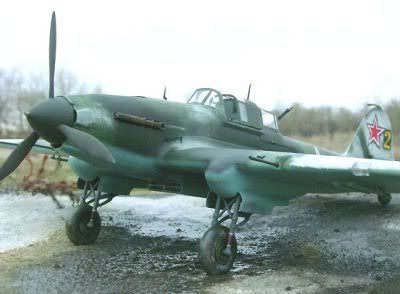
      Ilyushin IL-2 Sturmovik                                  36,183
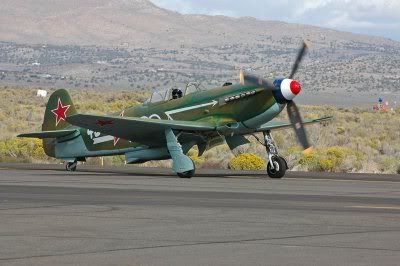
      Yakolev Yak-1,-3,-7, -9                               31,000+
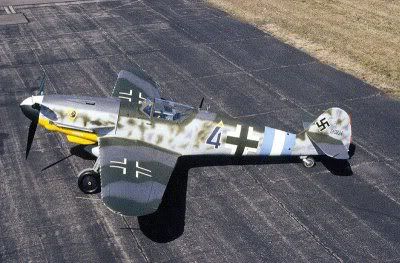
      Messerschmitt Bf-109                                  30,480
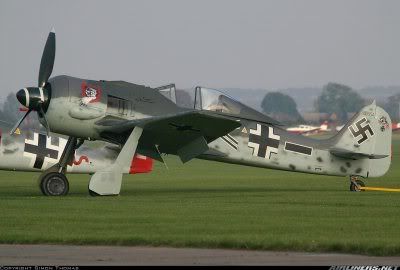
      Focke-Wulf Fw-190                                      29,001
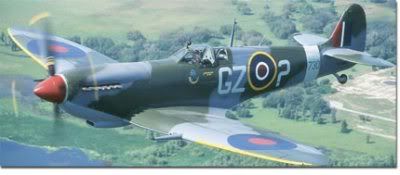
      Supermarine Spitfire/Seafire                           20,351
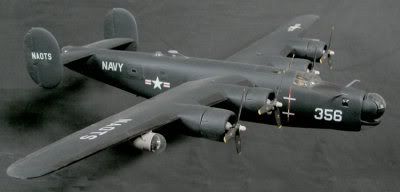
      Convair B-24/PB4Y Liberator/Privateer             18,482
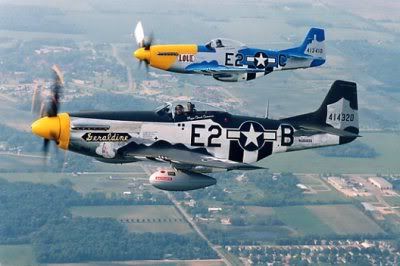
      North American P-51 Mustang                        15,875
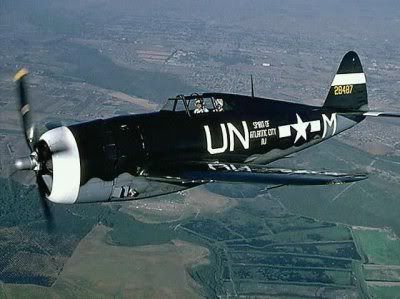
      Republic P-47 Thunderbolt                             15,686
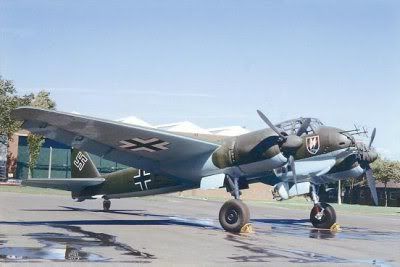
      Junkers Ju-88                                              15,000+
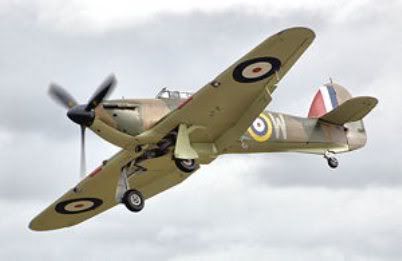
      Hawker Hurricane                                         14,533
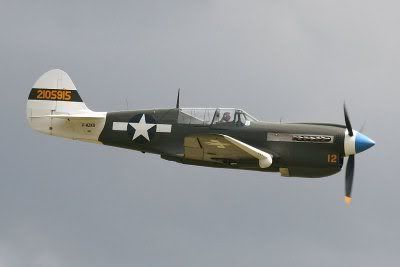
      Curtiss P-40 Warhawk                                   13,738
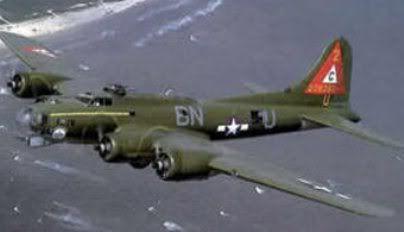
      Boeing B-17 Flying Fortress                            12,731
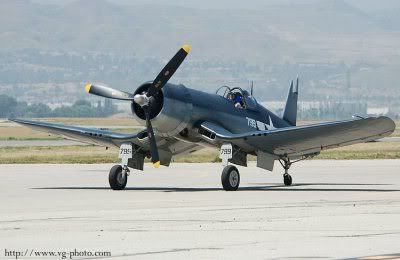
      Vought F4U Corsair                                       12,571
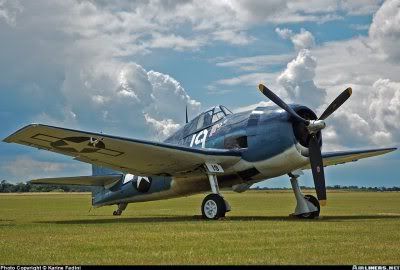
      Grumman F6F Hellcat                                    12,275
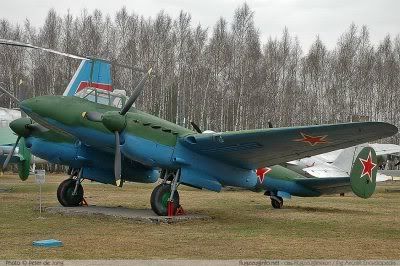
      Petlyakov Pe-2                                             11,400
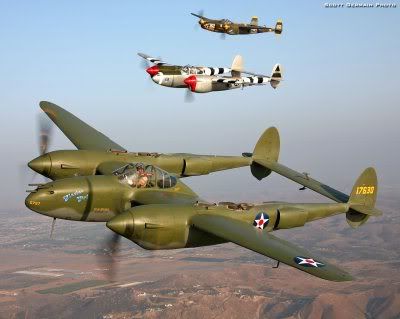
      Lockheed P-38 Lightning                                10,037
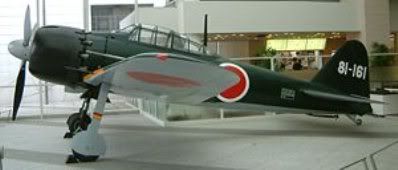
      Mitsubishi A6M Zero                                      10,449
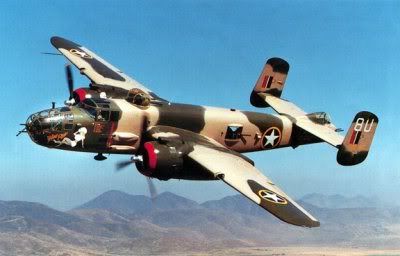
      North American B-25 Mitchell                           9,984
      Lavochkin LaGG-5                                          9,920
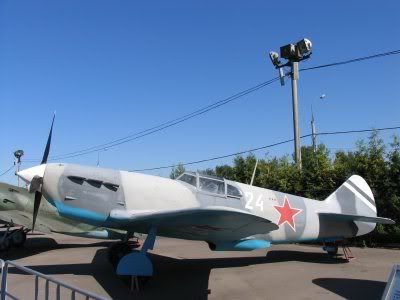
      Note: The LaGG-5 was produced with both water-cooled (top) and air-cooled (bottom) engines.
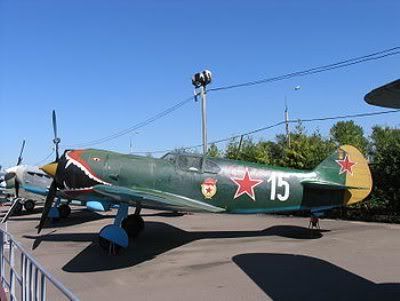
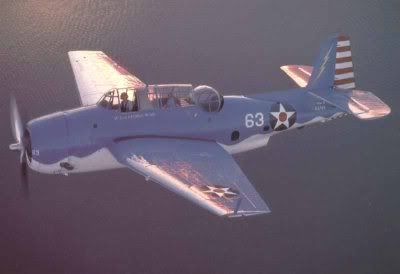
      Grumman TBM Avenger                                   9,837
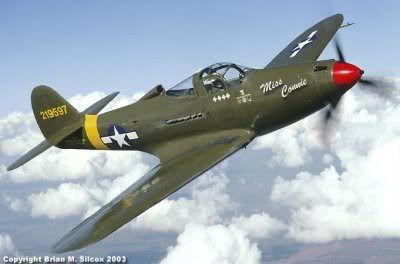
      Bell P-39 Airacobra                                        9,584
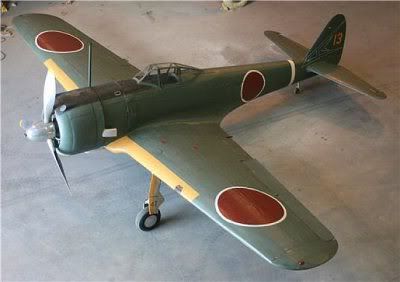
      Nakajima Ki-43 Oscar                                     5,919
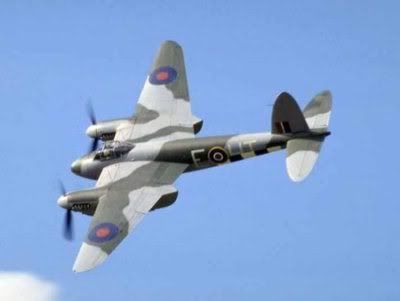
      DeHavilland Mosquito                                     7,780
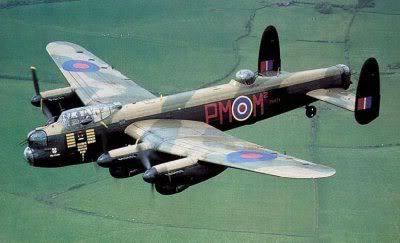
      Avro Lancaster                                              7,377
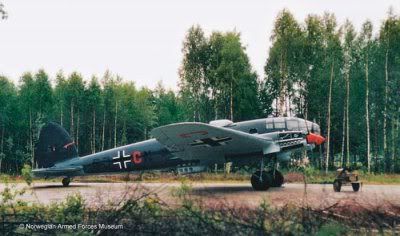
      Heinkel He-111                                              6,508
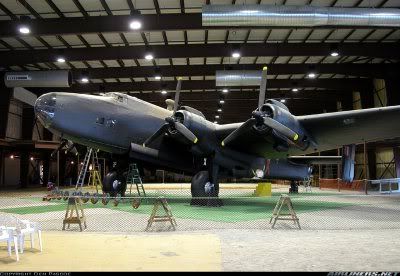
      Handley-Page Halifax                                      6,176
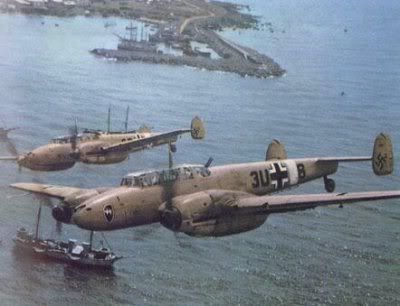
      Messerschmitt Bf-110                                    6,150
      Lavochkin LaGG-7                                         5,753
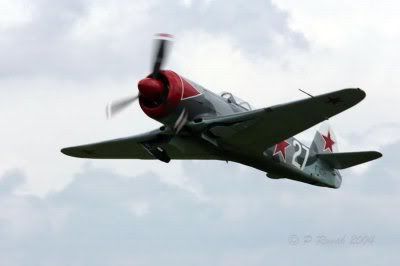
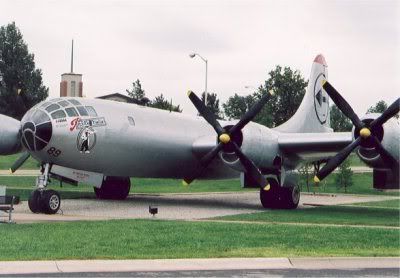
      Boeing B-29 Superfortress                            3,970
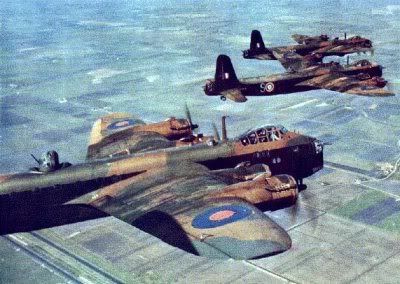
      Short Stirling                                                  2,383
      Sources:  Rene Francillon,  Japanese Aircraft of the Pacific war; Cajus Bekker, The Luftwaffe Diaries;  Ray Wagner, American Combat Planes; Wikipedia.

      According to the AAF Statistical Digest, in less than four years (December 1941- August 1945), the US Army Air Forces lost 14,903 pilots, aircrew and assorted personnel plus 13,873 airplanes –-inside the continental United States.  They were the result of 52,651 aircraft accidents (6,039 involving fatalities) in 45 months.

      Think about those numbers. They average 1,170 aircraft accidents per month---- nearly 40 a day.  (Less than one accident in four resulted in totaled aircraft, however.)

      It gets worse…

      Almost 1,000 Army planes disappeared en route from the US to foreign climes.  But an eye-watering 43,581 aircraft were lost overseas including 22,948 on combat missions (18,418 against the Western Axis) and 20,633 attributed to non-combat causes overseas.

      In a single 376 plane raid in August 1943, 60 B-17s were shot down. That was a 16 percent loss rate and meant 600 empty bunks in England.  In 1942-43 it was statistically impossible for bomber crews to complete a 25-mission tour in Europe.

      Pacific theatre losses were far less (4,530 in combat) owing to smaller forces committed.  The worst B-29 mission, against Tokyo on May 25, 1945, cost 26 Superfortresses, 5.6 percent of the 464 dispatched from the Marianas.

      On  average, 6,600 American servicemen died per month during WWII, about 220 a day. By the end of the war, over 40,000 airmen were killed in combat theatres and another 18,000 wounded.  Some 12,000 missing men were declared dead, including a number “liberated” by the Soviets but never returned.  More than 41,000 were captured, half of the 5,400 held by the Japanese died in captivity, compared with one-tenth in German hands.   Total combat casualties were pegged at 121,867.

      US manpower made up the deficit.  The AAF’s peak strength was reached in 1944 with 2,372,000 personnel, nearly twice the previous year’s figure.

      The losses were huge—but so were production totals.  From 1941 through 1945, American industry delivered more than 276,000 military aircraft. That number was enough not only for US Army, Navy and Marine Corps, but for allies as diverse as Britain, Australia, China and Russia.  In fact, from 1943 onward, America produced more planes than Britain and Russia combined.  And more than Germany and Japan together 1941-45.

      However, our enemies took massive losses.  Through much of 1944, the Luftwaffe sustained uncontrolled hemorrhaging, reaching 25 percent of aircrews and 40 planes a month.  And in late 1944 into 1945, nearly half the pilots in Japanese squadrons had flown fewer than 200 hours.  The disparity of two years before had been completely reversed.

      Experience Level:
      Uncle Sam sent many of his sons to war with absolute minimums of training. Some fighter pilots entered combat in 1942 with less than one hour in their assigned aircraft.
      The 357th Fighter Group (often known as The Yoxford Boys) went to England in late 1943 having trained on P-39s.   The group never saw a Mustang until shortly before its first combat mission.

      A high-time P-51 pilot had 30 hours in type.  Many had fewer than five hours.  Some had one hour.

      With arrival of new aircraft, many combat units transitioned in combat.  The attitude was, "They all have a stick and a throttle.  Go fly em." When the famed 4th Fighter Group converted from P-47s to P-51s in February 1944, there was no time to stand down for an orderly transition.   The Group commander, Col. Donald Blakeslee, said, "You can learn to fly 51s on the way to the target.

      A future P-47 ace said, “I was sent to England to die.”  He was not alone.   Some fighter pilots tucked their wheels in the well on their first combat mission with one previous flight in the aircraft.  Meanwhile, many bomber crews were still learning their trade:  of Jimmy Doolittle’s 15 pilots on the April 1942 Tokyo raid, only five had won their wings before 1941.   All but one of the 16 copilots were less than a year out of flight school.

      In WWII flying safety took a back seat to combat.  The AAF’s worst accident rate was recorded by the A-36 Invader version of the P-51: a staggering 274 accidents per 100,000 flying hours.   Next worst were the P-39 at 245, the P-40 at 188, and the P-38 at 139.  All were Allison powered.

      Bomber wrecks were fewer but more expensive.  The B-17 and B-24 averaged 30 and 35 accidents per 100,000 flight hours, respectively-- a horrific figure considering that from 1980 to 2000 the Air Force’s major mishap rate was less than 2.

      The B-29 was even worse at 40; the world’s most sophisticated, most capable and most expensive bomber was too urgently needed to stand down for mere safety reasons. The AAF set a reasonably high standard for B-29 pilots, but the desired figures were seldom attained.

      The original cadre of the 58th Bomb Wing was to have 400 hours of multi-engine time, but there were not enough experienced pilots to meet the criterion.  Only ten percent had overseas experience.  Conversely, when a $2.1 billion B-2 crashed in 2008, the Air Force initiated a two-month “safety pause” rather than declare a “stand down”, let alone grounding.

      The B-29 was no better for maintenance. Though the R3350 was known as a complicated, troublesome power-plant, no more than half the mechanics had previous experience with the Duplex Cyclone.  But they made it work.

      Navigators:
      Perhaps the greatest unsung success story of AAF training was Navigators.  The Army graduated some 50,000 during the War.  And many had never flown out of sight of land before leaving “Uncle Sugar” for a war zone.  Yet the huge majority found their way across oceans and continents without getting lost or running out of fuel — a stirring tribute to the AAF’s educational establishments.

      Cadet To Colonel:
      It was possible for a flying cadet at the time of Pearl Harbor to finish the war with eagles on his shoulders.  That was the record of John D. Landers, a 21-year-old Texan, who was commissioned a second lieutenant on December 12, 1941.  He joined his combat squadron with 209 hours total flight time, including 20 in P-40s.  He finished the war as a full colonel, commanding an 8th Air Force Group — at age 24.
      As the training pipeline filled up, however those low figures became exceptions.  
      By early 1944, the average AAF fighter pilot entering combat had logged at least 450 hours, usually including 250 hours in training.  At the same time, many captains and first lieutenants claimed over 600 hours.

      FACT:
      At its height in mid-1944, the Army Air Forces had 2.6 million people and nearly 80,000 aircraft of all types.  
      Today the US Air Force employs 327,000 active personnel (plus 170,000 civilians) with 5,500+ manned and perhaps 200 unmanned aircraft.  
      The 2009 figures represent about 12 percent of the manpower and 7 percent of the airplanes of the WWII peak.

      IN SUMMATION:
      Whether there will ever be another war like that experienced in 1940-45 is doubtful, as fighters and bombers have given way to helicopters and remotely-controlled drones over Afghanistan and Iraq.  But within living memory, men left the earth in 1,000-plane formations and fought major battles five miles high, leaving a legacy that remains timeless.

      posted in World War II History
      Black FoxB
      Black Fox
    • RE: Large scale AA42 map

      Gents

      I need some clarification here.  Is the map above just an enlarge version of the Spring 1942 version with no modification or is this IL’s modified map?

      Also, there are several links on this forum, which most don’t work because I understand IL deleted some so people didn’t down load the wrong one.  However, there seems to be several maps, Supreme, neutral, clean.

      So, for clarification IL can you just list all the different down links here and give a little bit more detailed information as to the description of each version if there are more than one.  I would appreciate it.

      Also, where is there a link for the large Spring 1942 map?  I thought I was downloading it but it turned out to be the AA50 final.  That is the nicest map I have seen ever!!!  Is there a 1942 version?

      Thank you very much.

      posted in Axis & Allies Spring 1942 Edition
      Black FoxB
      Black Fox
    • 1
    • 2
    • 3
    • 4
    • 5
    • 8
    • 9
    • 3 / 9