Axis & Allies .org Forums
    • Home
    • Categories
    • Recent
    • Popular
    • Users
    • Register
    • Login
    1. Home
    2. Argothair
    3. Best
    0%
    A
    • Profile
    • Following 1
    • Followers 4
    • Topics 88
    • Posts 3,176
    • Best 218
    • Controversial 0
    • Groups 9

    Best posts made by Argothair

    • RE: Axis & Allies Anniversary upgraded version

      OK, that’s kind of cool the way the diplomatic influence over the Free French tends to cascade and pass a tipping point – the more territories they control, the faster they gain more through diplomacy. That’s neat. I still think they’re kind of small potatoes, but they’re very fun small potatoes.

      Your national advantage cards look much nicer than most professionally published game cards that I’ve seen – would you be willing to share the graphic files so I can use the graphics in my house rules? I’d love to have either a .png or .gif of a blank card, or an .svg of a filled-in card.

      Also, are your frogmen actual infantry units that load and unload from a destroyer? Or are they sort of invisible ‘notional’ units that just give you an extra attack roll without using any pieces?

      posted in Customizations
      A
      Argothair
    • RE: We need an allied playbook.

      @Guam-Solo That’s interesting. What do you mean by ‘landlocked’, exactly? Is the idea that Britain couldn’t keep a navy in the water, so British forces were confined to the UK and Africa, without being able to land on islands or in France?

      posted in Axis & Allies Global 1940
      A
      Argothair
    • RE: Balanced Mod [Anniversary 41]

      Thanks for checking in, but nothing new to report on this particular set of house rules. :)

      I spent the spring studying data science, and much of the summer went to coping with roommate drama. I’m now comfortably ensconced in my own studio, which is refreshing, but it doesn’t really have the space to host Axis & Allies games (table’s way too small) and my schedule has mostly conflicted with the games that other people have been hosting. Karl S has been working pretty hard on some home remodeling, Karl S has been looking after his second newborn, James has been looking after his first newborn…the usual excuses. I’m still studying data science. I played a few games of Global (joined the ladder for about six months and did OK) and a few games of New World Order on TripleA. I’ve been working a little bit on my 1939 Middleweight Map, which is in the Customizations forum, and a little bit on Tiny Battles of World War 2, which might actually get published someday, and I’ve been playing some of the Battlefront: Strategic Command video games, which have that classic hex-and-counter setup from the 1970s grognard style of wargame, but on a PC. I’ll be playing WW2 Deluxe for the first time this weekend with Mike Kelley, which looks promising, but I can already see some of the potential flaws.

      I am always happy to play A&A 50 with my house rules, but I’m not sure the locals are as into it; they mostly like Sired Blood’s Global rules, and I think we’re going to try Larry Harris’s new War Room soon.

      posted in House Rules
      A
      Argothair
    • RE: "East & West" by Imp Games - Discussion

      @the-janus Unfortunately, I have gotten overscheduled with too many different board game projects, so it will be a while before I do any development on this one, but I’m still interested and I hope to come back to it someday.

      posted in Other Axis & Allies Variants
      A
      Argothair
    • RE: [AA50/Anniversary] Modular Map Overlays - Splitting Australia, the Balkans, and Sea Zones; adding Cairo, Malaya, Singapore, Rio, Cape Town, Recruitment Centers and tons more!

      @Titus The whole premise of this project is that it’s possible and useful to add a few more carefully chosen territories to create a middle ground between AA50 and Global.

      Global is very careless and generous with its placement of territories – there are dozens of territories in Siberia, western China, west Africa, the southeast Pacific, south America, etc. that essentially see zero combat and are worth either 0 or 1 IPCs each. 99.9% of games would play exactly the same if they deleted Samoa or Uruguay or Tsagaan Olom. Heck, there are even plenty of impassible territories – sometimes they split the impassible territories into two, just for fun. It would make absolutely no difference to gameplay in literally 100% of games if they merged, e.g., Sierra Leone and Liberia, because nobody is ever allowed to enter either of them.

      There are literally 100 more territories in Global than in AA50. Vodot and I think it’s possible to add something like 15 extra territories to AA50 and get good results.

      That said, not every request to add territories to AA50 will make sense. I personally don’t see any need for the Maldives or the Azores in a game at this scale, but Vodot is too much of a softie to tell Imperious-Leader no, so instead Vodot will just do hours of free graphic design labor and give Imperious-Leader what he wants, regardless of whether Vodot agrees with the request.

      posted in Customizations
      A
      Argothair
    • RE: Mechanized Russia

      @weddingsinger That makes sense as far as it goes, and I wouldn’t say you’re missing anything, exactly. I think the emphasis on keeping Germany out of the Baltic States is slightly mis-placed; the Baltic States is just 1 IPC. It’s Leningrad that’s the big economic swing zone, so the question is what turn will Germany arrive in Leningrad, and then ultimately in Moscow. I think you could get away with a purchase like 8 mech, 1 art on R1 and R2 against most G1/G2 openings, but if you stretch it much past that and start mixing in tanks or planes as well, then I’d be tempted (as Italy) to stop fussing with Egypt and start sending mechs and tanks for a max stack of can-openers. If you give up too many Russian hit points, then you can’t hold the territory two spaces back (e.g. Leningrad) against Germany’s fast movers, so you’ve got to hold all of the territories in the middle (e.g. Baltic States, Belorussia) firmly enough that Italy can’t can-open them, and if you never build any regular infantry, then you’ll run out of infantry to do that garrison work and you’ll start trading more expensive units. If you get forked enough times, eventually your defense might collapse and you might have to drive back to Moscow in a hurry, allowing the Germans to advance two spaces a turn and make up for some of the turns when the Germans didn’t advance any spaces in a turn.

      posted in Axis & Allies Global 1940
      A
      Argothair
    • RE: Balanced Mod [Anniversary 41]

      I am excited to announce the 1941 Anniversary Balanced Mod is now available as a TripleA map!

      I’m still working on the automatic download, but for now, if you’re tech-savvy, you can put the objectives.properties file in world_war_ii_v3-master/map, and put the WW2v3-1941balmod file in world_war_ii_v3-master/map/games, and it should work for you. You will need to manually change the file type of the ‘objectives’ file from “objectives.txt” to “objectives.properties” because TripleA cannot handle the “.properties” file type. It is OK to replace the old objectives.properties file; I have preserved all of its old info for you. You will probably need to unzip the relevant folder (which is in C:/users/[your name]/TripleA/downloadedMaps/) in order to add the files.

      WW2v3-1941balmod.xml
      objectives.txt

      posted in House Rules
      A
      Argothair
    • RE: WW2 Path to Victory - Feedback Thread

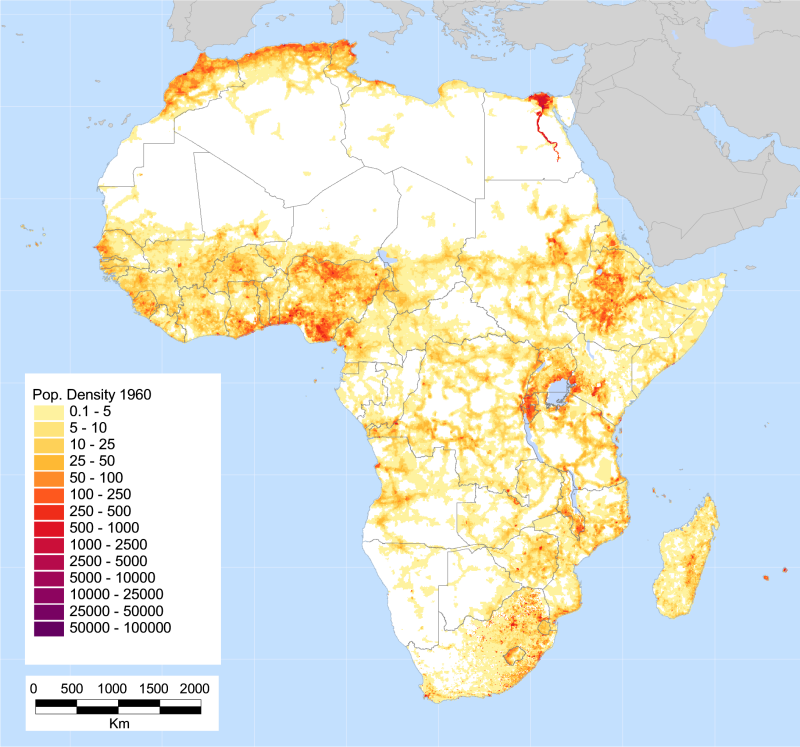
      @simon33 I mean, reasonable people can disagree about whether an army could have crossed the Western Sahara in the 1940s. In terms of both rainfall and population density, the Rio de Oro area is actually less desolate than northern Sudan, where the game does allow you to cross.

      2f25c127-dddf-41ac-82da-9ce0857433e4-image.png

      f7a11565-9b75-49f7-9e16-e689e0e4fc93-image.png

      That said, I’m primarily relying on the TripleA map here. You can see that Rio de Oro is clearly adjacent to both Morocco and French West Africa. If the map designers want that area to be impassible, then I believe it should be marked as such in the basic map, not just after you apply the graphical overlay.

      459265fc-7742-47cd-b219-ca6317e489a2-image.png

      As far as your second question, I have no idea why people have stopped playing this game. I enjoy it and I plan to continue playing, even though the developers have ignored my bug reports for the last year.

      Moreover, I do not agree that dividing SZ38 is a mistake. The sailing distance from Bangkok (in SZ 132) through Singapore (in SZ38) to Calcutta (in SZ40) is about 3,000 miles. This is also roughly the sailing distance from New York to France. The standard Global map models the NY-France trip as requiring a naval move of 4 spaces. I see no excuse for treating that trip as 4 spaces wide while treating the Bangkok-Calcutta route as only 2 spaces wide. Any invasion of India would have required some staging grounds on the western coast of the Malayan peninsula – it would have been totally unrealistic to try to attack India using forces based out of Bangkok or Saigon, yet this is exactly what Global encourages players to do. I am thrilled that the Path to Victory map corrects this problem; it is one of the main reasons that I find the map interesting.

      posted in Other Axis & Allies Variants
      A
      Argothair
    • RE: We need an allied playbook.

      @AldoRaine said in We need an allied playbook.:

      The biggest problem this creates for the allies in my mind is how it gives Japan a lot of space. Which can lead to very bad things for the Allies.

      I hear you, comrade! I agree that if USA puts 80%+ into killing Italy, then Italy is not going anywhere useful from this opening, and Moscow will either fall late or not fall at all, so Europe looks pretty good for the Allies – but then you have to turn around and pivot and scramble to save Sydney or whatever. Which works great for a lot of players; some people are more comfortable than I am with that kind of emergency pivot. My personal preference (so far) is to look for Allied strategies that give you a reasonable chance of more-or-less containing the Axis all over the map – halt Italy near Sudan and Jordan, halt Germany near Norway and Bryansk, halt Japan near Burma and Borneo and the Carolines. If the Axis break out a little bit somewhere, fine, figure out how to deal with that – but don’t write off a whole theater as part of your opening strategy.

      posted in Axis & Allies Global 1940
      A
      Argothair
    • [Global 1940] Streamlined Factories & Victory Cities

      For about a year now, I’ve been mulling over some ideas for a streamlined ruleset for factories, victory cities, capitals, and economies. My goal is to make the rules simpler, faster, and easier to remember without taking away from the realism and tactical challenges offered by the Global 1940 map. Anyway, I was bored at work this morning, and I think my ideas finally crystallized into something worth sharing. Please let me know what you think!

      ALL FACTORIES ARE VICTORY CITIES, AND VICE VERSA

      To avoid having to keep track of two separate lists of critical targets, I want to treat all territories with factories in them as victory cities, and I want to put a factory in each victory city. People naturally pay attention to factory cities, because that’s where the stream of enemy units is originating from. Instead of being forced to split your attention between factory cities and victory cities, you should be able to win the game if you capture and shut down enough of your opponents’ factories.

      Starting Allied Victory Cities (14):
      Kiev, Leningrad, Moscow, Stalingrad, Omsk (Novosibirsk)
      London, Ottawa, Calcutta, Sydney
      New York, Chicago, San Francisco
      Paris
      Chongqing (Szechwan)

      Starting Axis Victory Cities (6):
      Berlin (Eastern Germany), Frankfurt (Western Germany), Prague (Greater Southern Germany)
      Tokyo, Harbin (Manchuria)
      Rome

      The Axis need to capture a net of 6 victory cities to win, so they’re looking to get up to a total of 12 victory cities. That would often mean capturing Paris, Chongqing, Kiev, Leningrad, Stalingrad, and either Calcutta or Sydney, but there is some flexibility if the Axis want to go all-out against either Britain or Russia.

      The Allies need to capture a net of 2 victory cities to win, so they’re looking to get up to a total of 16 victory cities. That could mean capturing Tokyo and Harbin while liberating France, or it could mean capturing Frankfurt and Rome while holding the line against Japan, or it could mean completely wiping out the European Axis while only losing a couple of victory cities to Japan, e.g., down Chongqing and down Sydney.

      BUILD FACILITIES, NOT FACTORIES

      Because factories are victory cities, they cannot be constructed, upgraded, or destroyed. Instead, players can build training camps, naval bases, and air bases as needed to try to provide better geographic coverage.

      | Building | Cost | Produces | Special Abilities |
      | Major Factory     | N/A | Up to 10 units | Is a Victory City |
      | Training Camp     | 5 IPCs | Up to 3 infantry     | None |
      | Naval Base | 8 IPCs | Up to 3 ships | +1 ship range, repairs capital ships |
      | Air Base | 10 IPCs     | Up to 3 planes | +1 airplane range, scramble fighters |

      Facilities stack with each other to add additional production opportunities. For example, if you have both a training camp and a naval base in Southern France, then you could build up to 3 infantry and 3 submarines there on the same turn. However, no territory, no matter what facilities it has, can ever spend more than 40 IPCs on producing new units in the same turn. Even if you have a factory, a naval base, an air base, and a training camp all on the same territory, you still can’t spend more than 40 IPCs there. If your nation is earning more than 40 IPCs per turn, then you have either save the income or spread your spending across more than one territory.

      THERE ARE NO CAPITALS; INSTEAD YOU CAN LOOT ALL FACTORIES

      This system doesn’t use or require capitals. There is no such thing as capitals in this ruleset. Instead, anytime you capture a factory, that factory automatically goes up to max damage (20 damage tokens), and you can steal up to 10 IPCs from the factory’s former owner. If the owner doesn’t have a full 10 IPCs, then you simply steal whatever they do have in their treasury. For example, if China only has 4 IPCs left when Japan conquers Chongqing, then Japan would steal 4 IPCs from China. On the other hand, when Germany conquers Paris, they would only steal 10 IPCs from Paris – not the full 17 IPCs that would typically be in France’s treasury.

      Because there are no capitals, conquering the cities that are traditionally thought of as capitals doesn’t cripple the nation’s economy quite as badly. For example, if Germany conquers London, that’s quite bad for Britain – it means that Germany gets to steal 10 IPCs, plus collect England’s 8 IPCs, plus inflict max damage on London’s factory, plus Germany gains a victory city and is closer to victory, plus Britain may finds it harder to produce enough units in the Atlantic theater to fight back effectively. So there are plenty of reasons to try to capture the cities that are traditionally thought of as capitals. But in this ruleset, capturing those cities doesn’t completely prevent their former owners from collecting income, constructing buildings, or recruiting new units. For example,. after Germany takes Paris, Paris will still have 7 IPCs in its treasury, and it can use those IPCs to immediately build a training camp in, e.g., Algeria or French Equatorial Africa. Then, on turn 2, France would be able to recruit some infantry in its training camp.

      If you conquer a city with airbases, naval bases, and/or training camps, then all of those facilities receive 5 damage at the moment you capture them. If this pushes them over the 8 damage maximum, then the facilities are destroyed.

      ADJUSTMENTS TO BOMBING RULES

      Both tactical bombers and strategic bombers may target any type of building for bombing damage. As per the usual rules, tactical bombers deal 1d6 damage, and strategic bombers deal 1d6+2 damage. A training camp, naval base, or air base is fully functional as long as it has 3 or less damage. A training camp, naval base, or air base is deactivated if it has between 4 and 7 damage. A training camp, naval base, or air base that accumulates 8 damage is immediately destroyed. It can be rebuilt for its full price on its owner’s turn if the owner has the cash and wishes to do so. A rebuilt facility starts off at full health.

      Factories behave as normal – they lose one unit of production capacity for each damage up to 10 damage, and then after that they can accumulate ‘surplus’ damage up to 20 damage. Factories cannot be destroyed. If you inflict more than 20 damage on the same factory, it just gets 20 damage and stays there until its owner pays for repairs.

      UNIFIED BRITISH ECONOMY

      All British territories, including the UK, Canada, ANZAC, India, Singapore, Hong Kong, and South Africa, participate as part of the same unified nation and economy on the same turn. There is no more division between UK-Europe and UK-Pacific. Because no territory can produce more than 40 IPCs of units in the same turn, Britain cannot simply dump its entire economy into Calcutta or Sydney. Britain can choose to focus its efforts into the Pacific if it desires, but that is an appropriate option that should be allowed. If Britain directs all of its efforts to the Pacific theater, then Germany and Italy will rapidly get very large at Britain’s expense, reducing Britain’s total budget and making it hard or impossible for Britain to keep on cranking out units in the Pacific.

      STARTING LOCATIONS FOR TRAINING CAMPS

      There are no minor factories in this ruleset. This is just one possible suggestion for where the training camps might go at the start of the game. Players are free to build more, for 5 IPCs each, in any territory generating at least 1 income. There might need to be other changes to setup to make these rules work well. Naval bases and airbases would probably be placed mostly in the same starting positions as regular Global 1940.

      Scotland
      Southern France
      Northern Italy
      Finland
      South Africa
      New Zealand
      Buryatia
      Korea

      posted in House Rules
      A
      Argothair
    • RE: We need an allied playbook.

      I think if we’re sticking closely to the theme of a “playbook” then it is not really worthwhile to debate the relative priority of the UK’s tasks – instead the thing to do is to just name the UK’s tasks, and briefly explain what the Allies need to get done, and then suggest some of the tactics that can work, either individually or as a package, to accomplish some of those tasks.

      For example, let’s say for the sake of argument that we all think that the UK wants to defend London, push Germany out of the Atlantic, and defend Egypt in the opening. Fine! We don’t need to rank the importance of those tasks. Instead we can discuss the Taranto Raid, and the Gibraltar Stack, and the Tobruk Attack, and the Ethiopia Attack, and the Middle Earth setup, and advise our readers on how well each of those openings will serve each of the UK’s goals. That way readers can decide for themselves what goals they want to prioritize and then pick an opening that will help achieve their goals.

      posted in Axis & Allies Global 1940
      A
      Argothair
    • RE: G40 Redesign (currently taking suggestions)

      LHoffman, thanks for engaging with my ideas in so much detail. It’s good to get this stuff out in the open.

      I cannot speak for anyone else, but my motivation in attacking Russia with Japan is not to get money from Moscow; it is to win the game. The easiest and most reliable way for the Axis to win the game is for Germany and Japan to jointly pressure the USSR and head for Moscow. If the Axis can eliminate the most reachable major Ally, and the only one on the Euro-Asian land mass, they become very, very difficult, if not impossible for the Allies to beat.

      I have two questions here: (1) do we want the Axis to become virtually impossible to beat after they capture Moscow? (2) do we want there to be other ways for the Axis to become virtually impossible to beat, e.g., capturing London, or capturing India, or capturing Hawaii, or capturing Brazil?

      If your answers are yes to (1) and no to (2), then the race to Moscow really is inevitable, and there’s just nothing we can do about that – if you give a player one goal that’s obviously more useful than the other goals, then of course that’s what they’ll try to do. Personally, I find having only a single major goal boring, and not worth the 10+ hour investment required to play a game like G40, but if you enjoy it, that’s fine.

      If your answer is no to (1), then we need to work on giving the Allies at least one plausible base from which to fight for Eurasia that works even if Moscow falls. That could be a Russian base, like a factory and secondary capital in the Urals or Kazakhstan or Amur, or it could be a non-Russian base, like India, Persia, Egypt, Turkey, Yugoslavia, Greece, Italy, or Norway.

      If your answer is yes to (2), then we need to work on giving the Axis exciting goals that can lock down the game for them other than conquering Moscow. The most obvious option is probably changing the starting units so that Germany has a chance to take and hold London if it makes that its top priority. Another option is to bring more of South America into play and providing starting naval bases in, e.g., Chile, Argentina, New Zealand, and Morocco, that shorten the width of the south Pacific (so that moving southwest into Africa / South America / ANZAC becomes a more realistic strategy for economic victory). A third option is to loosen the restrictions on building on island territories, so that if Japan takes Hawaii it has a chance to continue on to Alaska, Mexico, and Panama without losing too much momentum.

      As far as France, China, and ANZAC, I think most of the boost they need is just a chance to go before their respective Axis opponents. France should go before Germany, and China and ANZAC should go before Japan.

      How is this a good idea? Or historically accurate?

      It’s a good idea because there’s no point in setting up the blue pieces only to mechanically wipe them off the board on turn 1 before anyone gets to move them or choose how they’re arranged. You may as well use neutral white pieces if France literally never gets to issue orders to the troops in metropolitan France. Having one turn to set up a French defense after your own stylistic preferences, even if the defense is ultimately doomed, is way more fun than having zero turns to set up the defense and watching the French pieces get picked off in exactly the same way game after game.

      In terms of game balance, as we’ve discussed on other threads in House Rules recently, there’s no need to give France all of the same starting units – if you want to nerf France a bit to make up for its turn order advantage, you can. Another option is to give France only a noncombat move on its first turn, so that it can’t attack Italy. Personally, I would prefer to have Italy be neutral (!) on turn 1 and not get activated until turn 2 unless Britain or France attack it. That way, France can attack Northern Italy if it wants, but it brings Italy into the war a turn earlier, so that’s a gambit at best for the Allies.

      In terms of history, check out the Saar Offensive on Wikipedia – it’s a little known fact that after Germany invaded Poland, France responded by invading Germany, without waiting for Germany or Italy to invade France. They didn’t get very far, but there’s no special reason why the French couldn’t have attacked harder or done better in their opening attack.

      I understand that sometimes the historical aspect must be slightly compromised for balanced gameplay, but your reasoning is purely emotional. I would propose the ability for China to somehow obtain a second fighter if the first is destroyed. For instance, the USA or Britain flying one of theirs to China and having it then belong to China. This isn’t the same as your fun idea, but it gives China a second chance at more diverse firepower.

      I’m not emotionally worked up about China having a second fighter; it’s not like I’m Chinese-American or something like that. I just think it makes for better gameplay, for the reasons Black Elk was pointing out: with 12 territories in play, it’s boring to have to pick only one of them in which to attack. I wouldn’t mind if the second Chinese fighter had to come from some kind of American lend-lease, e.g., you start with a fighter in the Philippines, and you can send it to China, where it becomes Chinese, or retreat it to Hawaii, where it remains American. However, I think restricting the gift of a second fighter to situations where the first fighter has already been killed is far too weak: the point isn’t to ensure that China keeps its fighter (generally not too hard, because the fighter can keep landing in safe territories and Japan doesn’t have many AA guns to work with in China), the point is to give China the interesting decision of whether to make one attack or two attacks per turn.

      Even though Axis and Allies G40 technically has 9 or 10 independently playable powers does not mean that they all should be played independently or that they should be played with the expectation of having similar amounts of action or import to gameplay.

      I strongly disagree. If you don’t want 9+ playable powers, don’t have them: nothing wrong with a game that has Germany, Italy, Japan, USSR, UK, USA, and a bunch of neutrals. If you treat the Australians and the Chinese as pro-Allied neutrals, the game can work just fine. On the other hand, if you have 9+ playable powers, you have to make them freaking playable! Adding extra player powers that don’t actually get to play is a waste of expensive chrome, a waste of setup time, a waste of brainpower spent thinking about a more complicated turn order, and a trap for the unwary: even if you and your friends know that the minor powers aren’t supposed to be interesting, there will always be newbies who reasonably assume that the designers wouldn’t have put a country like France in the box and the rules unless France was meant to be playable, and those newbies are going to be bored stiff. As G40 stands, you could give France, China, UK Pacific, and ANZAC all to the same player, and he’d still have way less fun than the guy playing even a medium-sized power like UK Europe. That’s crazy.

      I am just against a secondary capital rule as a general practice. To me, it would make the game a little more convoluted and, ultimately, I don’t think it would mean very much. Once you go to a secondary capital your whole objective will still be to re-take your original capital. Being able to collect your remaining income and spend it (if able) will likely just delay the inevitable (defeat) in many cases.

      I don’t see why everyone working out of a secondary capital will be obsessed with recapturing their original capital. As, e.g., the Free French, I might be perfectly willing to work on retaking French North Africa, or Trans-Jordan, or just on supporting an attack on Italy. As a British player operating out of Ottawa or Calcutta, I might be perfectly willing to let the Germans hang on to London for a few turns in favor of a strategic bombing campaign that helps the Russians take Berlin.

      Also, I think having a meaningful ability to build units after the fall of your capital will change the point at which players abandon their capitals. Right now, players hold on to their capitals until it becomes abundantly clear that their entire army will be handily wiped out if they try to hold it. By the time Germany has 60+ troops adjacent to Moscow, the Russians barely have any territories left besides Moscow, so the best the Russians can hope for is a wandering nomadic horde that holds one territory at a time. On the other hand, if Russia had the option to fall back to a more defensible position, maybe they would take advantage of that opportunity and therefore be able to trade/hold more territory. A Russian stack holding at Omsk could reunite the Siberian and European armies faster and would be stronger relative to the invading German and Japanese forces. A Russian capital at Omsk wouldn’t have a huge income, but it could reasonably trade and deadzone for 15+ IPCs for a few turns, which could be interesting. I don’t see that as “delaying the inevitable defeat,” because if the Germans or the Japanese have to pull their stack back to defend their own capital, then the Russians could increase their income and sustain themselves indefinitely, whether or not they recapture Moscow.

      That said, I’m not wedded to the idea of secondary capitals per se – what’s important to me is that powers have a way to place units after their original capital is lost. I could live with the infantry-spawn idea.

      posted in House Rules
      A
      Argothair
    • RE: We need an allied playbook.

      The question gets a little weird because if you send the entire starting Allied air force directly to Moscow, then you could wind up losing some of London, Gibraltar, Cairo, etc. in ways that make it harder to build more fighters or get them to Moscow before G5 / G6.

      You can also lose the game on victory cities with Germany controlling London, Paris, Rome, Berlin, Warsaw, Cairo, Leningrad, and Stalingrad – no Moscow conquest required.

      I still think it’s an interesting question, but the answer isn’t as simple as just saying “fly every fighter on the map to Moscow and then Moscow won’t fall and then the Allies win.”

      posted in Axis & Allies Global 1940
      A
      Argothair
    • Five of the Japanese Openings

      INTRODUCTION

      This post, loosely inspired by BlackElk’s posts on All the Russian Openings and All the German Openings, will take a look at Japanese opening strategy from a beginner-to-intermediate point of view. I’m going to assume you know the rules and basic tactical concepts like trading and deadzoning, but this post should still be fun to read even if you’re not an experienced player.

      Because the Japanese go fourth in the turn order, and because the Allies often get a ‘bid’ of additional units to place on the board that can disrupt the starting position, there are so many possible board positions by the time Japan gets to take its first turn that I can’t possibly cover all the Japanese openings. So, here I’ll cover five of my favorites – some popular, and some less popular – and explain how they work, when to use them, and what kind of middlegames they can set you up for.

      TANK DEATH MARCH TO MOSCOW (“TDMTM”)

      What is it?

      In TDMTM, Japan builds a constant river of tanks, usually from mainland Chinese factories, and sends them straight to Moscow, hoping to overwhelm the Russian defenses and sack the Russian capital.

      What should you build?

      You’ll probably want at least two Chinese factories – one in Manchuria and one in Kiangsu or Kwangtung, so that you can build five tanks a turn right into Asia. With the cash left over, I recommend building fighters, which can help you take territories while you’re left alone, and then quickly fly back to defend your factories if America comes to get you.

      How should you attack?

      You need to find the fastest path to Moscow, which usually runs through China (four spaces). Siberia, which has five spaces, can sometimes be a faster route if China is defended and Russia is foolish enough to stack their eastern infantry in Buryatia (or the Far East) so that you can wipe out the whole Russian stack on turn 1 or turn 2. If Siberia is totally undefended, you can blitz across it with tanks in only three turns. In general, be willing to lose tanks in order to get your tank forces one space closer to Moscow, as long as the Russians can’t push you back out without taking painful losses. Gather most of your infantry and separate it from your tanks, sending the infantry toward Burma to bottle up the British forces there, and then retreat your infantry to the east as needed to avoid losing a major battle. It’s OK to give up some territory in the south as long as you still hold your factories and the victory city in Shanghai.

      Why does it work?

      No matter what Russia builds, it can’t afford to build enough units to fend off a combined onslaught by both the Germans and the Japanese. Basically, it’s OK if the troops you lose cost you more than the troops Russia loses, because you can afford to replace all 5 tanks every turn, but at best, Russia can only afford to replace 3 infantry per turn in Asia. Meanwhile, if the Japanese use mostly tanks, then in order to arrive on time to save the Russians, the western Allies have to fly in planes, which cost more and are less efficient than the Japanese tanks.

      When should you use this opening?

      This opening works best when Russia doesn’t roll well on its first-turn attacks in eastern Europe, stacks its eastern infantry in Buryatia, or builds expensive units like a plane or two tanks on its first turn. It works well when Germany ferries units from Africa up to Europe (instead of vice versa), and when Germany builds all land units, especially tanks, and sends them directly against Russia. This opening works very nicely when Britain over-invests in India (e.g., 1 infantry and 2 fighters) instead of building an early fleet to crush Germany, because you don’t need to attack India at all to win with this opening. If there’s a bid, you want the bid to include Egyptian infantry and/or an Indian Ocean sub, and you want the bid to not include any Russian infantry.

      What kind of middlegame can you expect?

      If your opponents are competent, America and Britain will usually manage a successful landing in France or Italy before you can actually take the Russian capital. At some point, you will probably have to divert some German production to infantry and artillery to defend western Europe. You may wind up crippling Russia and knocking it down to 10 to 12 IPCs per turn a few turns before you can actually take the capital. Be prepared to fly a stack of Japanese fighters west to defend Berlin (or vice versa if the Allies are attacking Tokyo), and start to look for more moderate, slightly less aggressive trades. You have to be willing to go for the knockout blow if you really have an opportunity to take the Russian capital, and you also have to be willing to be patient if the best you can do is trade Kazakh and the Caucasus. If you throw away too many tanks for too many turns in a row, you can give Russia a chance to stabilize. You need to win by turn 8 or 9, but you don’t need to win on turn 6 or 7 – it will take several turns for Allied transports to make their second round-trip from Washington to Paris, and until they make that second round-trip, the added cost of the transports and their defensive escorts means that Germany can produce more land units than America and Britain put together.

      LET’S ORDER INDIAN TAKEOUT

      What is it?

      In the Indian Takeout opening, you focus all of Japan’s energy on conquering and holding India at the earliest possible moment. This wipes out the only Allied factory that’s anywhere on the southern or eastern halves of the board, and it gives you a strong base of operations for attacking juicy targets like Egypt, Caucasus, and Kazakh.

      What should you build?

      You’ll need either three transports and a factory in French Indochina Vietnam, or five transports. Your transports will be loaded with a balanced mix of infantry, artillery, and tanks – you can adjust the exact mix to make good use of all of your income each turn. It’s OK to have 1 more transport than you can afford to fill, because you can usefully load one transport with Manchurian troops and bring them down to Indochina to help with the Indian battle.

      How should you attack?

      Your biggest bottleneck in this opening is transport capacity, because you need transports to unload troops onto the Asian mainland for attacks, and you also need transports to get your troops – including troops from Manchuria – closer to India. Try to solve this bottleneck by making each transport move do double duty. For example, on round 1, if you move troops from Tokyo to Yunnan, they’re now only two moves from India, and they can also kill some American infantry as they’re landing. Also, killing any British boats left in the Indian Ocean is a top priority – you need to be able to send your transports exactly where they want to go without having to worry about escorting them against British sub attacks.

      Why does it work?

      India only has 3 build slots, and the Allies don’t have any other factories anywhere nearby to help reinforce it, nor are there any good candidate territories for the Allies to use to build a second colonial factory. The Allies can fly fighters to India, but it’s slow, expensive, and challenging to do that. Even if the Allies manage to get planes to India in time, it will set them back on other fronts. Also, you can set up a ‘dual threat’ on India – one threat via land, with tanks in Indochina blitzing through Burma to reach India, and one threat via sea, with transports off the coast of Kiangsu, the Philippines, or the East Indies ready to deliver troops to India by sea. The idea is that if India attacks Burma to stop the blitz, they could use up enough troops that India would be vulnerable by sea, but if India doesn’t attack Burma, then they get blitzed and they still get hammered by your transports.

      When should you use it?

      If the Germans take Egypt or even Trans-Jordan on turn 1, or if the British divert units away from India toward Egypt, then this opening has an excellent chance of succeeding. This opening can also be useful if the Russians do above-average in eastern Europe on turn 1, since the opening works fine even when Russia is strong. If Britain doesn’t place a full 3 units in India on turn 1, this opening should be near the top of your list. This opening is not recommended during a strong American attack on Japan, since India is too far away from Japan for your fleet to operate effectively in both theaters, and you won’t have any spare cash available to build defensive warships. If there’s a bid, this opening works well when the bid goes to Russia or to the American Atlantic fleet.

      What kind of middlegame can you expect?

      If you successfully take India, it sets you up for Japan to have both an enormous economy and a convenient factory site with which to exploit it. Without Allied reinforcements from India, China and Siberia will typically fall pretty quickly, and you can at least trade Egypt, Kazakh, and usually the Caucasus, for an income of at least $50/turn. With that kind of money, you can build, e.g., 3 infantry in India, 3 tanks in Manchuria, and 2 bombers in Tokyo every turn. If you were able to kill big stacks of British units while they futilely tried to defend India, then the game is yours. If Britain gave up on India early and built a fleet to invade France/Italy, Germany is probably in trouble, and Moscow is probably still safe for a few turns, so get ready to relieve Germany as soon as you can – if the Allies are in the Mediterranean, then you can ‘liberate’ the Suez and send your fleet to help Italy, and if the Allies are in the Baltic, then you can try to meet up with German forces for a one-two punch by the Germans and then the Japanese in the Caucasus, allowing you to hold the Stalingrad factory and crank out 4 tanks / turn to relieve the German position.

      POLAR EXPRESS

      What is it?

      In the Polar Express, you set up to quickly ferry troops into Alaska, building a factory there and penetrating as far into the American interior as circumstances allow. This opening won’t let you actually conquer the United States unless your opponents royally screw up, but it can distract the heck out of the USA during crucial turns when they really need to be ferrying troops to Paris.

      What should you build?

      As many transports that are fully loaded with pairs of infantry as you can afford, plus a couple of destroyers for blocking the US Pacific fleet (if any). Also, one factory in Alaska. If the USA builds warships in the Pacific, you may need to at least partially match their build, or build fighters to sink their ships and then land the fighters in Alaska. Otherwise, go easy on the planes.

      How should you attack?

      The best time to move troops ot Alaska is usually turn 3 – you need to wait the Allies are far enough out of position that they won’t be able to launch an immediate counter-attack. With perfect execution, you can invade Alaska on turn 3 while bringing your fighters back to Tokyo, follow up on turn 4 by building an Alaskan factory, sending a second load of transports to Alaska, and flying your fighters over to Alaska, and then deliver a third load of transports to Alaska on turn 5 while building tanks at your new Alaskan factory. You’re going to lose some transports this way, but every turn you pose a serious threat in Alaska is another turn that the US can’t focus on Europe. Be aware of who can blitz into which territories – if the US has tanks in San Francisco, you may need to put a token force into Western Canada so the tanks can’t reach Alaska, and if you have tanks in Alaska, you may want to put a token force into Western Canada to threaten to invade San Francisco. Meanwhile, you can slowly expand into central Asia, especially China, making smart, opportunistic attacks that cost the enemy more troops than they cost you. You’re not in a hurry; you’re just there to get extra income and reduce US income. If you have more loaded transports than you need to hold Alaska, send them to Hawaii, Panama, and Brazil to further reduce US income.

      When should you use this opening?

      This opening only makes sense if (a) the US starts to send its Pacific fleet through the Panama Canal into the Atlantic, and (b) Britain spends most of its turn 1 income on planes or India. If America builds ships in the Pacific, or if Britain plops down a carrier in the Atlantic on turn 1, then don’t use this opening – you won’t get anywhere useful by distracting the US if Britain is in position to take Paris on its own or if the US is planning on attacking you anyway.

      Why does it work?

      Japan can make some reasonable progress in mainland Asia even with virtually no spending there, freeing up basically the entire Japanese economy to go harass the United States. Meanwhile, the United States’ first few turns of building usually go to transports and defensive warships, which don’t have any effect on Germany until after they unload in Europe. If you can distract the US intensely enough at the right time, then you can give Germany the time it needs to crush Russia without sacrificing much position in Asia. By building mostly infantry and fighters, you can force the US to attack you, which usually requires a higher income – but after Japan conquers China and Alaska, they’re earning at least as much cash as the US (36 IPCs / turn).

      What kind of middlegame can you expect?

      Japan will have a somewhat smaller economy than most games – even as late as turn 6, Japan might only be collecting 40 ipcs, and you won’t have much in the way of stored-up armies, either. However, Germany should be huge – either about to capture Moscow, or marching tanks all over the map from Archangel to the Congo, or both. You’ll need to find the right moment to abandon your Alaskan adventure and go beat up on India or help finish off Moscow.

      SKIPPERS OF THE SOUTH PACIFIC

      What is it?

      If you get bogged down on land but your navy is in solid control of the South Pacific, you can take advantage of the extra mobility of your marines to vacuum up territories across a wide area, making the Allies’ land-based garrisons irrelevant.

      What should you build?

      Transports. At least 6 transports, together with a couple of bombers, several infantry, and a few artillery. You won’t need more than your one starting tank (for South Africa). If you can afford it, a factory in the East Indies can be useful for this opening – because it’s 3 spaces away from Japan, and more or less in the direction of your targets, an East Indies factory can resupply your transports a full turn earlier than normal.

      How should you attack?

      Priority one is to clear the South Pacific of Allied boats. No destroyers, no subs, definitely no carriers – send out your planes, send out your subs, and kill them all. Priority two is to drop enough infantry into mainland east Asia to hold the line and create at least a little bit of presure on India – if Britain feels totally safe in India, they’ll start building subs or bombers there, which can wreck your plans. Basically, you want Britain to feel that they can hold India if they build 3 infantry there, but that they’ll lose India if they build 3 subs. Think of suppressive fire – you’re not trying to kill India; you just want to make sure India stays down, under cover, where they can’t shoot at you. Priority three is to launch your transports and start hoovering up Allied cash – take Australia, Madagascar, New Zealand, South Africa, Brazil, Hawaii, British West Africa, and anything else you can get away with, roughly in that order. If your landing site is undefended, you can spread out for a turn or two to adjacent territories (e.g., Rhodesia, or the Congo). If the Allies somehow manage to ship in reinforcements, don’t bother to stay and fight – just pick up your dudes and move on to the next undefended target. Note that the priorities are listed in order of importance, not in order of time – you’ll need to start moving transports out on turn 1, but if you don’t have enough cash to accomplish all three priorities, then transport-construction is the place to skimp.

      When should you use this opening?

      This opening works well when the Allies over-commit to defending Siberia, China, and/or India. If you see Russia move two infantry and two tanks to the east, or if you see Britain build tanks in India and fly planes to Gibraltar, it’s time to think about letting the Allies keep central Asia and eating up the Allied economy on other parts of the map.

      Why does it work?

      The southern hemisphere is just woefully undefended on the starting map setup – you’ve got one British infantry in South Africa trying to defend 6 different territories with no navy and no air support, Brazil is literally empty, and the only Allied factory that can resupply any of those places is in India. Keep India busy, and the rest of the southern hemisphere falls. Granted, the southern territories aren’t super-valuable – you’ll be picking off a lot of $1 and $2 provinces. Together, though, they add up, and Germany is likely to get off to an excellent start while the Allied garrison is wasting its time in Central Asia defending against a Japanese attack that you don’t need to launch and won’t ever have to launch.

      What kind of middlegame can you expect?

      A long one. This opening will create an economic advantage for both Germany and Japan – you could be collecting 95+ IPCs per turn by turn 6 – but none of the Allied capitals will be in any special danger, and this opening doesn’t create any real opportunities to crush large Allied armies. The Allied forces in central Asia will be out of position in the opening, but they won’t be killed or stranded, so they can fall back to Moscow and render excellent service later in the game.

      (continued below)

      posted in Axis & Allies 1942 2nd Edition
      A
      Argothair
    • RE: We need an allied playbook.

      So the problem I’m having with this “pick x of 5 cities to save” discussion is that it matters a lot when the cities fall. London falls on turn 3? Not a problem if you’ve done the Taranto raid and killed some German planes; Russia can just swoop in and occupy eastern Europe, America can liberate London at its leisure, and you’re looking at an Allied win.

      London falls on turn 7? You’re pretty much screwed in most cases.

      Flipping that around, if Calcutta falls on turn 3? That’s pretty bad; the Japanese have enough time to pivot over to Australia or Honolulu and force America to ignore the Atlantic, or they might even be able to build a factory in West India and crank out 6 fast movers a turn (9 if they get Persia, 12 if they get Iraq, etc.) to seize the middle east and mess up moscow’s southern front.

      On the other hand, if Calcutta falls on turn 7? That’s totally fine; in most cases, if Japan is only reaching Calcutta by turn 7 that means Japan is more-or-less contained, and by the time Japan can use the Indian bases to seriously threaten Cairo or Moscow, the game will be over.

      So, taking the question as seriously as I can:

      In the opening, hold Moscow and Calcutta.
      From the middlegame on, hold Moscow and London.

      posted in Axis & Allies Global 1940
      A
      Argothair
    • RE: Grand Plans, 3rd Edition?

      @Black_Elk said in Grand Plans, 3rd Edition?:

      To me having more game tiles (a bunch of additional tt and sz) doesn’t really necessitate all the baseline rules complexity we see in 1940. What I mean is that you could surely find a way to make a more limited and much faster 5-6 man total war scenario, still with a larger game map more on the scale of global, and it wouldn’t be that much harder to learn than 1942.2 is currently.

      I think there’s definitely some room for a modular starter map that has lots more ‘tiles’ than, say, 1941. I think once you get up near the Global 1940 scale, the amount of table space you need to set the thing up, in square feet, is excessive for a starter game. Not everybody has a giant living room table that they can reserve for a full day of gaming; it’s a barrier to entry if the flagship map is so big that casual players won’t even be able to set it up.

      That’s just a quibble, though – I strongly agree with you on the missed opportunities for a modular map with a moderate size, lightweight rules that can expand to become more complicated as players get more sophisticated, and digital integration.

      posted in Axis & Allies 1942 Online
      A
      Argothair
    • RE: We need an allied playbook.

      If you want to link to the VC card, I’d be happy to check it out.

      I think my response to that kind of strategy, assuming a G1/J1 DoW, would be to not build any factories in Egypt, Iraq, or Persia, and instead just focus all Allied efforts on taking Berlin. Don’t scramble, spend the whole UK1 buy on buffing up the fleet that Berlin didn’t sink, then buy transports UK2 after you see the G2 tank buy. If the tanks go east on G3, Western Germany should fall on UK3; the G1 strat buy won’t help defend it. Or, if Germany collects all available resources to hold Western Germany, then you should be able to snap up Norway, Normandy, and Belgium for very cheap, and then you get ready for the Denmark-Berlin punch on UK/US4. It’s totally OK to trade Moscow for Berlin!

      Have you tried that already? How did it turn out?

      posted in Axis & Allies Global 1940
      A
      Argothair
    • RE: Grand Plans, 3rd Edition?

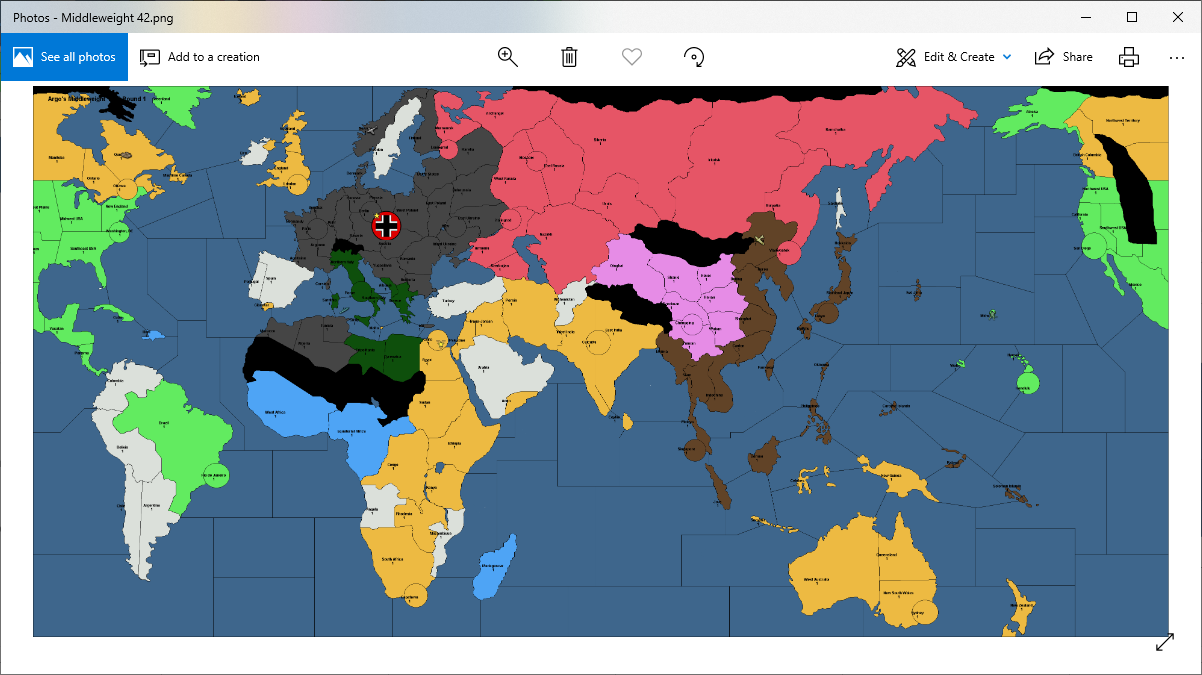
      I’ve started work on a new map for TripleA that I hope will serve as a useful ‘middleweight’ option for people who want some complexity and variety, but who don’t need the comprehensive “kitchen sink” approach of World at War or Global. I’ve added a few tiles near Paris, San Francisco, Tokyo, etc. to make capitals a bit more vulnerable to piecemeal attacks, but otherwise I’ve tried to remove and merge tiles where ever I could muster the will to press the ‘delete’ key. Here’s a very early draft with no territory values or units – just the ownership. I’m putting all the Allied factions in lighter pastels, and all the Axis factions in darker shades, to make it easier to tell at a glance which side owns a territory. All of the victory cities are 70-pixel-wide circles, and vice versa, to make it easier to tell at a glance who owns the victory cities and where they’re located.

      These are very early drafts, still, but maybe it’ll give you a sense of where I’m headed. I don’t want to hijack this thread, so future updates will be posted at https://www.axisandallies.org/forums/topic/33233/argo-s-middleweight-map-for-1939-1942, but I’m basically making this map as a direct response to the discussion we’ve been having here, so I thought I would at least mention it once. :-)

      1939:
      65795168-a8a8-40d4-b1b9-0b3c004a3179-image.png

      1942:
      a6ab3a17-32b7-4461-b87a-05af84f10e4f-image.png

      posted in Axis & Allies 1942 Online
      A
      Argothair
    • RE: We need an allied playbook.

      @taamvan So I think the response I’m imagining is meant to take Berlin before Germany can build with the Moscow money. If Germany is targeting a G5 Moscow attack then you can take Berlin through UK5, and Germany won’t ever be able to spend 100 IPCs.

      You and I and many others agree that the Global 40 OOB is unbalanced without a bid, so we’re not necessarily talking about trying to win with no bid. But if you have either a bid or the extra cash from Balanced Mod, I think you could stack enough infantry in Moscow that Germany can’t both take Moscow G5 and hold Berlin against an all-out US+UK frontal assault on northwest Europe.

      Maybe Berlin can pivot in a way that would defeat the Allies; e.g., when you see the Allies coming for Berlin, pause and build some infantry, and settle for a G6 attack on Moscow that will still have superior momentum. I’m not sure, though. I think maybe if you build almost nothing but tanks and bombers, then you set yourself up for a do-or-die on G5 where after G5 Russia has enough infantry in Moscow to hold. You have other problems, like Japan will be a monster by then, and US spending will have to shift to the Pacific to keep Sydney and Honolulu out of Japanese hands. So I’m not saying the G1 attack is a bad idea for Germany; just that there are probably some effective counters for people who are interested in thinking outside the usual confines of “rush Anglo-American reinforcements to Moscow.” I hear you that Germany is very difficult to take in a normal game, but the attack plan you’re describing doesn’t sound to me like a normal game. It sounds like Germany is diverting all of the assets that usually make Germany a tough nut to crack toward heading east with a massive, fast hammer-blow.

      By analogy, usually it’s crazy to talk about Japan taking San Francisco, but if you literally send the US Pacific fleet through the Panama Canal and build nothing in the Western US, well, now it’s a serious threat.

      Anyway, we can agree to disagree on all this stuff, or we could try it out in a friendly playtest on TripleA sometime.

      I’m not on Facebook; I don’t like their business model. If you want to send me any of your custom stuff, I’m happy to look at it; you’ve got my e-mail. If not, that’s fine too.

      Cheers,
      Argo

      posted in Axis & Allies Global 1940
      A
      Argothair
    • RE: Axis & Allies balance problems …

      Returning for a moment to the transport-pricing question, I think one good way of analyzing that is to compare the cost of sending loaded transports vs. the cost of sending planes.

      Suppose for the sake of argument that you have unchallenged control of the seas, so the only extra expense you have to incur for amphibious assaults is the cost of the transports themselves. Also for the sake of simplicity, suppose you have a token beachhead of 3 infantry that is already on the mainland, so that if you support that infantry with enough planes, it can theoretically conquer as many territories as necessary. These two assumptions cut in opposite directions (control of the seas makes transports better; having a beachhead makes planes better), so hopefully they at least roughly balance each other out.

      If transports cost 7 IPCs and you are able to use the same transport twice over the course of a tournament game, then the cost of buying and delivering a supporting force of 2 inf, 1 art, 1 tnk is 6 + 4 + 5 + 7 = 22 IPCs. This results in a total force of 5 inf, 1 art, 1 tnk, which has 7 HP, 11 punch, and 15 defense.

      Alternatively, if fighters cost 10 IPCs, and bombers cost 12 IPCs, then the cost of buying and delivering a supporting force of 1 inf, 1 bmr is 10 + 12 = 22 IPCs. This results in a total force of 3 inf, 1 ftr, 1 bmr, which has 5 HP, 10 punch, and 11 defense.

      Under the (admittedly artificial) assumptions of the experiment, the transports are strictly better – you get more HP, more punch, and more defense for the same amount of money.

      On the other hand, suppose each transport can only make one delivery during the length of the tournament game. Buying and delivering a supporting force of 2 inf, 2 tnk will now cost 6 + 10 + 7 + 7 = 30 IPCs. You could instead deliver 3 fighters for those 30 IPCs. The total amphibious forces (including the beachhead) would be 5 inf, 2 tnk = 7 HP, 11 punch, 16 defense. The total airborne forces (including the beachhead) would be 3 inf, 3 ftr = 6 HP, 12 punch, 18 defense. Those forces appear roughly equivalent to me – the airborne force has one fewer hit point, but it has slightly more punch and defense.

      Finally, suppose the transports can only make one trip, and they also need to be escorted by a pair of destroyers in order to survive even that one trip. Buying and delivering a supporting force of 4 inf, 1 art, 1 tnk + 3 transports + 2 destroyers now costs 12 + 4 + 5 + 21 + 16 = 56 IPCs. For less money than that, you could afford 4 ftr, 1 bmr. The total amphibious forces (including the beachhead) would be 7 inf, 1 art, 1 tnk = 9 HP, 13 punch, 19 defense. The total airborne forces (including the beachhead) would be 3 inf, 4 ftr, 1 bmr = 8 HP, 19 punch, 23 defense. The airborne force appears superior to me – it would be able to reliably trash the amphibious force if they fought in direct combat.

      Part of why I think transports are overpriced in tournament play is that you often do need something like destroyers to protect your transports. You might not be able to finish a second round-trip before the tournament game ends, especially for transports built after turn 3 or so, and you might need two or even three fleets of transports to efficiently ferry infantry from, e.g., New York to Rome/Berlin. If you have to set up a shuck-shuck where transports are constantly swapping places with each other (i.e., if you want to cross an ocean rather than just bridge a single sea zone) then that seriously increases your transportation costs.

      posted in Axis & Allies Discussion & Older Games
      A
      Argothair
    • 1 / 1