
If anyone wanted to take a look at the rulebook, yo can go here to see the rules for World War II on the Western Front:
Western Front 1944 scenario
-
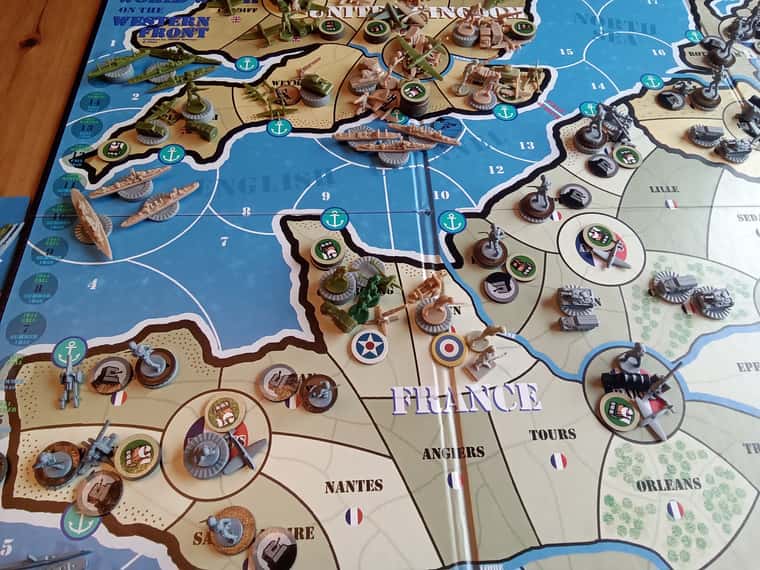
Here is the 1944 scenario. Allies go first in the scenario followed by Germany. Scenario start on June 6th, 1944. US must land in Cherbourg, and UK/Canadians must land in Caen - unless playing with optional rules.
This game is available through Combat Miniatures:
https://combatminiatures.org/collections/historical-board-games/products/world-war-ii-on-the-western-front

-
In this game, infantry get defensive bonuses from terrain such as forest, mountains, coastlines, or rivers. But Infantry can also entrech themselves to get a defensive bonus. While entrenched, they cannot move, even to retreat.
They also get a bonus for defending in a fortress, but the infantry must be entrenched to get the fortress bonus. While entrenched in a fortress, infantry roll 2d6, instead of 1d6.
When defending from an amphibious landing, the defender fires first and the attacker must remove those units before he gets to fire. This is for the first round only. It makes amphibious landings very dangerous.
The stack limit in the game is 6 ground units to a space. But when amphibiously attacking a land space, only 3 units are allowed to amphibiously attack - unless the land space is a beach, in which case all 6 units can attack.
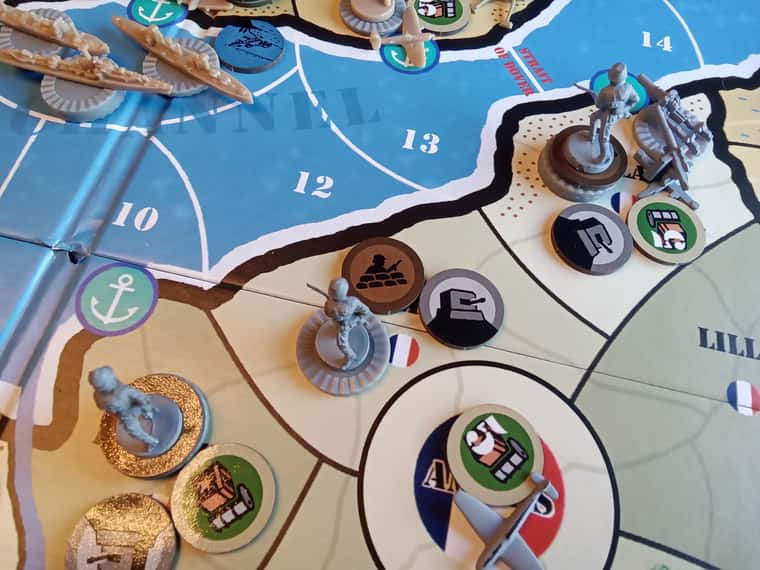
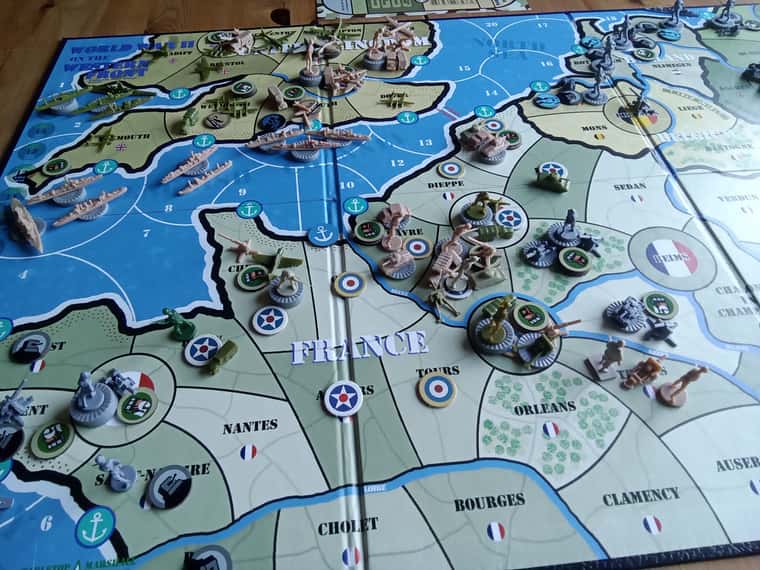
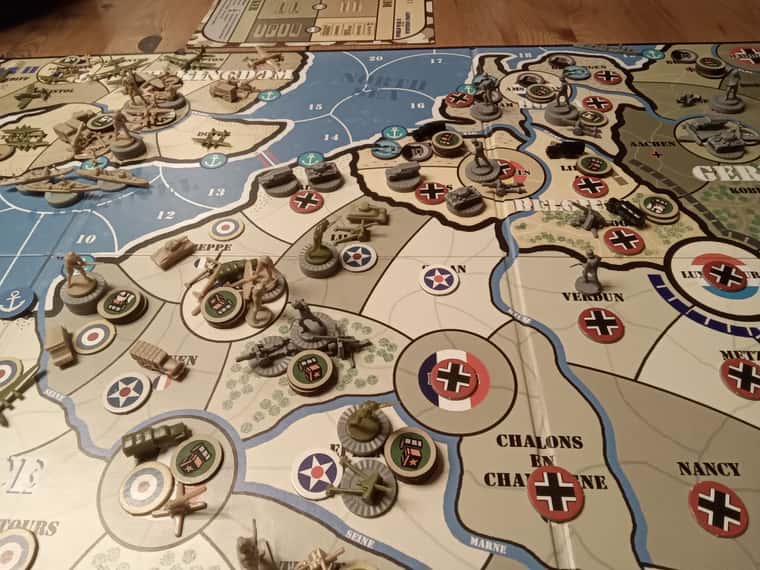
The grey token with the turret represents a fortification. The brown token represents that the infantry are entrenched.

-
@jim010 Are there Free French or no?
-
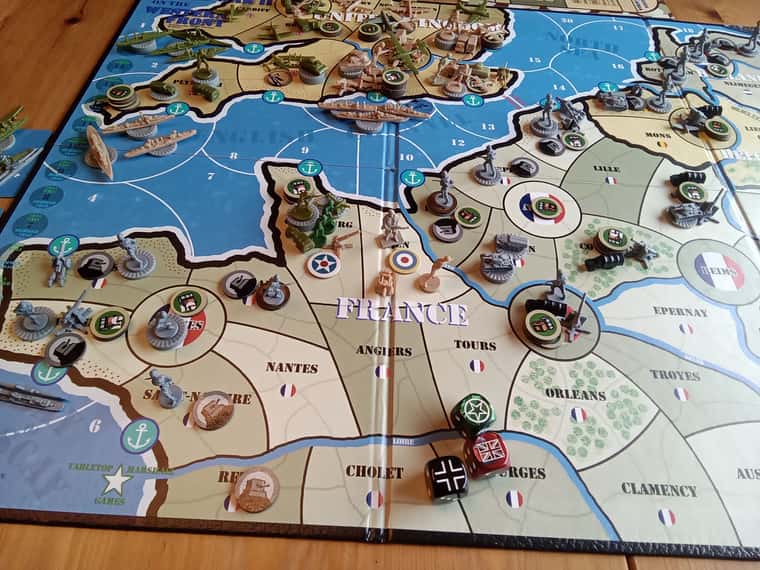
End of Allied turn. Successful landing with heavy casualties.

-
@FranceNeedsMorePower Yes. They show up on or after turn 8 as the French First Army coming up from southern France chasing the Germans after Dragoon.
-
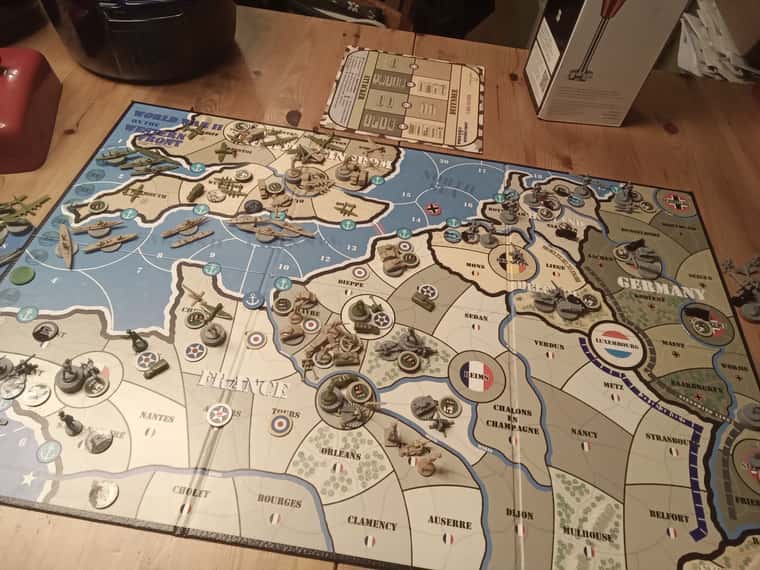
End German turn 1. Disastrous counterattack at Caen. Tried to deplete the British forces there, which did happen, but the Allies brought their entire airforce to help defend, enabling the British to survive and the German attack being wiped out.

-
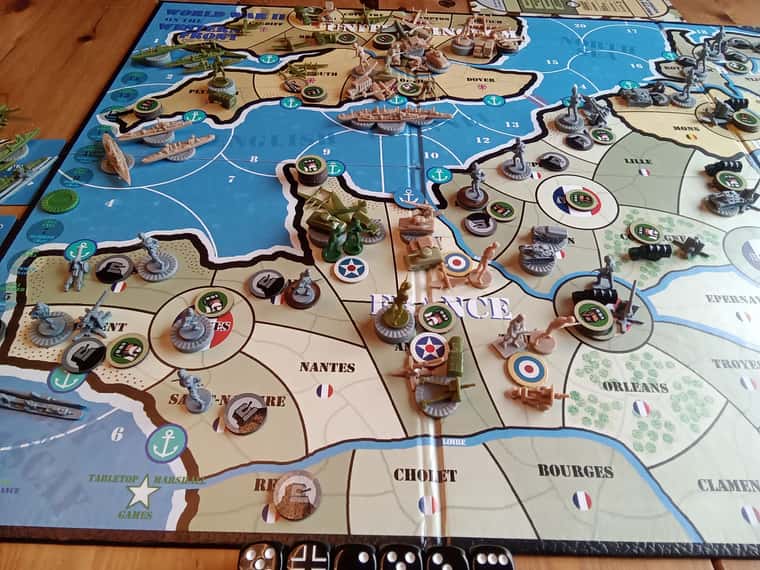
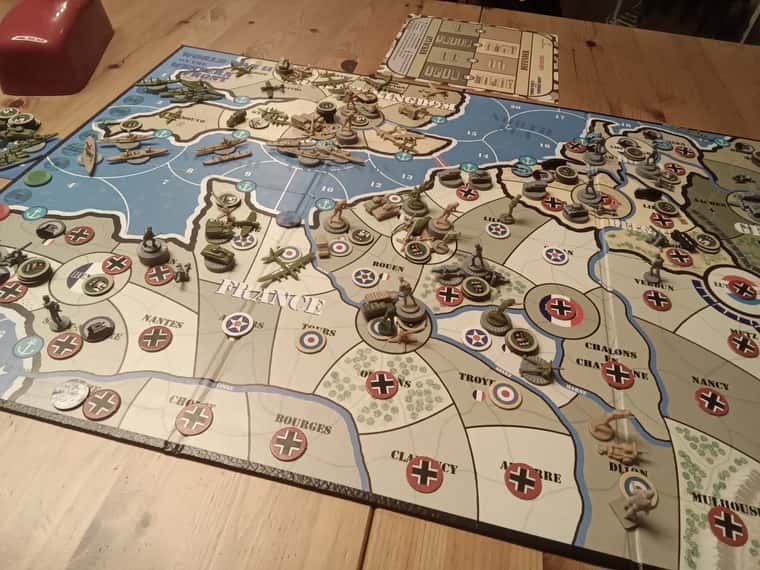
End of Allied turn 2. Breakout from Normandy.

-
End of German turn 2. Assem assembling on the east side of the Seine River. Brest is cut off from German support.

-
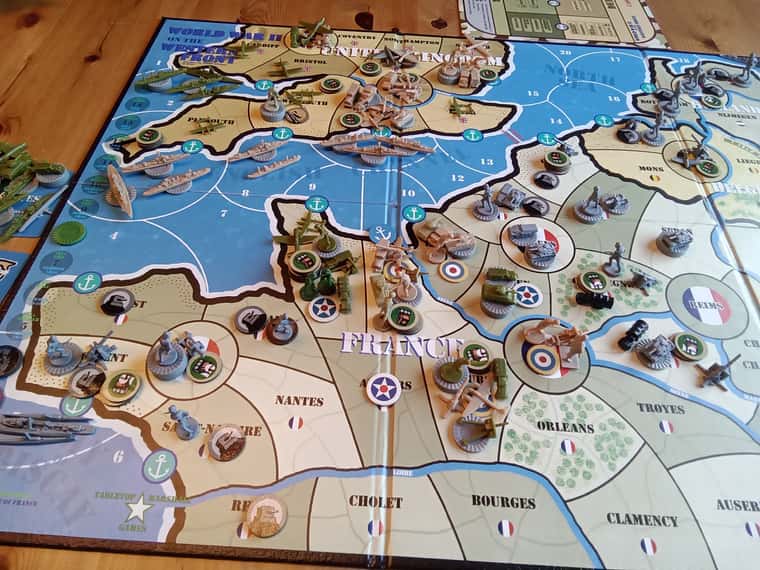
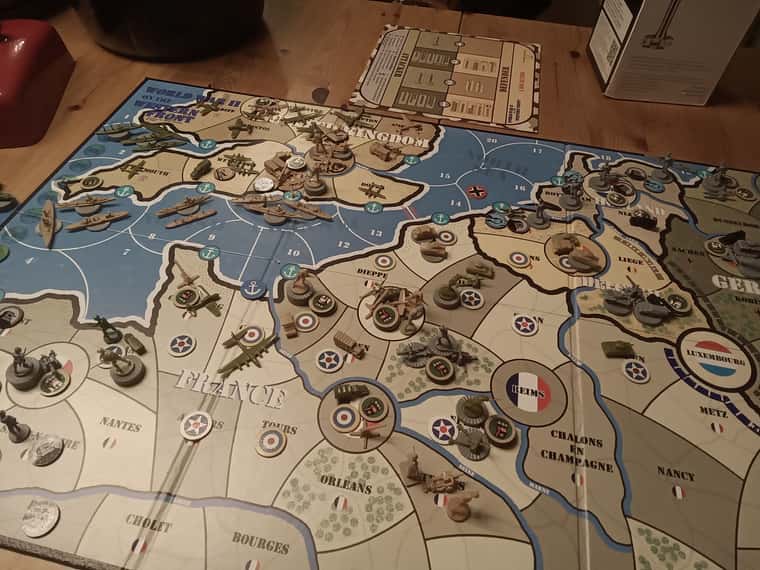
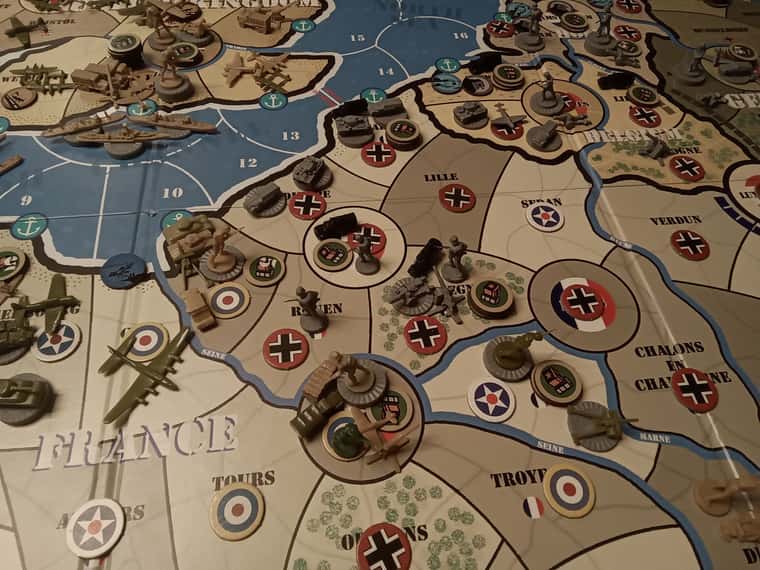
End of Allied turn 3. Crossed the Seine river.

-
Ok, the second German counter attack didn’t go so well either … end of German turn 3.

-
@jim010 Could you show a picture of what that looks like? When you get to it tag me. I know you going in order.
-
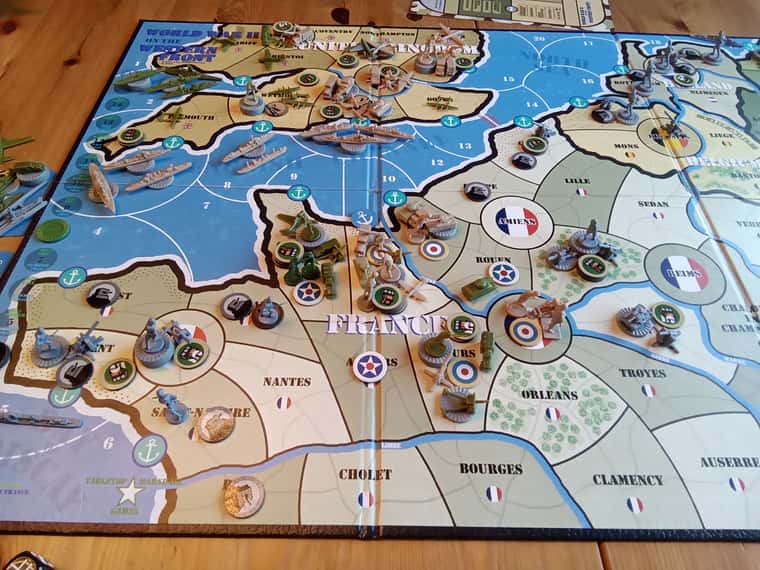
End of Allied turn 4. Broke through, but now supply is lacking. Need to slow down and let supply catch up.

-
End of the German turn 4. Regrouping behind the Meuse river.

-
End of Allied turn 5. Supply situation is critical, but pushed forward anyway. Britishand Canadians took Brussels.

-
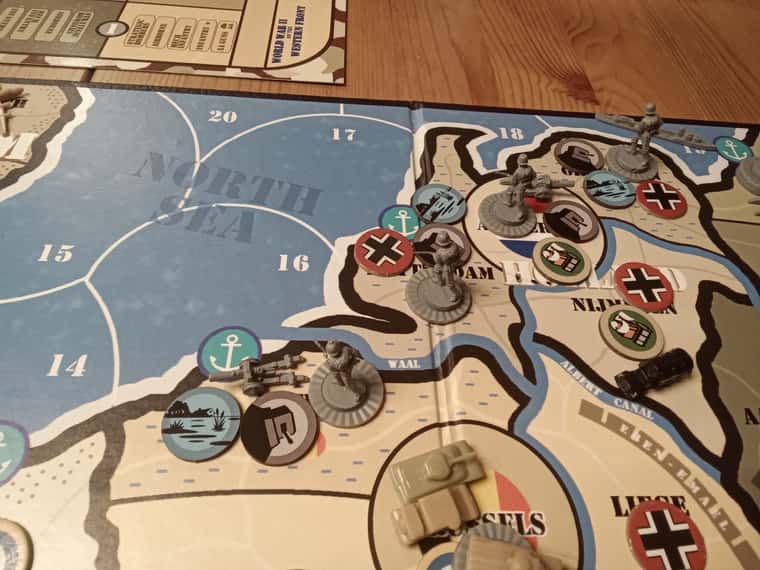
Germans flooded the wetlands to slow the Allied advance.

-
End of German turn 5. Allies were over extended after all. Lead British and US forces cut off an annihilated. Allied armored punch has been lost while the Germans rebuilt theirs.

-
End of Allied turn 6. Uboat war has scored successes against US transports. Go8ng to take a bit to get the tank and mech replacements back up to the front.

-
End of German turn 6. Another successful counterattack. Allies kicked out of Amiens, Calais and Dieppe.

-
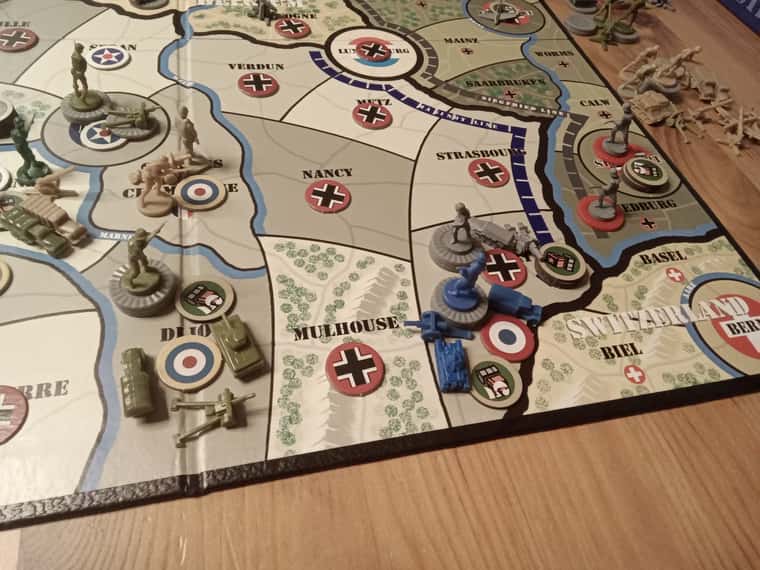
@FranceNeedsMorePower just jumping ahead, but starting on turn 8, Allies start rolling to see if the Operation Dragoon armies pop up on the south eastern part of the board like so:
Meant to represent the US 7th army and the French 1st army chasing the German army group G.

-
I’ll leave it here. Should be enough to show how a game could play out. The challenge with the Allies - especially the US - is to keep a steady supply of supply and forces flowing to the front. Easier said than done, though. Gets really hard as the Allies drive further east. The job of the Germans here is the same as that of the French in the 1940 scenario: delay the Allied advance and wait until the Allies have overextended themselves and are short on supply, then hit. Preferably before the Operation Dragoon Allied armies show up on the south east of the board. While doing all this, slowly start to build and man up the Siegfried Line to provide a strong defensive barrier. Because by the time the Allies get to the German frontier, they are very strong.


