Yeah, he can straighten you out.
I’m going to look at what you’re talking about with step 1: combat
Okay, I see what you’re talking about.
It does look like the rules talk about deciding whether to ignore transports/submarines during the combat movement phase and again in the conduct combat phase.
So when kamikazes are involved, we’ll use this example:
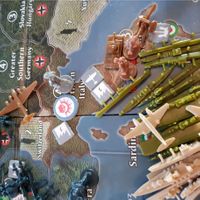
USA attacking the Philippines amphibiously with a fleet that has a destroyer and a battleship, and the Japanese have a submarine in Zone 35.
Combat movement phase: The attacker says I’m ignoring the submarine and amphibiously assaulting the Philippines.
Scramble and kamikaze decisions are made by the defender. The defender says no scramble but attacks the destroyer with kamikazes. The destroyer is hit by kamikazes.
Because there was no scramble, the attacker may opt to attack or ignore the sub. If there was a scramble, the sub could not be ignored because it is not alone anymore.
Again, if we assume there was no scramble then the attacker could decide to ignore or attack the sub. If he attacks and loses, then he would be forced to retreat the loaded transport. (If there were multiple subs, it’s possible the transport would even be sunk by the defending subs). If the battleship wins, then the amphibious assault is conducted on the Philippines.
You’re right, there can be multiple times in a turn that the attacker makes a decision to ignore or engage transports/submarines, so could change his mind after getting kamikaze results.
But feel free to ask Krieghund