Congratulations to Mr. Prewitt. It should be noted, however, that France’s highest order of merit is called the Legion of Honour (Légion d’honneur), not the Legion of Armour, and also that France doesn’t actually have knighthoods in the same sense as Britain does. “Chevalier” (knight) is indeed one of the Legion of Honour’s five levels, and the name is a holdover from the days when France still had an aristocracy, but the French nobility system went out the window with the French Revolution. I once saw a series of amusing cartoons depicting what life in France would be like today if the Bourbon monarchy hadn’t fallen, and one of them showed an irate air traveler standing at the ticket counter of “Royal Air France” and telling the ticket agent “But I’m a baron and I have a confirmed reservation!” The agent replies, “I’m sorry, sir, but the Duke of So-and-so has precedence over you, so we gave him your seat.” In fairness, the same sort of thing actually happens in real-life republican France. A few years ago, there was scandal involving one of the major D-Day anniversaries (I think it was the 50th one), when the French government contacted various hotels in Normany and appropriated some of their existing reservations so that various French officials could have rooms for the event. Some of those rooms, however, had been reserved by foreign veterans of the D-Day invasion. When the story broke on the front page of French newspapers (under such headlines as “Our Liberators Insulted!”), public opinion was outraged and the French government beat a hasty retreat. The prevailing editorial opinion over this affair was: Do this to our own citizens if you want, but don’t do this to the heroes who ended the occupation of France.
WWII–-75th ANNIVERSARY DISCUSSION--#25---AUGUST 1941
-
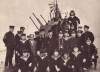
The Shetland Bus was the nickname of a clandestine special operations group that made a permanent link between Shetland, Scotland, and German-occupied Norway from 1941 until the German occupation ended on 8 May 1945. From mid-1942 the official name of the group was “Norwegian Naval Independent Unit” (NNIU). In October 1943 it became an official part of the Royal Norwegian Navy, and was renamed the “Royal Norwegian Naval Special Unit” (RNNSU).
The unit was operated initially by a large number of small fishing boats, and later augmented by three fast and well-armed submarine chasers – Vigra, Hessa and Hitra.
Crossings were mostly made during the winter under the cover of darkness. This meant that the crews and passengers had to endure very heavy North Sea conditions, with no lights, and constant risk of discovery by German aircraft or patrol boats. There was also the possibility of being captured whilst carrying out the mission on the Norwegian coast. However, early on it was decided that camouflage was the best defence and the boats were disguised as working fishing boats, with the crew as fishermen. The fishing boats were armed with light machine guns concealed inside oil drums placed on deck. The operation was under constant threat from German forces, and several missions went awry, of which the Telavåg tragedy is a prime example. Several fishing boats were lost during the initial operations, but after receiving the three submarine chasers there were no more losses.
Leif Andreas Larsen (popularly known as Shetland Larsen) was perhaps the most famous of the Shetland Bus men. In all he made 52 trips to Norway, and became the most highly decorated Allied naval officer of the Second World War.
https://en.wikipedia.org/wiki/Shetland_bus
The Shetland Bus is a little known story of WWII. What do you guys think?