




Japan had no interest in invading Africa, they knew that UK had that on lockdown and they didn’t have the resources to do it. I am 100% sure that Japanese High Command would of double down on invading Australia over that. The idea behind controlling Indian ocean was to do two jobs. First: Close Burma Road since the Chinese were getting heavy equipment from the US. People forget the bulk of the IJA was in China and China was always the end goal for Japan. Two: Cutting the Persian trade route was more of a request from Germany. People forget that the Battle of Madagascar was the only battle during WWII that had both Germany and Japan in the same battle.
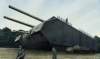
Italian and Japanese Heavy Tanks
-
Both these tanks carried a 75mm main gun and would have been a vast upgrade from both countries armor standard armored vehicles. Your thoughts?
-
I don’t recall Japan being involved in many tank-vs-tank slugging matches, whereas Italy most definitely did participate in major armoured force clashes in North Africa – so I’d pick the improved Italian tank rather than the improved Japanese one, on the grounds that Italy had more to gain from a better tank than Japan did.
-
@ABWorsham:
Both these tanks carried a 75mm main gun and would have been a vast upgrade from both countries armor standard armored vehicles. Your thoughts?
Before casting my vote I’d like to ask some clarifying questions:
- When do you envision each tank being put into production? The Italian tank was designed in 1940, the Japanese tank in late '43.
- How many of each tank would be produced? Italy envisioned producing 1,200 P 40s. It’s not clear how many Type 3 Chi Nu’s Japan intended to produce.
Suppose (for example) that the Axis could have 1,000 P 40s for Italy, or 1,000 Type 3 Chi Nus for Japan, as of December 1940. In that scenario, you have to ask:
a) Would the Axis benefit more by using those tanks in Italy’s effort to take Egypt, or a hypothetical Japanese invasion of India?
b) Would the Axis be better served if those tanks were in the hands of Italian crewmen or Japanese crewmen?The two tanks seem fairly similar from a design standpoint. The P 40 was 26 tonnes, compared to 19 for the Type 3 Chi Nu. This put them in the same weight category as the Sherman or the T-34. The P 40 had thicker armor than the Type 3 Chi Nu. However, the P 40’s armor was riveted, making it inferior to welded armor of the same thickness. I am not certain whether the Type 3 Chi Nu’s armor was riveted or welded. Both tanks had a maximum top speed of about 40 km/hour. However, the P 40’s engine produced 330 horsepower, compared to 240 for the Type 3 Chi Nu.
-
Evening Worsham. Excuse my delay in answering your post.
I had not heard of either tank. I voted for the Japanese one, as they could have been used to defend Japan against an amphibious attack (if it had happened).
For Italy, the P26 came too late. It did not have the technology to get it into production early enough to tilt things in its favour. It was relying on the Semovente and big guns mounted on lorries. The Germans were Italy’s armoured force.
Thanks again.
Suggested Topics