







A submarine either attacks or submerge.
If it attacks and hits a unit with a surprise strike with no destroyer present. The ship that is chosen to be hit does not defend and is removed from the battle board. Exceptions are Battleships. They take 2 hits and the second hit removes of the battleboard.
Repeat steps 2-7 if combat continues.If a submarine submerges it is not involved in any sea battle.
so is that to say that if a sub scores a hit with a surprise attack it destroys whatever unit it hits, with the exception of battle ships which would need to be hit by two surprise attacks? cause battle ships have a defence of 4
General Combat Sequence
Combat takes place over a number of rounds. Each battle round consists of several steps.
1. Place units along the battle strip
2. Submarine surprise strike or submerge (sea battles only)
3. Attacking units fire
4. Defending units fire
5. Remove defender�s casualties
6. Press attack or retreat
7. Conclude combatstep 2.
submarine surprise strike or submerge (sea Battles only)
This step is specific to attacking and defending submarines.
Before the general sea battle takes place (steps 3�5), both attacking and defending submarines choose to either make a
Surprise Strike die roll or submerge. However, if your opponent has a destroyer in the battle, your attacking or defending
submarines cannot submerge or make a Surprise Strike. Combat proceeds normally, and your submarines fire along with your
other units in step 3 or 4.
Submerge: Attacking or defending submarines that choose to submerge are immediately removed from the battle strip and
returned to the game board in the contested sea zone, removing them from the rest of that sea battle.
Players on both sides have to decide whether attacking and defending submarines will fire or submerge before rolling any dice.
The attacking player decides first.
Surprise Strike: Each attacking submarine conducting a Surprise Strike rolls one die, scoring a hit on a roll of �2� or less.
After the attacker has rolled for all attacking submarines, the defender chooses one sea unit for each hit scored and moves it
behind the casualty strip. (Submarines cannot hit air units.) Then each defending submarine conducting a Surprise Strike rolls
one die, scoring a hit on a roll of �1.� After the defender has rolled for all defending submarines, the attacker chooses one sea
unit for each hit scored and removes it from play.
Once all Surprise Strike rolls have been made, remove the defender�s casualties. This step is over for this round of
combat. Repeat this step during each round of combat as long as there are attacking and/or defending submarines and no
opposing destroyers. Any hits made during this step that do not destroy units (such as battleships) remain in effect until the
end of the combat.
Note: In both cases, attacking or defending, transports can be chosen as casualties only if there are no other eligible units.
You cannot choose submerged submarines as casualties since they have been removed from the battle.
Axis & Allies 1941 First Preview
-
Djensen
Any chance of getting some close up shots of the new pieces?
Cheers
-
Djensen
Any chance of getting some close up shots of the new pieces?
Cheers
I suspect the reason why we haven’t seen more yet is because Djensen is preparing some articles for the next days ;)
-
Nah… it’s an April Fool’s joke…
If somebody had suggested a few months ago that, in a future A&A release, the Americans would be given a Russian tank named after Josef Stalin, it probably would have been considered an April Fool’s joke.
-
Hey IL,
A minor correction to your list of new sculpts:
The British got the new Bomber sculpt – the AVRO Lancaster
The US got the new Fighter sculpt – The P-40 WarhawkEverything else looks correct to me. I would still like to know all of the classes/models.
-
I would still like to know all of the classes/models.
Me too. In David’s opening the box video, in the scene in which he’s flipping through the rulebook, I couldn’t tell if the last pages of the rulebook (as in some of the previous rulebooks) identify the units on which each sculpt is patterned. Hopefully they do.
-
I can see why this game is only going for 30 bucks. Looks pretty cheap. No money and I didn’t see any setup charts. No chips either. Cardboard cutouts for chips. Wow what a downer. Wizards of the Cheap couldn’t be more correct on this one. This is the first AA game I am really not that excited about. I hope 42 has nation specific units or I will not buy either of these games.
-
From what I could see from the video, it looked like the set up charts were printed on the back cover of the rulebook…
-
Is this correct for the new sculpts?
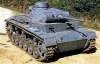
Allied Tank = USSR IS-2
Allied Fighter = US P-40
Allied Bomber = UK Lancaster
Allied Transport = UK Tower Hill
Allied Sub = US Gato
Allied Destroyer = US Sumner Class
Allied Carrier = Ark Royal
Allied Battleship = UK HoodAxis Tank = German Tiger
Axis Fighter = German FW-190
Axis Bomber = German He-111
Axis Transport = Japan Hakusan Maru
Axis Sub = German Type VII
Axis Destroyer = Japan Akitsuki
Axis Carrier = Japan Akagi
Axis Battleship = Japan Kongo -
If you watch the video, the units are all easier to see.
-
Can we see the setup charts? :-D
-
Please post a picture of the setup charts.
-
I suppose the game will be out in about a week. We can wait.
-
I suppose the game will be out in about a week. We can wait.
Waiting is for Christmas. We want to see the charts now please :D
-
Here’s what I’m thinking for the upcoming previews of Axis & Allies 1941: map & setup, rules, and finally a game review. Maybe a time lapse video of playing a game.
-
that would be fantastic. Just go over a turn with the new rules
-
Board game geek summary says it uses “game mechanics” used in 2nd edition rules…
Does that answer any questions?It’s selling at $19.99
-
Here’s what I’m thinking for the upcoming previews of Axis & Allies 1941: map & setup, rules, and finally a game review. Maybe a time lapse video of playing a game.
Excellent plan.
-
Hard to get excited bout these new sculpts. I’m so used to great quality of the HBG and FMG game pieces now that the oob pieces look cheap and amateurish.
-
Board game geek summary says it uses “game mechanics” used in 2nd edition rules…
Does that answer any questions?This reflects to the sales flyer. There it was said:
@sales:
Familiar Mechanics:
This game utilizes the A&A game mechanics present in A&A 1942 2 Edition, as designed by Larry Harris (the creator of the original game). -
Is this correct for the new sculpts?
Allied Tank = USSR IS-2
Allied Fighter = US P-40
Allied Bomber = UK Lancaster
Allied Transport = UK Tower Hill
Allied Sub = US Gato
Allied Destroyer = US Sumner Class
Allied Carrier = Ark Royal
Allied Battleship = UK HoodAxis Tank = German Tiger
Axis Fighter = German FW-190
Axis Bomber = German He-111
Axis Transport = Japan Hakusan Maru
Axis Sub = German Type VII
Axis Destroyer = Japan Akitsuki
Axis Carrier = Japan Akagi
Axis Battleship = Japan KongoThe IS-2, P-40, Lancaster, Tiger, He-111, Akagi and Kongo listings look right, and they match the types/classes that were listed in the WotC announcement.
The Hood (also listed in the WotcC announcement) is definitely right for the British, but the Americans and the Russians share a different (and unidentified) capital ship, according to the still pictures which David posted.
The FW-190 (also listed in the WotcC announcement) looks right for Germany, but in the still pictures which David posted the Japanese fighter looks different from the German one. It may just be because of the angle at which the pieces are lying on the table, or it may be that Japan has a different fighter from the FW-190 (in the same way that Britain has the Hood battlecruiser, while the US and the USSR have a different battleship). Maybe David could look at his sculpts side by side to check if they’re the same or not.
The destroyers, subs and transports, plus the Allied carrier, aren’t named in the WotC announcement, so the classes listed here are guesses at this point. Hard to tell definitively from the pictures if in each case the Allied countries all share one type and the Axis countries all share another; again, that’s something which David could verify for us by inspecting his sculpts side by side.
Suggested Topics