




Oh! I understand what you mean now.
Sorry for not figuring out.
No real term limits on leadership or background checks for that matter not that Stalin would do well here either.
Not removing Hitler before he implemented his Anti-Jewish plan. Hitler was bold and charismatic to the max. Germany was dealt a bad hand with the Treaty of Versailles and was a basket case by the time he managed to get himself elected so to speak. Of course burning down the Reichstag /parliament building and blaming the commies helped well that and Hindenburg being senile but I digress. Hitler did get Germany going, from 1933 to 1939 Germany did quite well, even until the end of 1940 the average German would have good reason to elect/re-elect him if given a choice.
The only trouble was that he was nuts and intended on removing the Jewish problem by: pick one (removing them his envisioned lands) OR (doing what ended up occurring).
Two 4 year term limits in Nazi Germany would have changed history.
Of course a real election and decent candidate background checks would reveal Hitler’s writings of 1919, kinda hard to run with that I would imagine.
Kurt - New World Order is a blast. Trucks and halftracks… trucks and halftracks! Say no more.
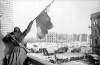
Hitler’s dreadful mistake was the attempt to invest Stalingrad, thereby rendering useless Germany’s greatest strengths - qualitative superiority and finely-tuned mobile and combined arms tactics. It became a slugfest, a meat grinder, a street brawl… and even though it came at massive loss to Russia, they were able to continuously pour troops into the city (manpower being their strength) while reinforcing the flanks and eventually using the German tactic of encirclement. Hitler’s hubris, as others have mentioned, was a fatal flaw. The apparent need to capture the city bearing Stalin’s name drove him to commit everything to the cause.
Stalingrad could have been circumnavigated and left behind as a pile of rubble, and the Wehrmacht could have kept the initiative.
Kurt - New World Order is a blast. Trucks and halftracks… trucks and halftracks! Say no more.
Hitler’s dreadful mistake was the attempt to invest Stalingrad, thereby rendering useless Germany’s greatest strengths - qualitative superiority and finely-tuned mobile and combined arms tactics. It became a slugfest, a meat grinder, a street brawl… and even though it came at massive loss to Russia, they were able to continuously pour troops into the city (manpower being their strength) while reinforcing the flanks and eventually using the German tactic of encirclement. Hitler’s hubris, as others have mentioned, was a fatal flaw. The apparent need to capture the city bearing Stalin’s name drove him to commit everything to the cause.
Stalingrad could have been circumnavigated and left behind as a pile of rubble, and the Wehrmacht could have kept the initiative.
agreed
Germany was a master at Blitzkrieg warfare.
Air superiority was a key in many WW2 battles.
Had they known about the Naval assention of aircraft carriers, they could have used some of the U-boad steel and reallocated that for building 4-5 carrier groups to hunt down the Royal Navy elements.
Japan and the USA proved carrier domination of the oceans. The aircraft are more lethal than U-boats for Blitzkrieg warfare on the high seas.
So the Germany’s surface naval war preparations by 1939 were more WW1 vintage, not matching the modernizations they had for armor and aircraft.
Good enough to take down France (big fortified army), but not Great Britain (remote fortified island).
Enjoyed the post, Linkon. Nice one.
First mistake = Bad strategies during the battle of britain.
Second mistake = declare war to USSR.
Third mistake = No good heavy bomber for the luthwaffe.
Had they known about the Naval assention of aircraft carriers, they could have used some of the U-boad steel and reallocated that for building 4-5 carrier groups to hunt down the Royal Navy elements.
Japan and the USA proved carrier domination of the oceans. The aircraft are more lethal than U-boats for Blitzkrieg warfare on the high seas.
Building carriers in and of itself wouldn’t have made a difference because the real problem Germany had in this area was Hermann Goering. Even though he was supposed to be in charge just of the Luftwaffe, Goering pushed hard to get control of all military aircraft in Germany, including those of the Navy. Goering, whose handling of the Luftwaffe was at times inept, was even less suited to handling naval aviation. And if I recall correctly, he intentionally hampered the development of German naval aviation (and perhaps even of the carrier-building program) because he viewed the Navy’s air assets as competition which drew away resources that he wanted to see allocated to the Luftwaffe.
I don’t agree.
Nazi didn’t need a carrier. In 1940, Germany possessed all the western litoral of Europe (France has the norvège).
What Germans miss the most was planes with long range capacity such as the condor (But with a better armement and equipment).
With this kind of planes, Luthwaffe could have cause lot problem to the Royal Navy.
Aircraft carrier proved their value in the pacific because the vast of the sea.
But in the north Atlantic Ocean, a German carriier would constantly have been harassed.
Moreover, Royal Navy lost some aircraft-carrier because of the Luthwaffe.
After all…Europe is an Unsinkable territory! :-D
Hey Marc.
If you want good info about Georing.
I recently reed a biography about Georing.
He was incompetent, drugs addict, influencable, and corrupted.
A head such as Kesselring would have been beneficial for the Luthwaffe.
In fact, the defeat of the Nazis is attributable has two men. Hitler and Georing who was nevertheless the number 1 and 2 of Germany.
First mistake = Bad strategies during the battle of britain.
Second mistake = declare war to USSR.
Third mistake = No good heavy bomber for the luthwaffe.
I agree that the Nazis could have done a better job of devising and implementing strategies for the Battle of Britain. But even if they had used their resources perfectly, Germany lacked the shipping capacity and other tools required for a D-Day style invasion. Their exit strategy was to hope Britain would agree to a peace treaty. Instead, the British government ramped up airplane production, and American factories added many more military aircraft.
After it became clear that Churchill had no interest in a negotiated peace agreement, the Germans concluded they needed another exit strategy. German military intelligence had grossly underestimated both the military strength of the Soviet Union and its military production capacity. A quick victory over the Soviet Union would provide Germany with the manpower, access to raw materials, and the industrial capacity required to stay in shouting range of Anglo-American military aircraft production.
Hitler’s notion of invading the Soviet Union was broadly accepted by senior army and Luftwaffe staff, in large part because they had no other alternative strategy for successfully getting Germany out of the war. Initially, the German Navy didn’t have a well-developed alternative either. But in the months leading up to Barbarossa, they gradually developed an alternative plan.
Their proposed alternative involved Axis control of the entire Mediterranean, of most or all of Africa, and of the Middle East. Germany itself lacked the naval resources necessary to execute this plan, so its success was contingent on the cooperation of its allies and purported allies. Spain would seize Gibraltar, closing the western Mediterranean to the Allies. The Vichy French would expand their influence in Africa and the Middle East. The Italians would push east from Libya, would take the Suez, and would then swing north into the Middle East. When all was said and done, the Axis would own all British possessions in Africa, and everything British in Asia west of India.
The problem with this plan is that Germany’s would-be allies were greedy and uncooperative. Franco demanded Vichy France’s Northwest African colonies as his price for entering the war. (In reality, Franco had no intention of entering the war, and therefore named a price well beyond what Hitler could reasonably consider.) The Vichy French demanded large territorial rewards as their price for entry–territory which Mussolini had also demanded as his price for entry!
Possibly, Hitler should have written off the Spanish–Gibraltar wasn’t worth that much–and focused on getting the Vichy French and the Italians to agree to something. He did make a halfhearted effort in that direction. But the efficacy of that effort was undermined both by his own determination to pursue Barbarossa, and by Italy’s subsequent military adventures in places like Greece. If Hitler had somehow forced the Italians and Vichy French to agree to something, it’s quite possible that Africa and the Eastern Mediterranean could have fallen into Axis hands. Oil from Persia would have been very welcome in Germany, and losing so large a portion of its empire would likely have reduced the number of military aircraft Britain might otherwise have produced.
But would this have been enough to get Germany out of the war? Or would the British have continued to send British and American-made planes against German cities, while shrugging off the loss of so much of their empire? If the latter, then what would Germany’s exit strategy have been? 1941 represented a period of temporary weakness for the Red Army. Even if Germany had not attacked, the Red Army would have been a much tougher opponent in 1943 or 1944 than it had been in the summer of '41.
Enjoyed the post very much, Kurt, thanks.
I agree that the Nazis could have done a better job of devising and implementing strategies for the Battle of Britain. But even if they had used their resources perfectly, Germany lacked the shipping capacity and other tools required for a D-Day style invasion. Their exit strategy was to hope Britain would agree to a peace treaty. Instead, the British government ramped up airplane production, and American factories added many more military aircraft.
I agree with you Kurt. I know all that fact.
U-Boat strangled UK economy 1940-1941. With an extensive bombardement with heavy bombers, English would have bent
their knees. Uk forces wasn’t enough strengh to impede a german invasion German in 1940. (memoirs of Churchill)
That’s why he was so happy when Uk wins the battle of Britain because he knows the result in front of failure.
It was the confrontation between the whale and the elephant and the elephant lost because he makes more mistake!
Based on what I have seen of A&A players actions…
1. Japan should not have honored their Russian non-aggression pact.
Japan player usu attacks the USSR in A&A.
2. Japan should have sunk the US carriers.
Another common Round 1 move.
3. Italy should have developed better fighters, bombers, and air force training.
Would have made a big difference in many battles. Aggresive Germany players will stack air power to take Africa in the game.
4. Italy should have built aircraft carriers before the war started.
Their navy was 50% disabled for years after Taranto. This cost them the Mediteranian and Africa. Having carriers, the naval command would likely find ways to utilize them, and eventually develop defences by ships and ports against aircraft.
5. Axis did not recruit Spain, Iceland, or Turkey early in the war.
Spain and Iceland offer great airbase stations to blockade convoys to GBR.
Turkey’s military could have fought to close the Suez and eventually claim the rich Saudi Oil fields.
Based on what I have seen of A&A players actions…
1. Japan should not have honored their Russian non-aggression pact.
Japan player usu attacks the USSR in A&A.2. Japan should have sunk the US carriers.
Another common Round 1 move.3. Italy should have developed better fighters, bombers, and air force training.
Would have made a big difference in many battles. Aggresive Germany players will stack air power to take Africa in the game.4. Italy should have built aircraft carriers before the war started.
Their navy was 50% disabled for years after Taranto. This cost them the Mediteranian and Africa. Having carriers, the naval command would likely find ways to utilize them, and eventually develop defences by ships and ports against aircraft.5. Axis did not recruit Spain, Iceland, or Turkey early in the war.
Spain and Iceland offer great airbase stations to blockade convoys to GBR.
Turkey’s military could have fought to close the Suez and eventually claim the rich Saudi Oil fields.
I agree that from an AA standpoint, a lot of what the Axis did in the historical war didn’t make sense. But a lot of that didn’t represent Axis error so much as Larry Harris oversimplifying historical reality. That’s not a criticism: there is no way Larry Harris could possibly have designed a game that was both balanced and historically accurate. If he’d tried to make a game that was both those things and had the desired level of simplicity, he would have taken on an impossible task. The game he designed makes good sense, despite (or perhaps because of) its lack of historical accuracy.
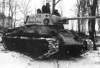
In the historical war, a Japanese invasion of the Soviet Union would have been much less practical than it is in AA terms. During WWII, the Soviet Union produced over 516,000 artillery pieces, compared to about 13,000 for Japan. The Soviets produced 105,000 tanks, compared to 2,500 tanks for Japan. The latter difference was exacerbated by the fact that Soviet tanks tended to be good, solid T-34s, or even T-34-85s, as opposed to the obsolete light tanks which constituted nearly all of Japanese tank production. The Soviets also had a large population advantage, and could field a much, much larger infantry force than could either Germany or Japan. Add to this the fact the Japanese Army was already bogged down in China, Southeast Asia, Pacific islands, and elsewhere, and the potential for a serious invasion diminishes further. Even if Japan did succeed in conquering the Soviets’ Pacific coast, Japan’s very limited logistics system would have precluded much in the way of further advance.
This is not to suggest that a Japanese invasion of the Soviet Union would have been an outright impossibility, especially not in the summer of 1941. But Japan did not have the resources to take on the Soviets and the British and Americans. It was one or the other, and Japan chose the latter. This was largely because the American oil embargo forced Japan to acquire the Dutch East Indies, which meant war against Britain. Japanese leaders assumed that if they attacked Britain, the U.S. would declare war against them as well.
America’s carriers were not at Pearl Harbor when the Japanese attacked, or else they would likely have been destroyed. Japan made several subsequent efforts to sink those carriers, including the Battle of Coral Sea and the Battle of Midway. Both battles occurred within a year of the Pearl Harbor attack.
I agree that Italy should have done many things differently. The Italian military was riddled with problems, including bad or inadequate equipment, bad leadership, poor morale, lack of military discipline, lack of preparedness, and a total inability to unite doctrine, available equipment and forces, and the other tools at its disposal to achieve a larger strategy. Britain’s ability to launch a Pearl Harbor-style surprise attack on Taranto–after the Japanese had done the same thing to the Americans–underscores the limitations of the Italian military. Italian aircraft carriers would have been useful for clearing the Eastern Mediterranean of its British naval presence, and might also have been useful in an attack on Gibraltar.
Spain in particular–or at least its dictator, Franco–wanted to remain neutral, and had zero intention of going to war on the Axis side. His supposed willingness to join the Axis was just a sham. Turkey’s leaders may also have preferred neutrality to joining the Axis, though it’s possible they may have proved more easily persuaded than Franco.
It’s hard for me to envision Iceland joining the war. One would think that Britain would have used its powerful navy to send an invasion force to conquer it. But barring that, it would at very least have imposed a naval blockade intended to starve the Icelanders into submission. What rewards could Germany offer, or threats could it make, to offset that? From Iceland’s perspective, neutrality was almost certainly the best option.
But while Iceland was almost certainly not an option for Germany, it’s possible Spain and Turkey might have been–regardless of how badly their leaders wanted to stay out of the war. Suppose Hitler had laid down the law to Franco, and had said something along the lines of, “Join the Axis or we will invade.” Suppose he’d said the same thing to Turkey’s leaders. And suppose that, as an added incentive, he’d offered Turkey’s leaders a good portion of whichever land he’d intended to conquer. (Either Britain’s possessions in the Syria/Iraq/Jordan area or Soviet Caucasus.) The time to make such threats would have been 1940, because after that the German Army was fully occupied by its Soviet counterpart.
Enjoyed that post too.
Throwing in 2 cents:
Japan was very wary of the Russians. They got their butt kicked in the Jap-Russo war the TR helped? mediate the end of.
Oh, and Turkey was a big part of WWI and lost, right? Wouldn’t that be a major reason they stayed out of WWII?
Excellent response regarding USA carriers - I have nothing to add, but to emphasize the importance that there were ZERO USA carriers at Pearl on 12/7/41.
And about Japan’s lack of manpower/resources/good tanks - this is one of my biggest pet peeves with A&A. I understand it isn’t meant to be historically accurate (extremely well put by Kurt) but it drives me crazy when Japan gets powerful (which is almost always, in the ridiculous 1941 scenario of AA50) and has so many infantry and tank units. Basically, in all these games where Japan is outproducing America turn after turn, it’s an absurdity that is necessary to make a fair game…. Like in Revised, people would crank out about 6-8 tanks a turn on the mainland and rush them toward Moscow, obliterating India (Japan never took India in the war), China, and all of Eastern Russia. None of these 3 were accomplished by Japan (supply lines are ridiculously long for these scenarios as well). But Revised is dead (to me anyway) and in the 1940 version, the USA has a more powerful economy, and the Jap hold on power is much more tenuous. (I have yet to be convinced that the current version of 1940, Alpha2, is not heavily slanted towards the Allies. Just saying this as my perspective thus far - not saying it’s really bad or good)
It’s hard for me to envision Iceland joining the war. One would think that Britain would have used its powerful navy to send an invasion force to conquer it.
In fact, that’s precisely what happened: http://en.wikipedia.org/wiki/Invasion_of_Iceland
It’s hard for me to envision Iceland joining the war. One would think that Britain would have used its powerful navy to send an invasion force to conquer it. But barring that, it would at very least have imposed a naval blockade intended to starve the Icelanders into submission. What rewards could Germany offer, or threats could it make, to offset that? From Iceland’s perspective, neutrality was almost certainly the best option.
But while Iceland was almost certainly not an option for Germany, it’s possible Spain and Turkey might have been–regardless of how badly their leaders wanted to stay out of the war. Suppose Hitler had laid down the law to Franco, and had said something along the lines of, “Join the Axis or we will invade.” Suppose he’d said the same thing to Turkey’s leaders. And suppose that, as an added incentive, he’d offered Turkey’s leaders a good portion of whichever land he’d intended to conquer. (Either Britain’s possessions in the Syria/Iraq/Jordan area or Soviet Caucasus.) The time to make such threats would have been 1940, because after that the German Army was fully occupied by its Soviet counterpart.
Iceland was full of Arians.
Norway had a Nazi Party that formed the colaboration government after they were invaded.
Hitler’s Ideology of Arianism is similar to some of the other Pan-National events in other parts of the world today.
In the historical war, a Japanese invasion of the Soviet Union would have been much less practical than it is in AA terms. During WWII, the Soviet Union produced over 516,000 artillery pieces, compared to about 13,000 for Japan. The Soviets produced 105,000 tanks, compared to 2,500 tanks for Japan. The latter difference was exacerbated by the fact that Soviet tanks tended to be good, solid T-34s, or even T-34-85s, as opposed to the obsolete light tanks which constituted nearly all of Japanese tank production. The Soviets also had a large population advantage, and could field a much, much larger infantry force than could either Germany or Japan. Add to this the fact the Japanese Army was already bogged down in China, Southeast Asia, Pacific islands, and elsewhere, and the potential for a serious invasion diminishes further. Even if Japan did succeed in conquering the Soviets’ Pacific coast, Japan’s very limited logistics system would have precluded much in the way of further advance.
This is not to suggest that a Japanese invasion of the Soviet Union would have been an outright impossibility, especially not in the summer of 1941. But Japan did not have the resources to take on the Soviets and the British and Americans. It was one or the other, and Japan chose the latter. This was largely because the American oil embargo forced Japan to acquire the Dutch East Indies, which meant war against Britain. Japanese leaders assumed that if they attacked Britain, the U.S. would declare war against them as well.
Historically, Japan already beaten both Russia and China, often at starting battle odds of 1:2 or worse. They had local air supremacy, and often used combined arms tactics that were not avaible to the opposition.
I remember reading that their Siberia campaign stalled mainly due to bad weather that prevented their air power to assert.
Wikipedia reports that Tokyo put a limit on air attacks of Soviet airfields.
Later battles by Japan in WWII were typified by their numerical inferiorities.
Iceland was full of Arians.
Norway had a Nazi Party that formed the colaboration government after they were invaded.
Iceland wasn’t a Norwegian territory when WWII started. It had been a Danish dependency since 1814, and it had been a semi-independent country with ties to the King of Denmark since 1918.
Vidkun Quisling’s Norwegian fascist party, the Nasjonal Samling, never received more than 2.5% of the vote from the time of its foundation in 1933 to the time of the Nazi invasion, so it was very much a fringe movement. The only reason they eventually achieved power is that the Nazis installed them as a collaborationist government after they had invaded and occupied the country. Nazi-style parties were formed in many countries in the years leading up to WWII – including Britain and the United States – but their existence did not in itself mean that those countries were full of Aryan supremacists. The fact that they were for the most part regarded as marginal extremist groups actually suggests the opposite: that the voters of those countries for the most part rejected fascist ideologies.
Historically, Japan already beaten both Russia and China, often at starting battle odds of 1:2 or worse. They had local air supremacy, and often used combined arms tactics that were not avaible to the opposition.
I remember reading that their Siberia campaign stalled mainly due to bad weather that prevented their air power to assert.
Wikipedia reports that Tokyo put a limit on air attacks of Soviet airfields.
Later battles by Japan in WWII were typified by their numerical inferiorities.
I’m in the midst of working on a rules set for a WWII strategy game. Where possible, I have incorporated qualitative differences between unit types. For example, a jet fighter is much better at air-to-air combat, and a lot harder to shoot down, than a piston-driven fighter. (Though the difference between the best possible piston fighter and the worst possible jet fighter is rather small.)
I have been able to find some pretty good data comparing the qualitative effectiveness of German infantry against the infantry they faced. (Soviet, British, and American.) Unfortunately, my data on the relative effectiveness of Chinese and Japanese infantry is less complete. I have tentatively made Japanese infantry qualitatively the same as Soviet infantry. This means they are a step down from British or American infantry, and two steps down from German infantry. I have made Chinese infantry a step or two down from Japanese infantry.
Your post seems to suggest I may have underestimated the effectiveness of Japanese infantry. I’d be happy to have an excuse to strengthen the early game Axis, especially Japan. But before I can increase the qualitative effectiveness of Japan’s infantry, I will need a link to a reasonably authoritative source which addresses the subject of Japanese infantry’s effectiveness.