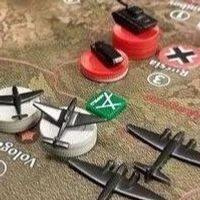




The confusion seems to be in you’re holding back naval ships for naval bombardment. The advantage about scrambling planes is that it forces the attacker to commit all their naval ships regardless if they want to or not. That’s why it is sometimes wise to scramble in a losing battle if the enemy is relying on bombardment for victory. The easiest situation would be when Japan invades the Philippine islands. If Japan was so aggressive that all they brought was two infantry with two cruisers as example. I would scramble the fighter in that situation because while I will lose the sea battle, if you choose to invade the island after the battle, you’re doing it without naval support which gives my defending infantry a better chance at winning.
Protecting the transports with aircraft, in an amphibious landing, from scrambles.
-
The only way to add planes to the defense of your fleet (as the attacker) if the defender scrambles during an amphibious assault, is to have a carrier present correct? I cannot fly planes to a sea-zone where there may not be any combat during the combat move, unless there is a carrier coming too? Or is even that not allowed?
-
@nzcamel you are able to send supporting Ftrs as long as they have a possible landing spot.
Example:
You attack Normandy you may send Ftrs from London bc the also can land in London again.
Or: you send Ftrs from Gibraltar and a CV who hasn’t moved yet who is located at sz 92 may move there to sz 110 after the combat is done.Hth
-
@aequitas-et-veritas they aren’t being sent to join a certain combat. They are staying with the fleet (with no enemy ships present) not fighting in the landing battle. Are you sure they are allowed to move in the combat step?
-
Rulebook (Europe 1940.2, page 13) has it:
"However, units can’t end their movement in friendly spaces during the Combat Move phase except in four instances.
…- Sea units that will be participating in an amphibious assault
from a friendly sea zone, as well as sea and/or air units that
may be needed to support it in the case that defending air
units are scrambled (see “Scramble,” page 16).
"
@nzcamel said in Protecting the transports with aircraft, in an amphibious landing, from scrambles.:
@aequitas-et-veritas they aren’t being sent to join a certain combat. They are staying with the fleet (with no enemy ships present) not fighting in the landing battle. Are you sure they are allowed to move in the combat step?
… same rulebook, page 32:
“Carrier aircraft move independently of the carrier on their own turn. They move along with the carrier on its turn if they belong to different powers. On the air units’ turn, they launch before the carrier moves, even if they are not leaving the sea zone themselves.”
So in case the attacking power brings its fighters to the sea zone in question (with the fleet or not) during combat move phase they will fight against possibly scrambling units.
Only fighters belonging to friendly powers remain as cargo on the carrier.
- Sea units that will be participating in an amphibious assault
Suggested Topics