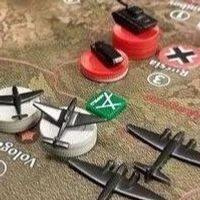
I would say the first few Turns were just about as perfect as I have ever seen. Great play and great dice; awesome combination. I did focus my comments on Europe since that was where the main mistakes were made however, I can comment on the Pacific if you would like.
As for the Pacific, again, it was dang near perfect till Turn 4. I am not a fan of going to Alaska on J4 since the US had a counter, but I can see some reason as a ploy to draw US ground forces north. However, on J5 Japan then tried to save that Alaskan transport by sending a significant portion of their fleet north. This allowed the US to counter with freshly minted units, so the logistics train was moved into their backyard. If those Jap units had gone south instead Japan would have had a 7-carrier force versus the 3-carrier US force.
This lack of Japanese firepower allowed the US to go to the Caroline’s on US5 and then Java on US 6 which caused a trading war that resulted in all the money islands being lost at the end of A7 and it took till the end of J9 for the Japanese to reclaim all the islands at quite a cost. Trading is Good for the Allies and Bad for the Axis. It allows little ANZAC to be just as useful to the Allies as big Japan is to the Axis plus it delays Japan from its strategic goals. All of that could have been avoided if Japan had concentrated their superior firepower south.
In addition, in effort to save transports I assume, Japan then split their fleet again in Java and Sumatra while the US was sitting off Queensland. Frankly you don’t want to do that. That means the US can beat you back to SZ6 which is exactly what they did. By threatening SZ6 from Hawaii and the Caroline Islands, with the IJN out of touch, SZ6 could not be protected and the US was able to take Korea. That is a disaster for Japan because:
- It means the US can land planes in Korea which means every US plane in the Pacific threatens SZ6
- It denies Japan its primary ship building yard
- It forces Japan to spend money on infantry for defense in Japan which is a waste of money
This was the move that lost the initiative for the Axis in the Pacific. Japan spent the next 6 Turns trying to get Korea back which gave the Allies time to hope the Axis would make a mistake; which it eventually did.
When Japan was ahead early in the game with a superior fleet the Axis allowed the US, with a smaller fleet, to dictate the initiative in the Pacific. Japan was constantly reacting to their moves instead of combining the superior IJN and pushing the US around.
I mean Japan took out China, India, eventually got Korea back and held the money islands. That is impressive! But never was the IJN able to force a decisive battle with the Allied fleet and in fact it was the Allies who outmaneuvered the Axis and on US 19 cut off and killed a significant IJN fleet that was caught by itself when trying to go for Hawaii. That -90 TUV loss for Japan removed the Japanese naval advantage.
Japan did not lose in the Pacific, but it did not win either. The Allies just had to stall in the Pacific while they won the game in Europe.